Master Chef Junior: Grade 1 Pancake-Making Activity
Master Chef Junior: Grade 1 Pancake-Making Activity
Master Chef Junior: Grade 1 Pancake-Making Activity
Do you remember the first time you cooked? Do you remember the first time you helped in the kitchen?
This is the core memory our Grade 1 students made during their first-ever cooking activity.
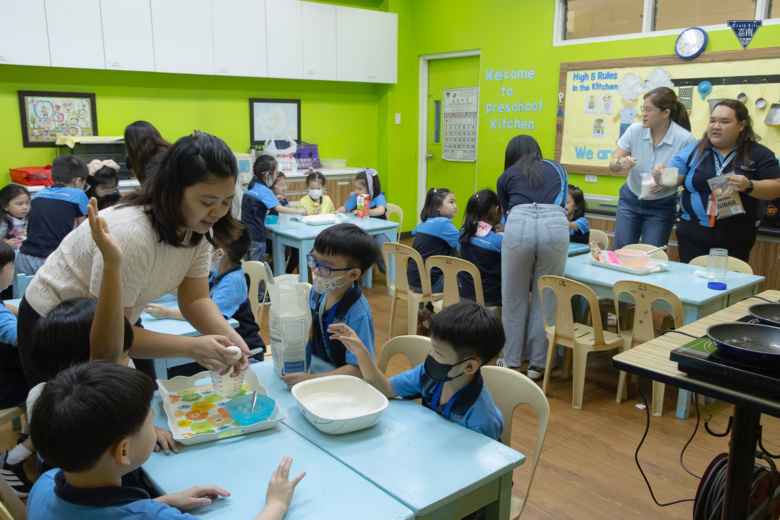
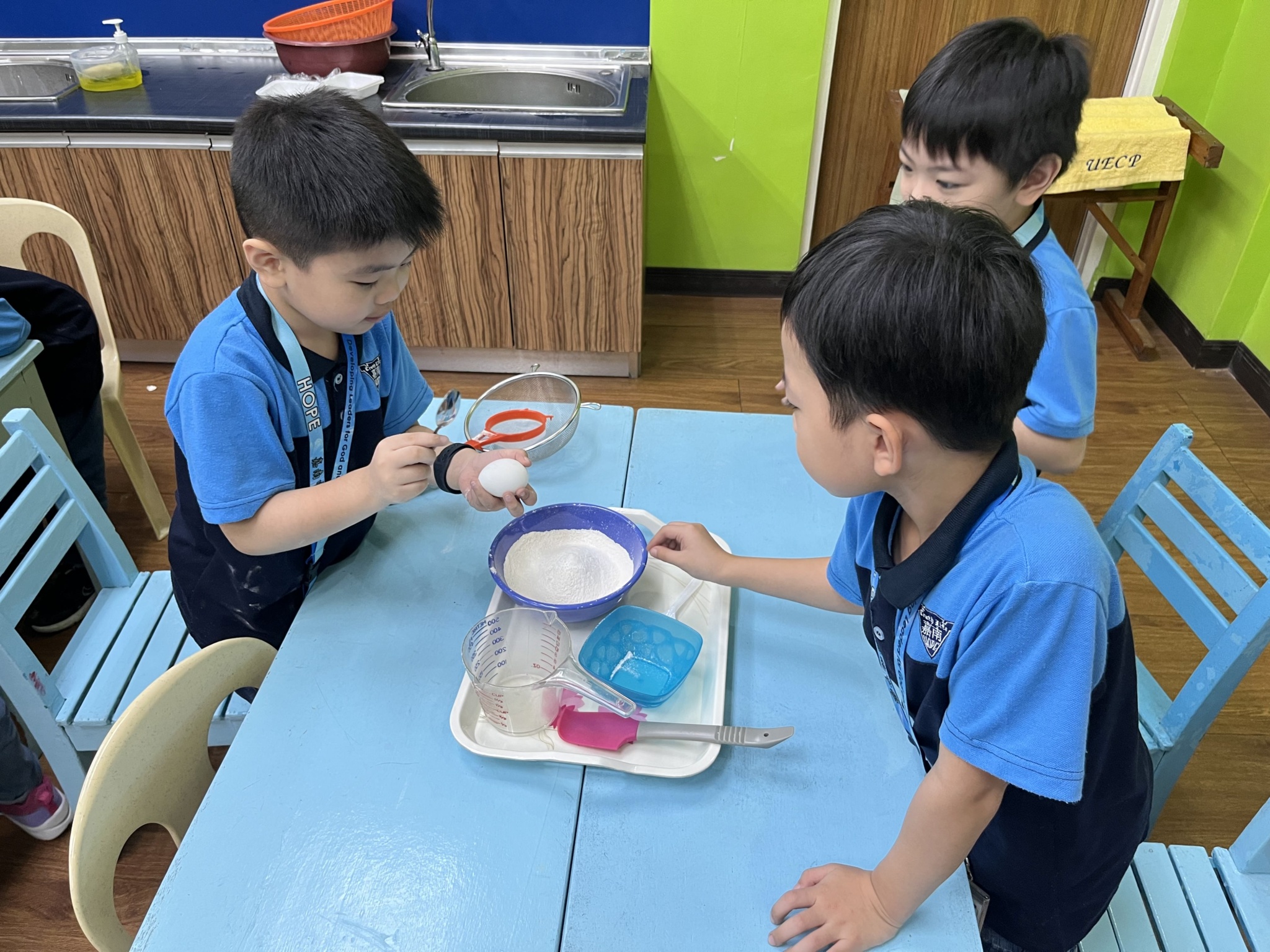
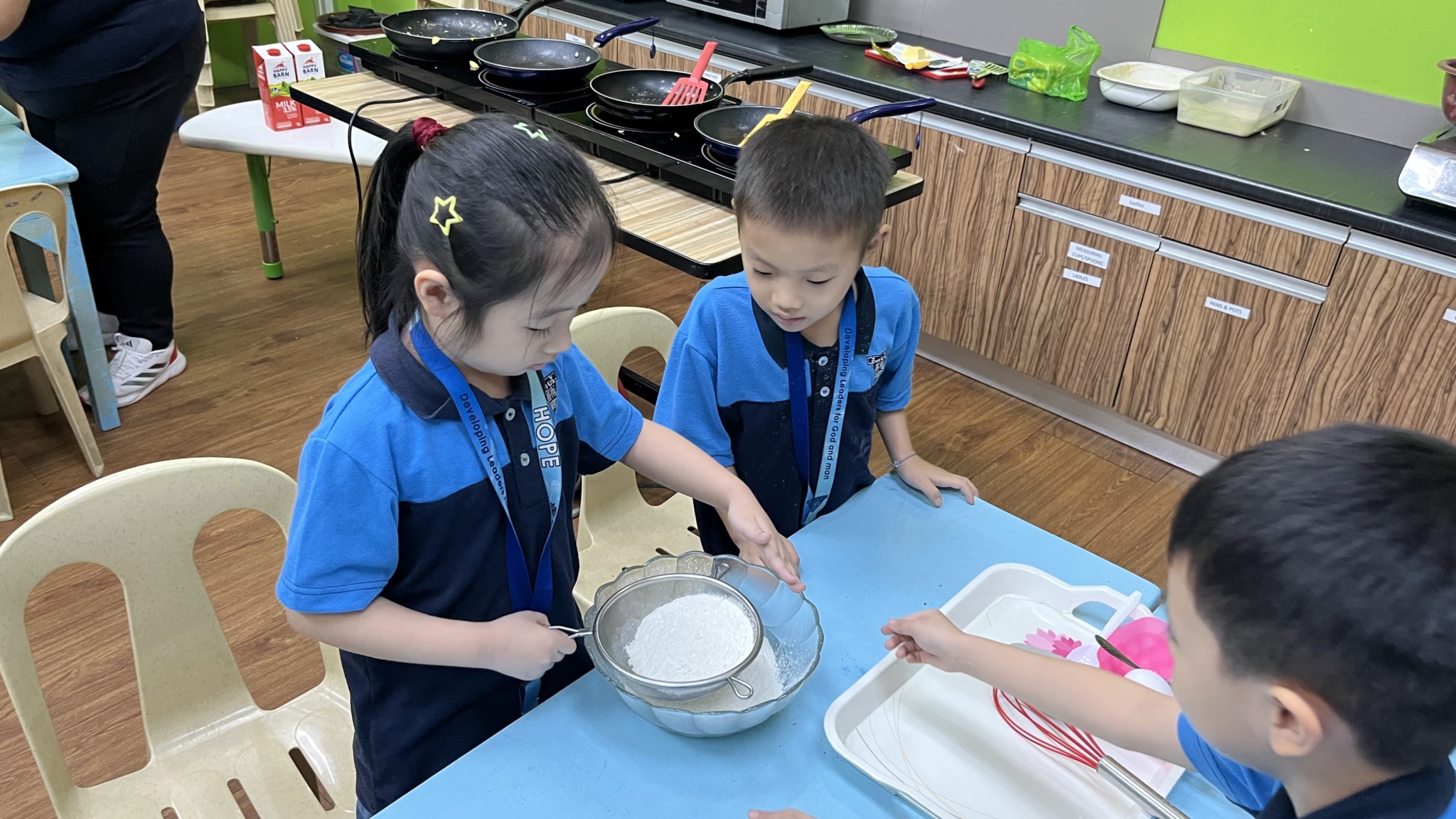
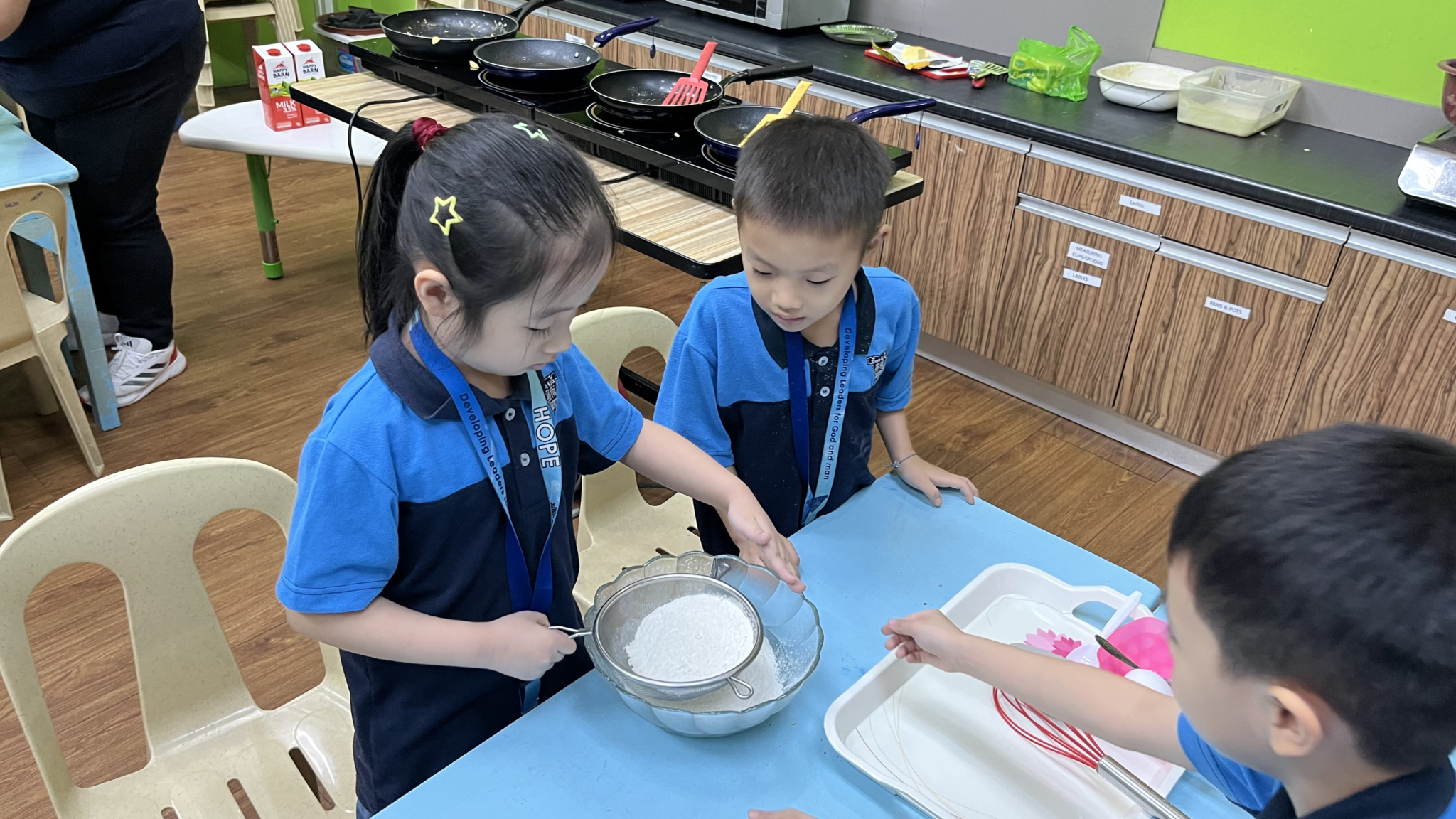
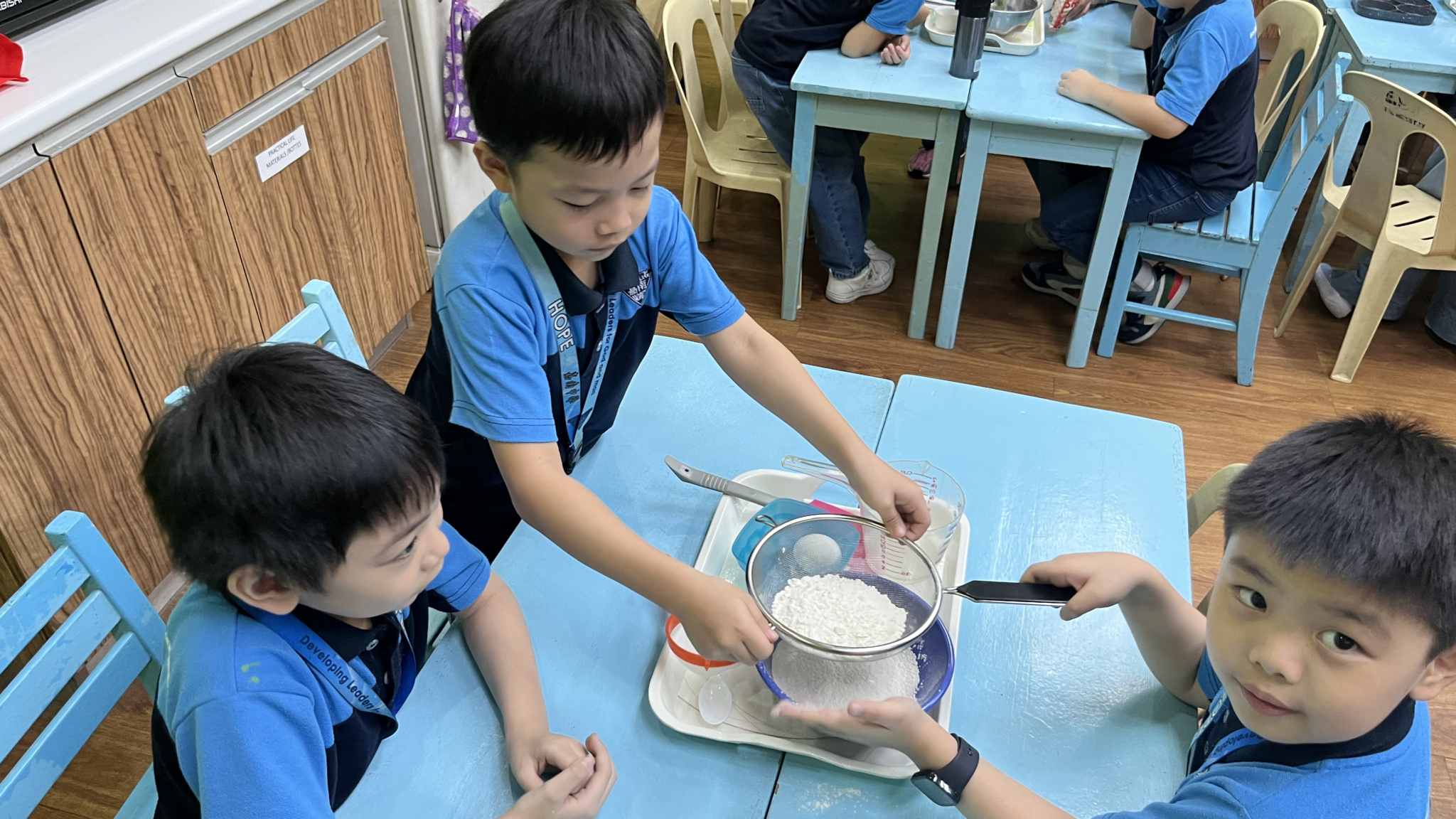
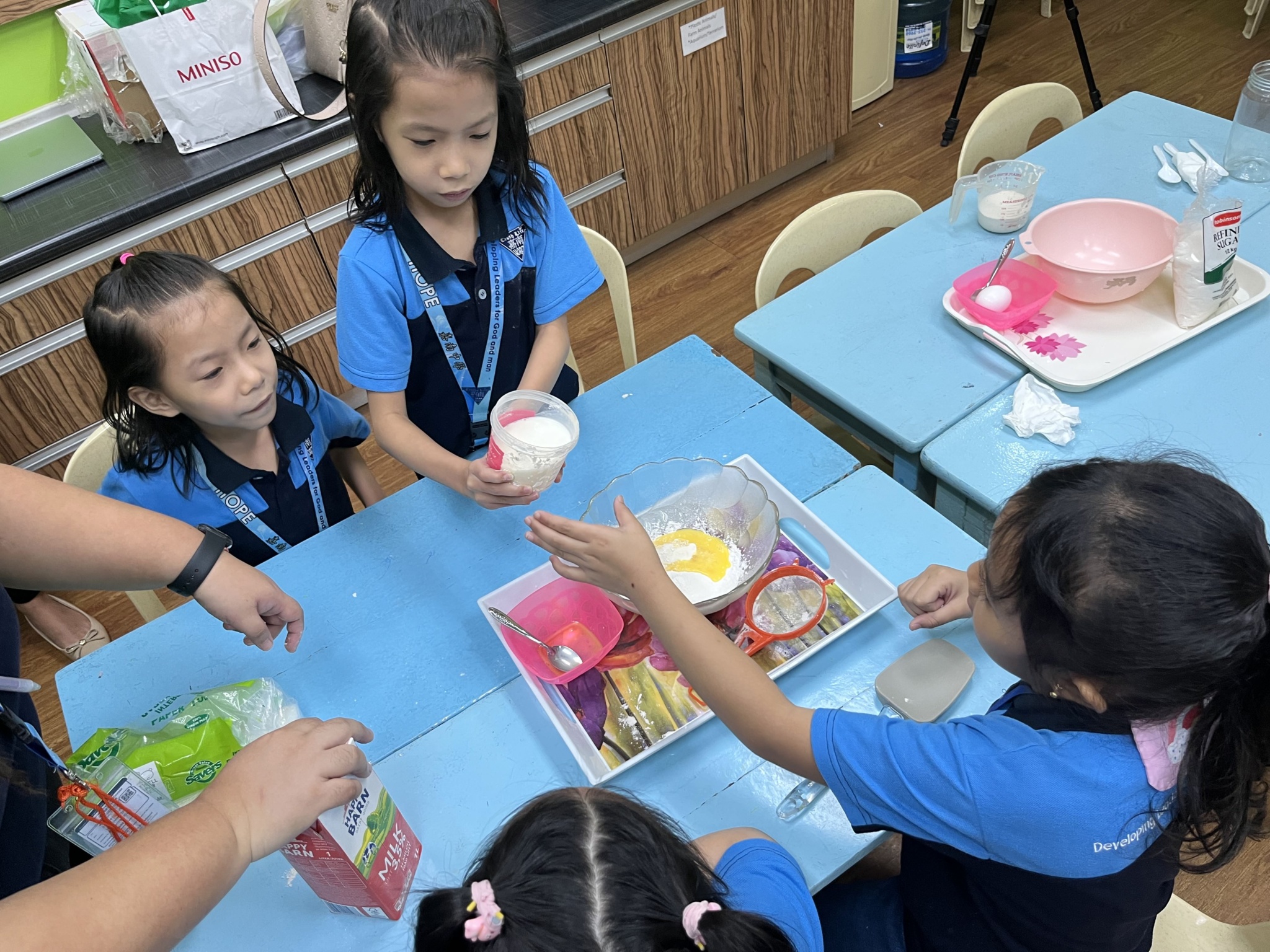
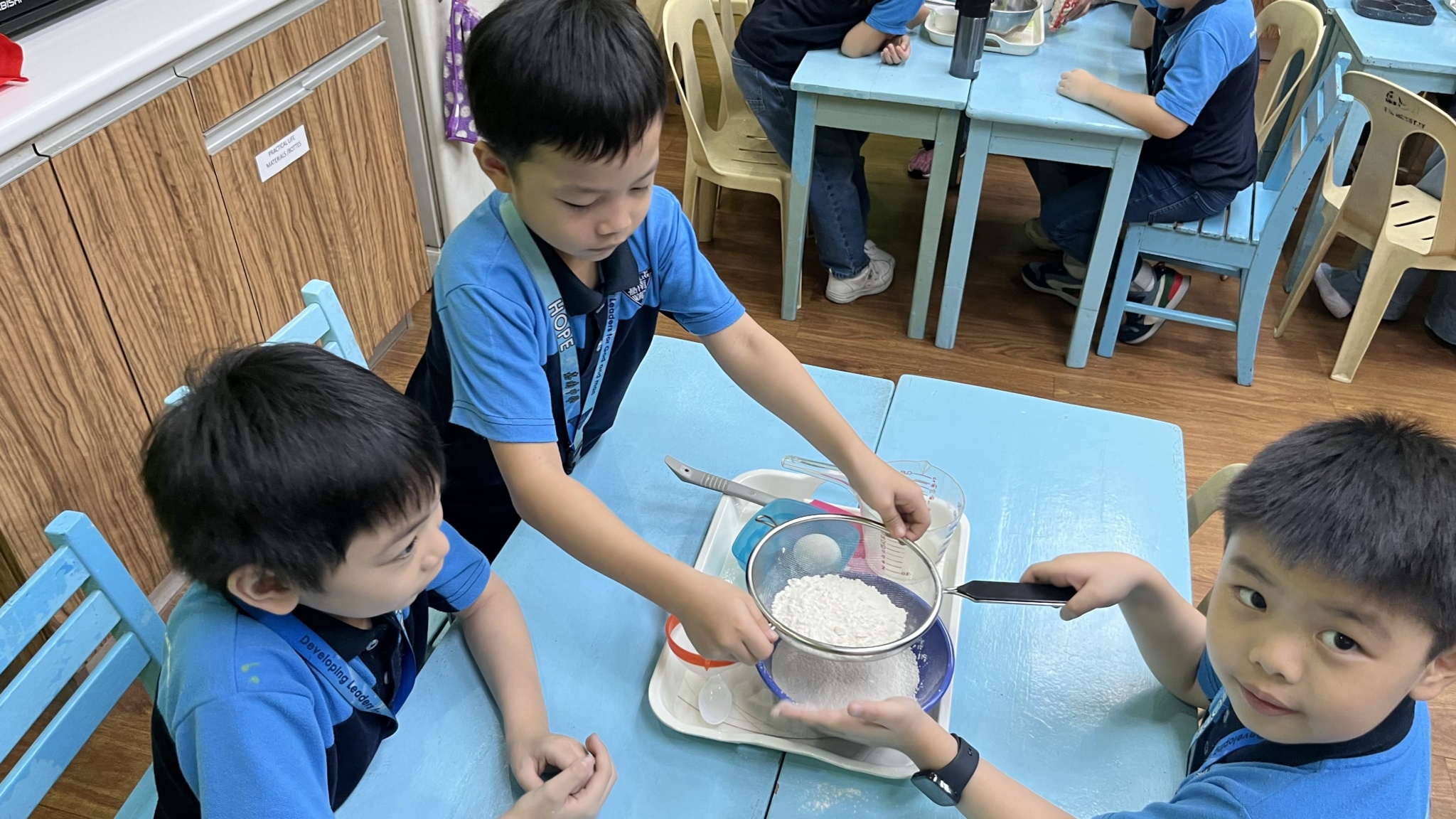
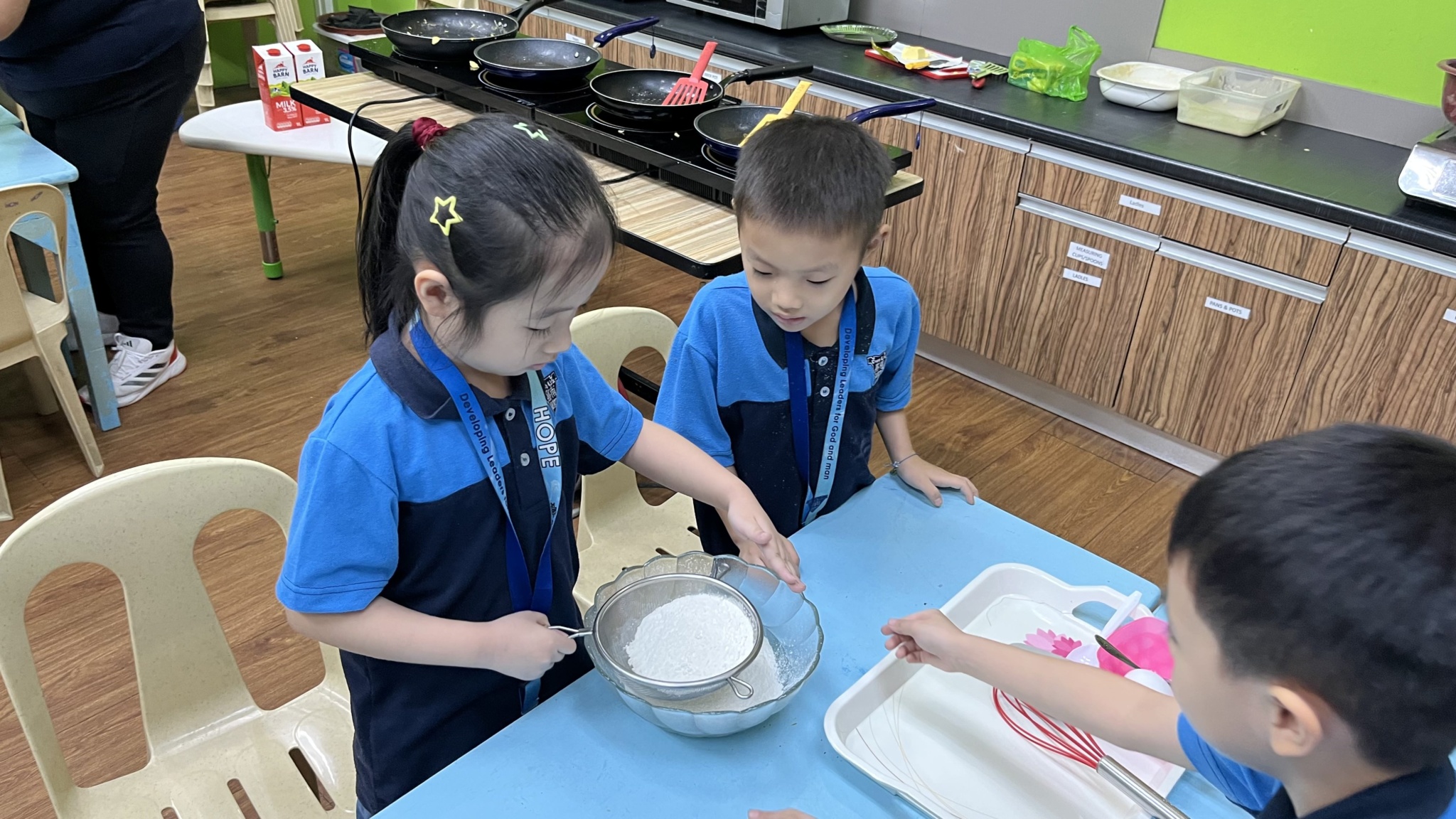
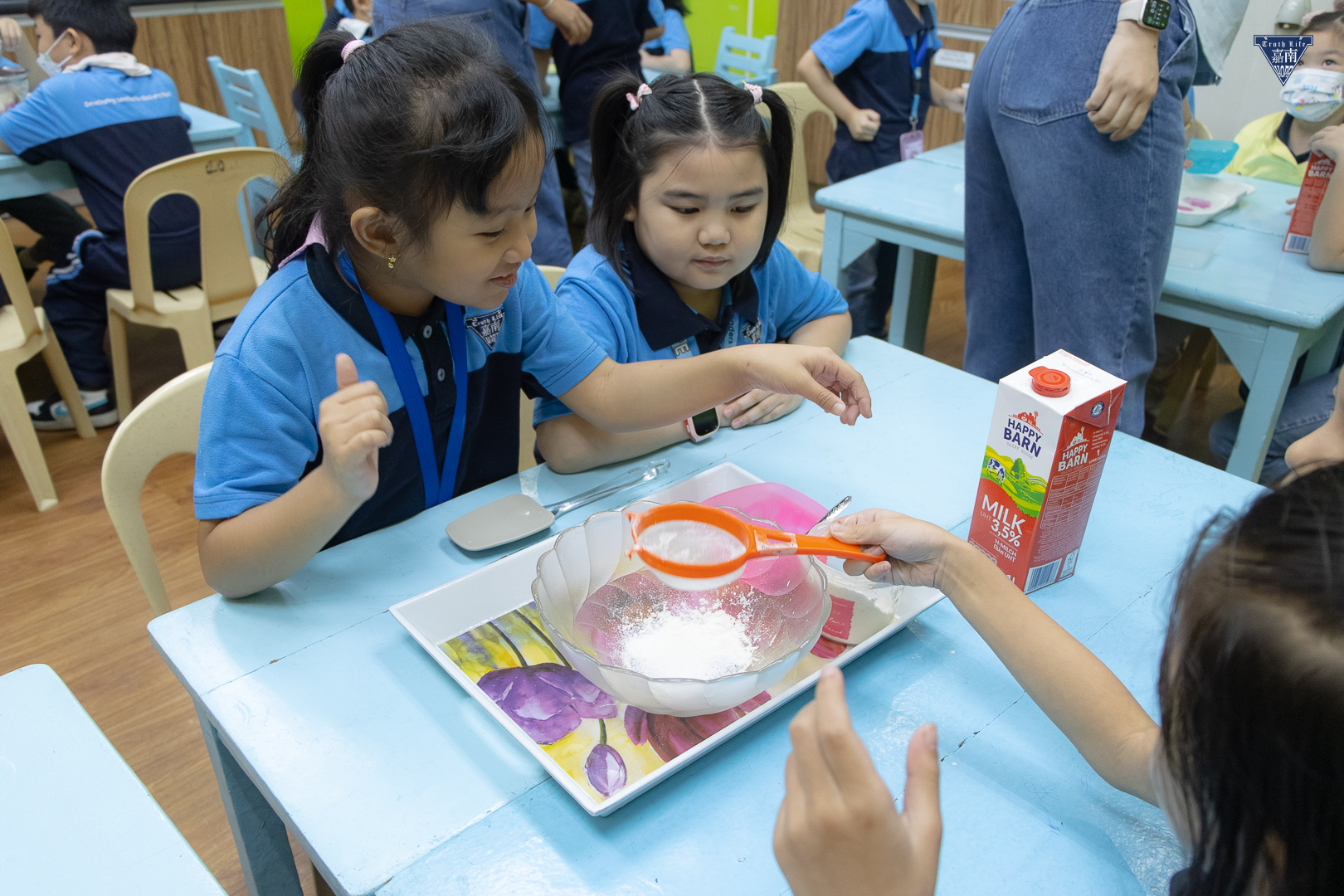
Giggles and anticipation beamed from the faces of the Grade 1 students as they entered the school kitchen. On the small tables, a tray of sift, whisk, measuring cup, spoon, and bowls awaited them, ready to be used. The junior master chefs were all excited to prepare their own pancakes.
While flour, milk, eggs, salt, and sugar make up pancakes, the ingredients by themselves won’t produce pancakes. Even its simplest recipe requires more than just gathering the ingredients. It demands specific procedures and skills.
Prepping Ingredients and Kitchen Items
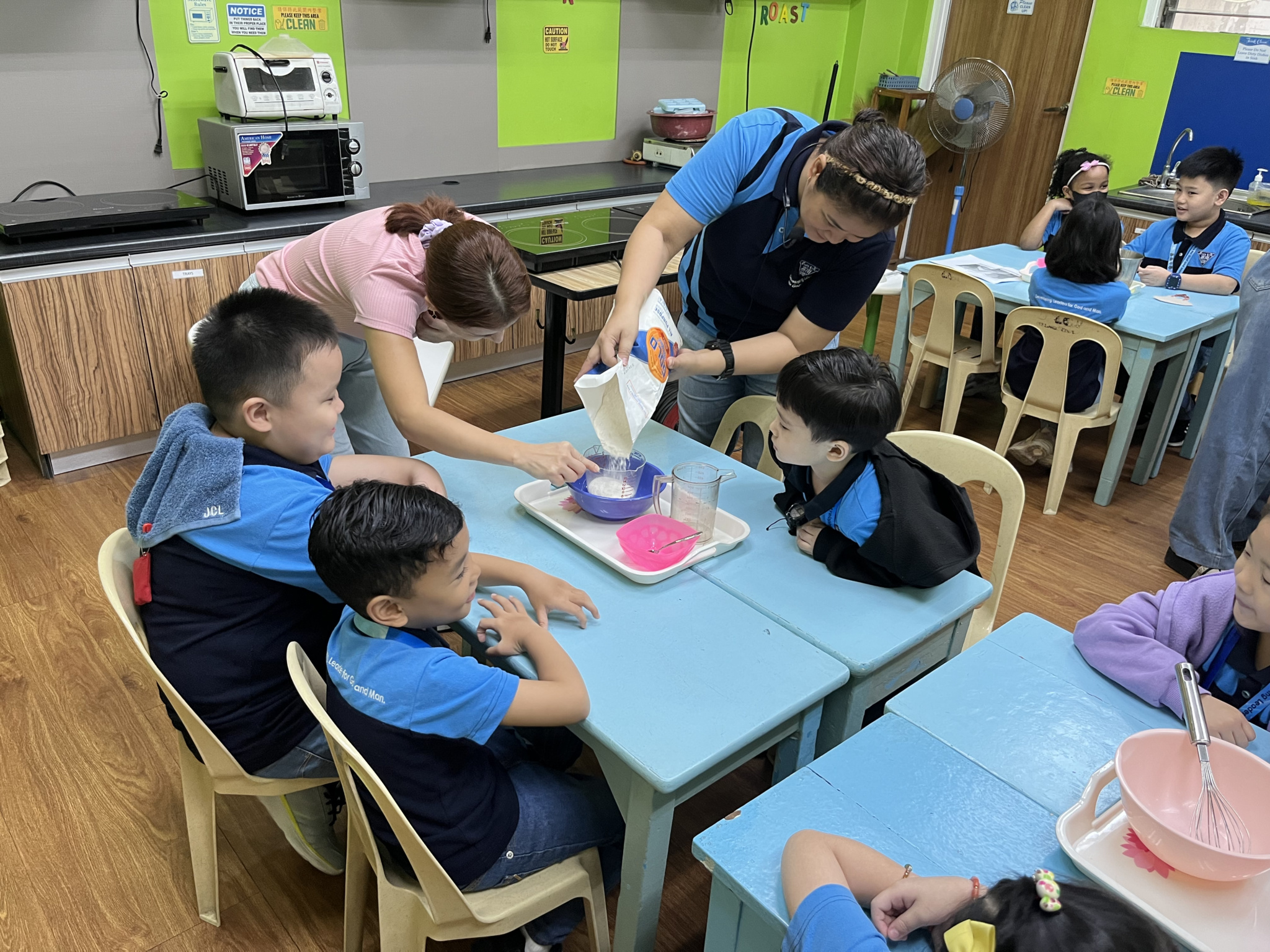
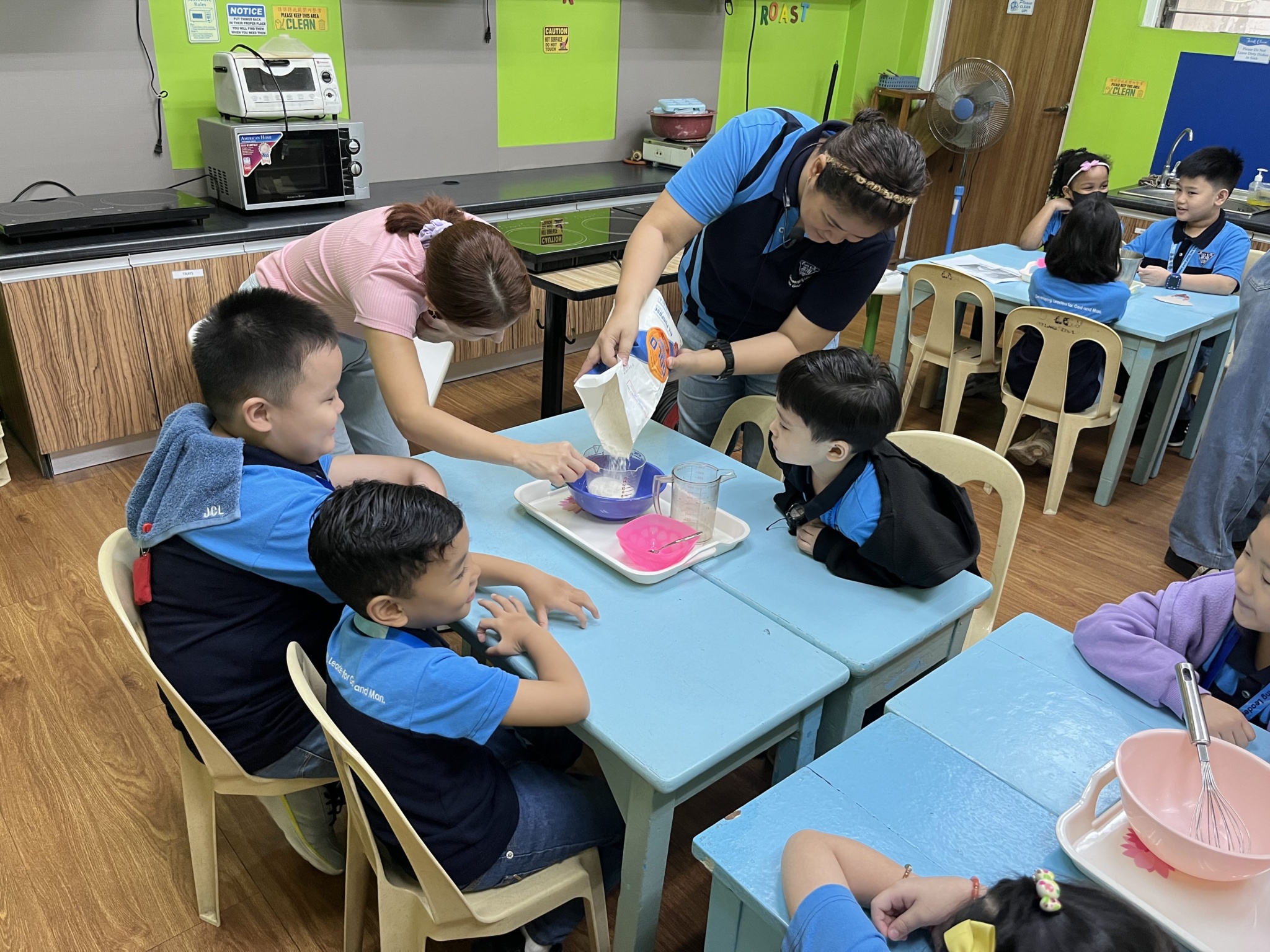
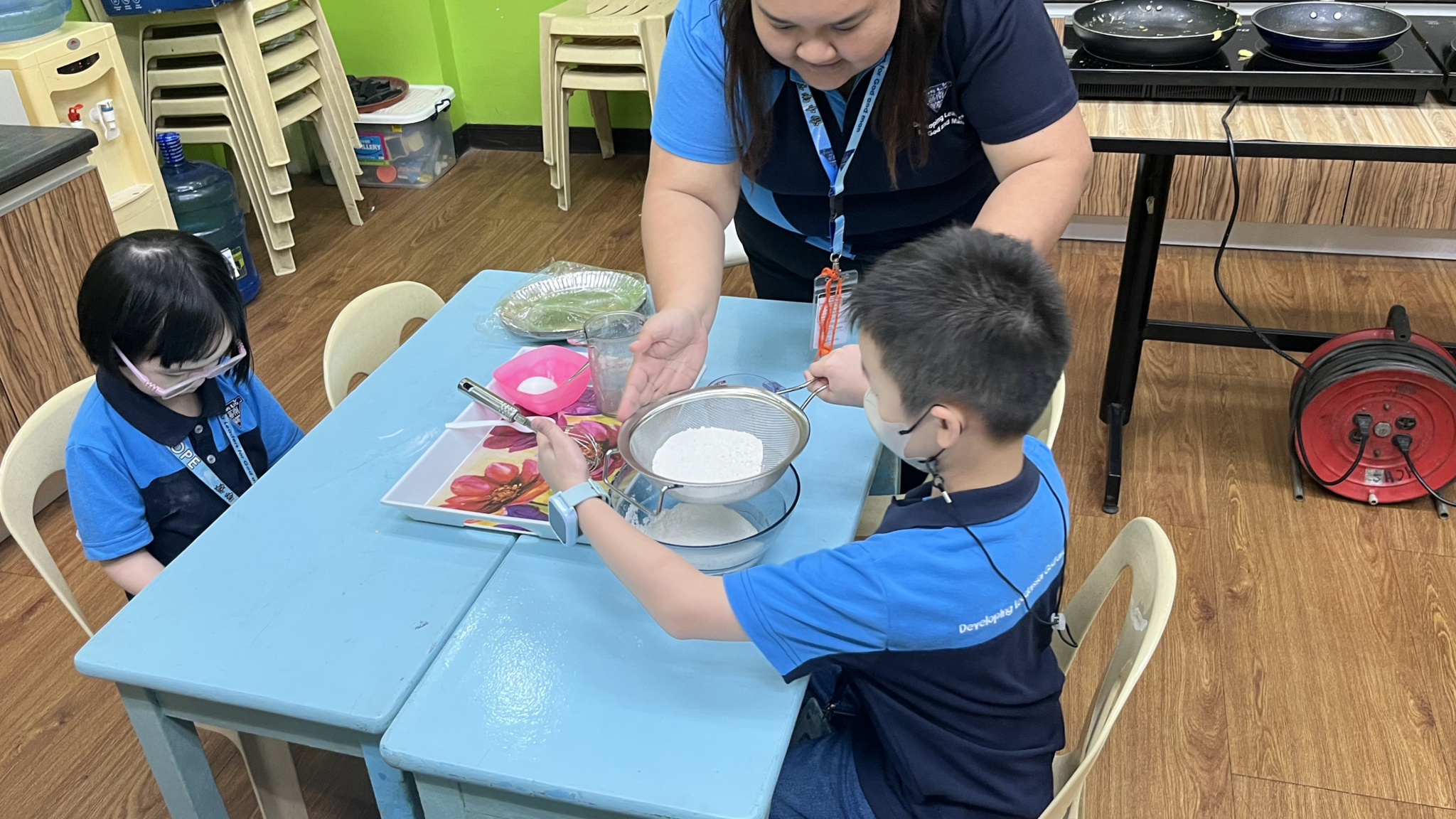
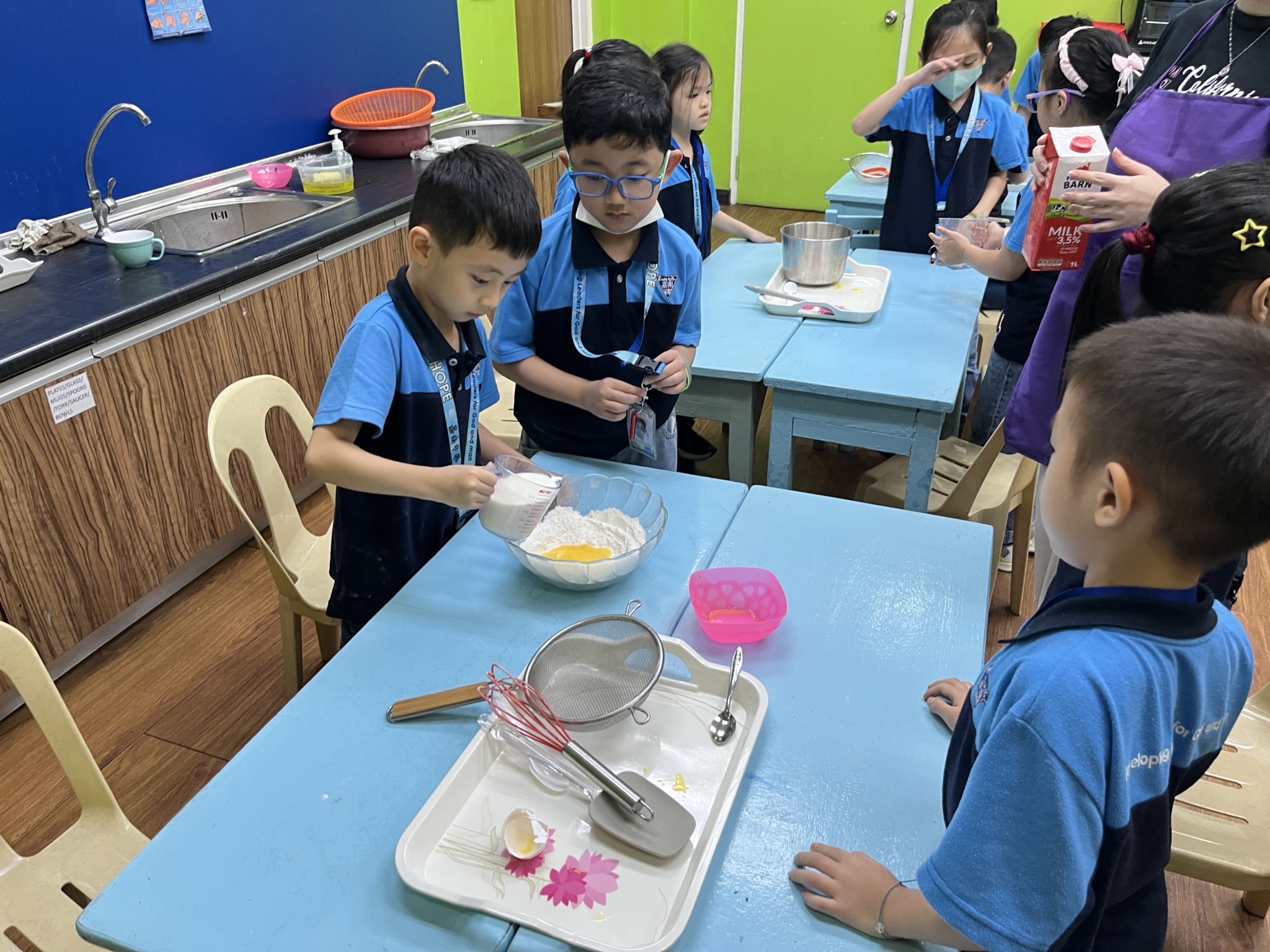
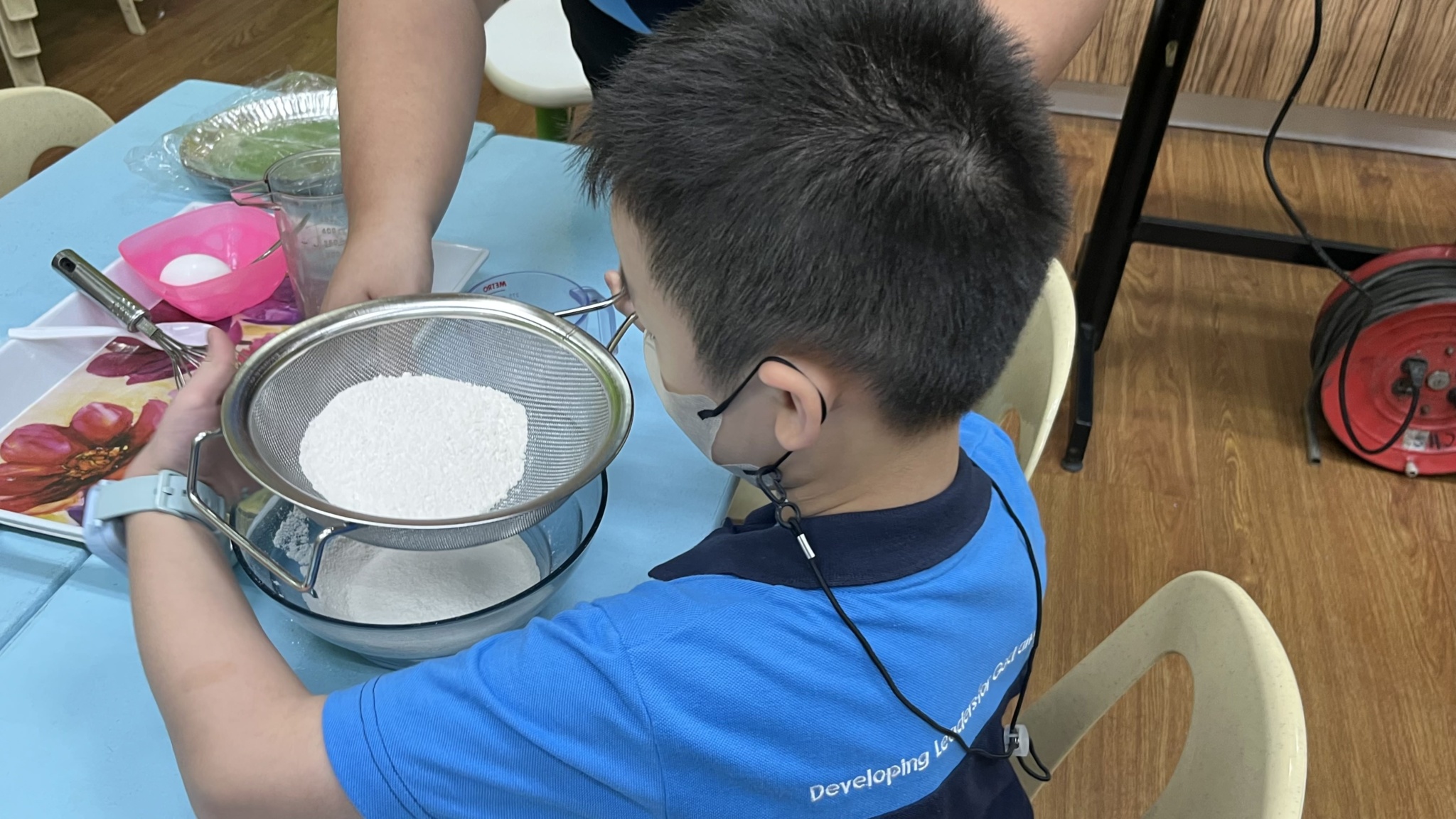
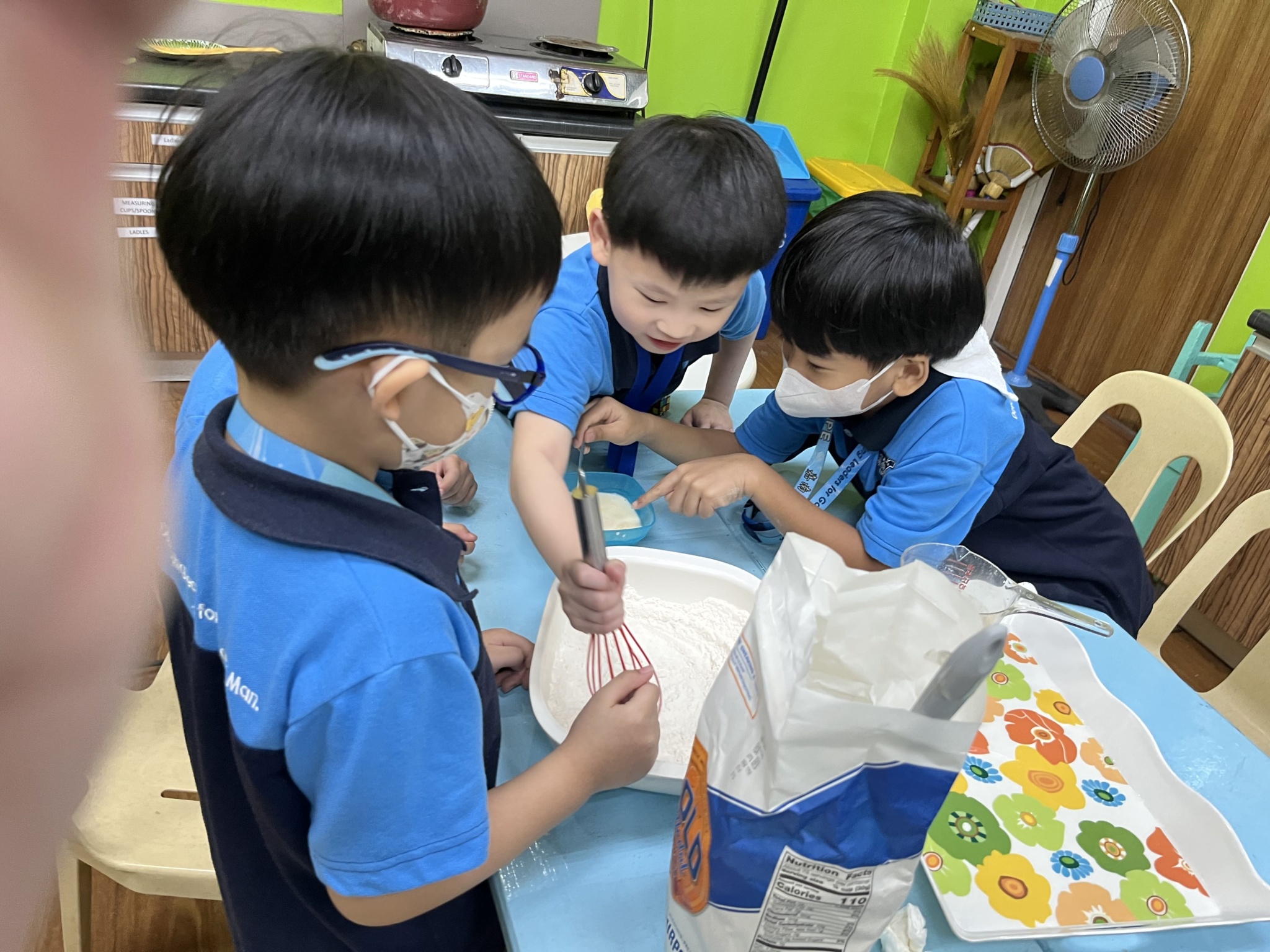
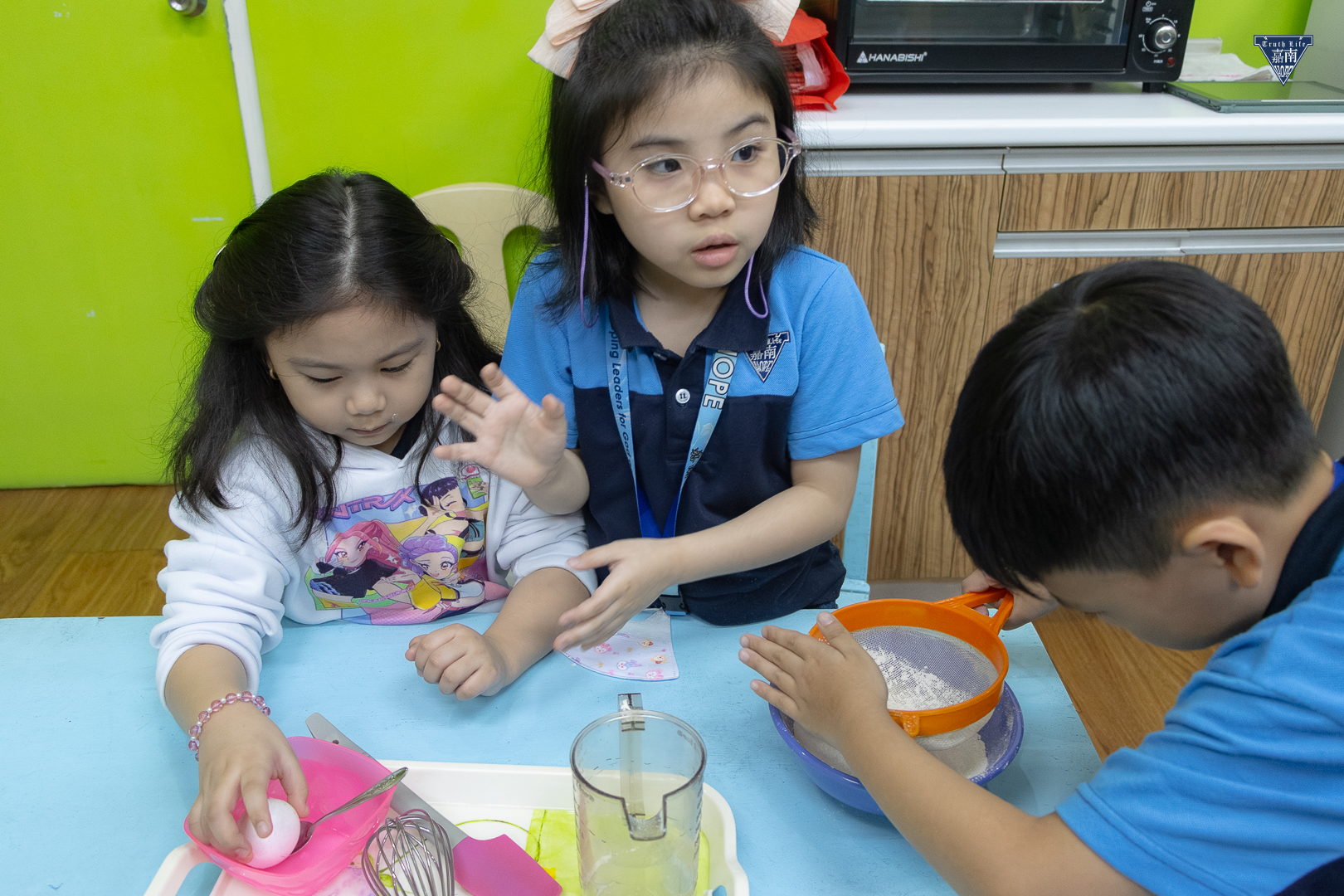
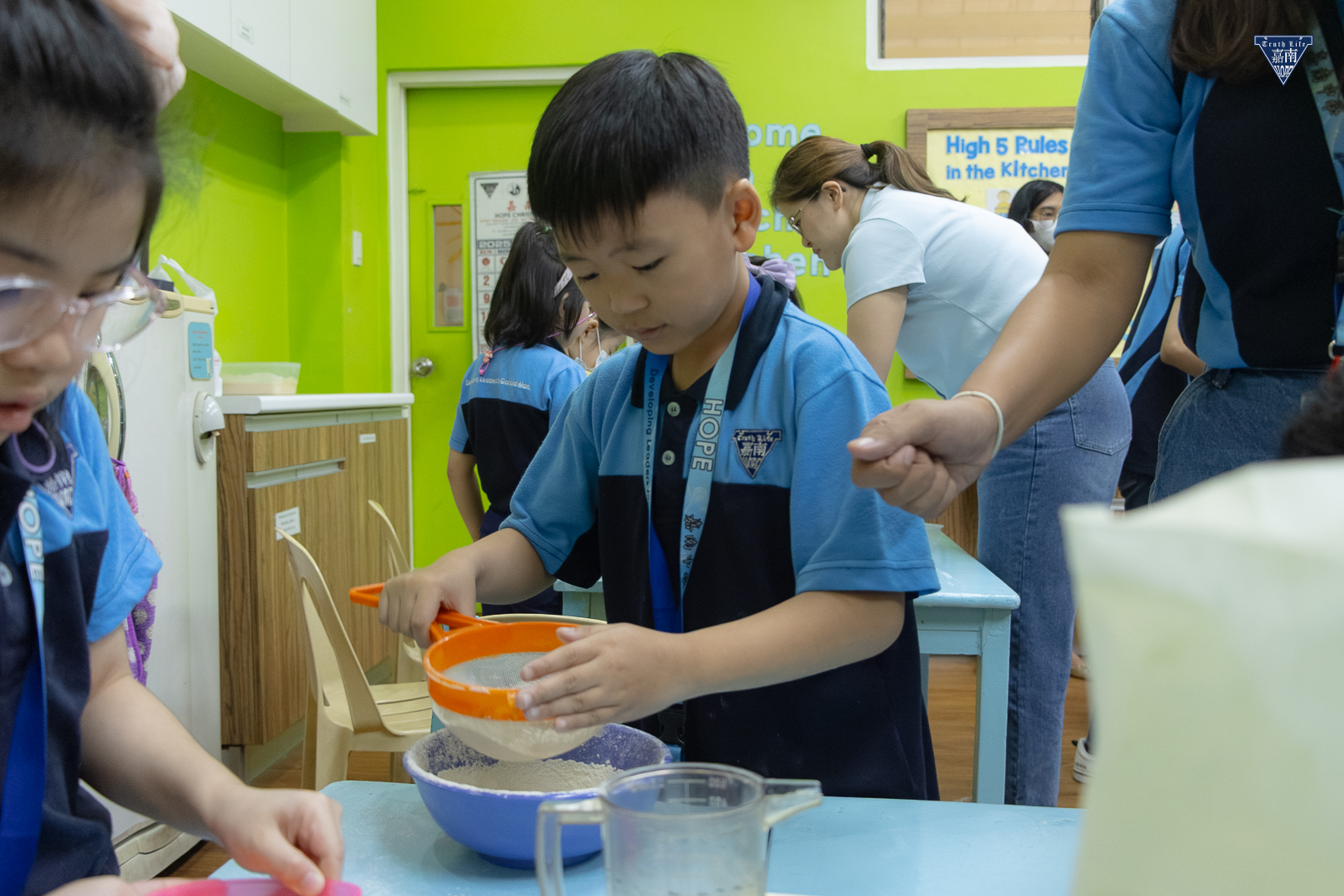
Before cooking, preparing the ingredients and necessary equipment is a must. Knowing how to use these things is even more important. In relation to the class’ unit of inquiry, the Grade 1 students were able to learn about the use of various materials for specific purposes. Through the pancake-making activity, the students learned how to use kitchen utensils. They specifically learned the purpose of unfamiliar utensils like whisks and sifts. The students were able to acquire this knowledge by utilizing one of the most basic skills in cooking: following directions.
Sifting Literacy Skills from Cooking
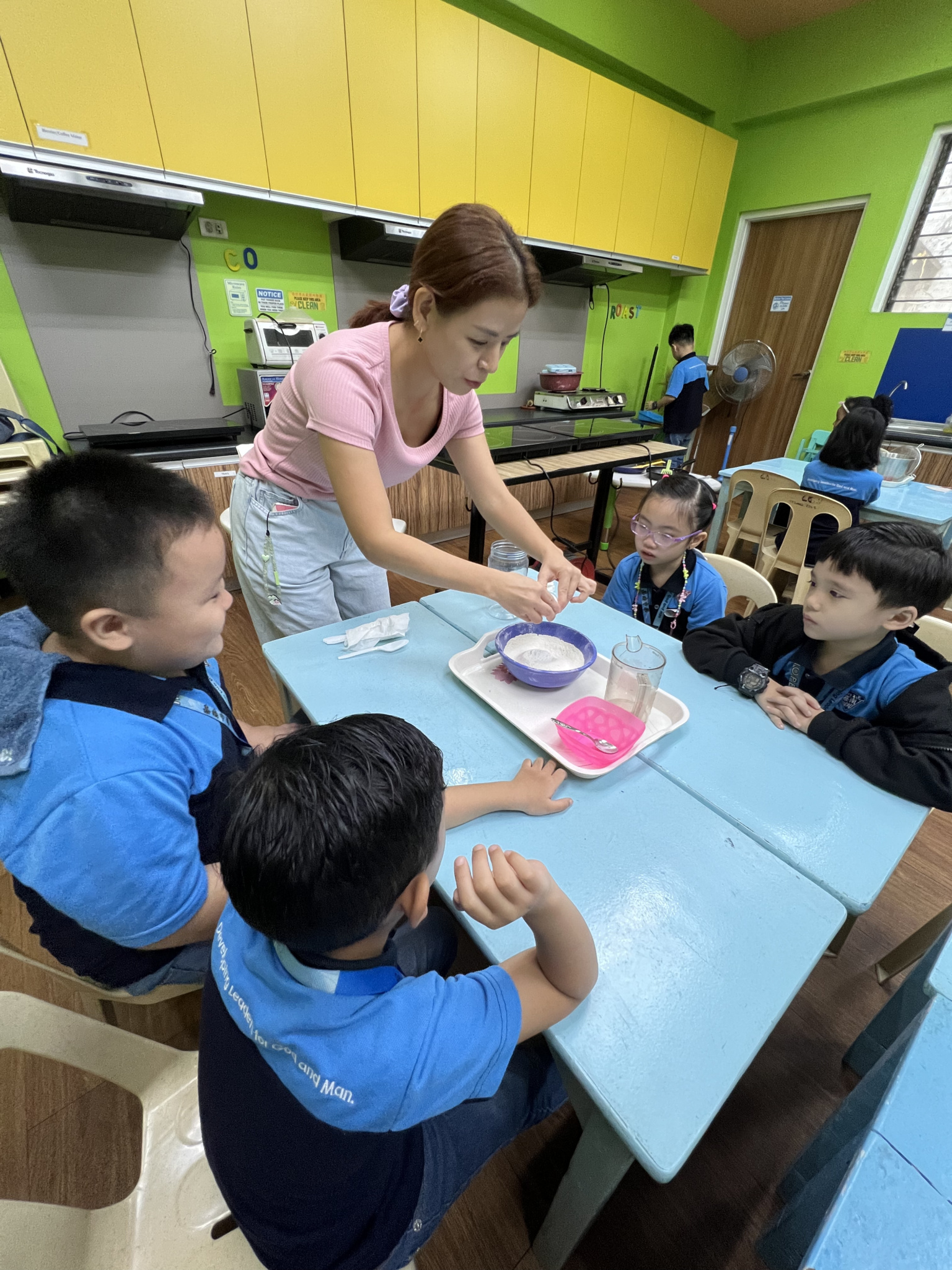
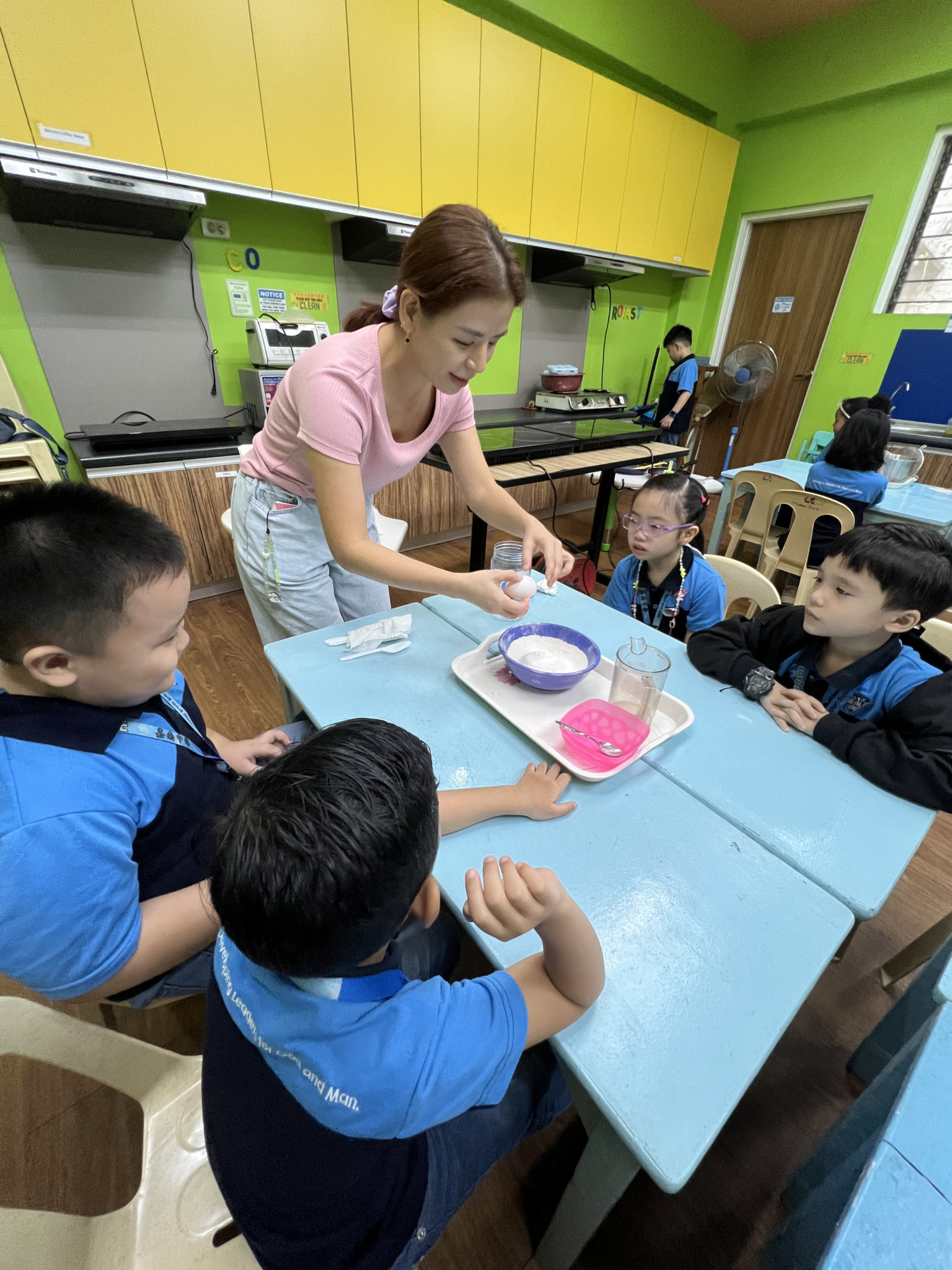
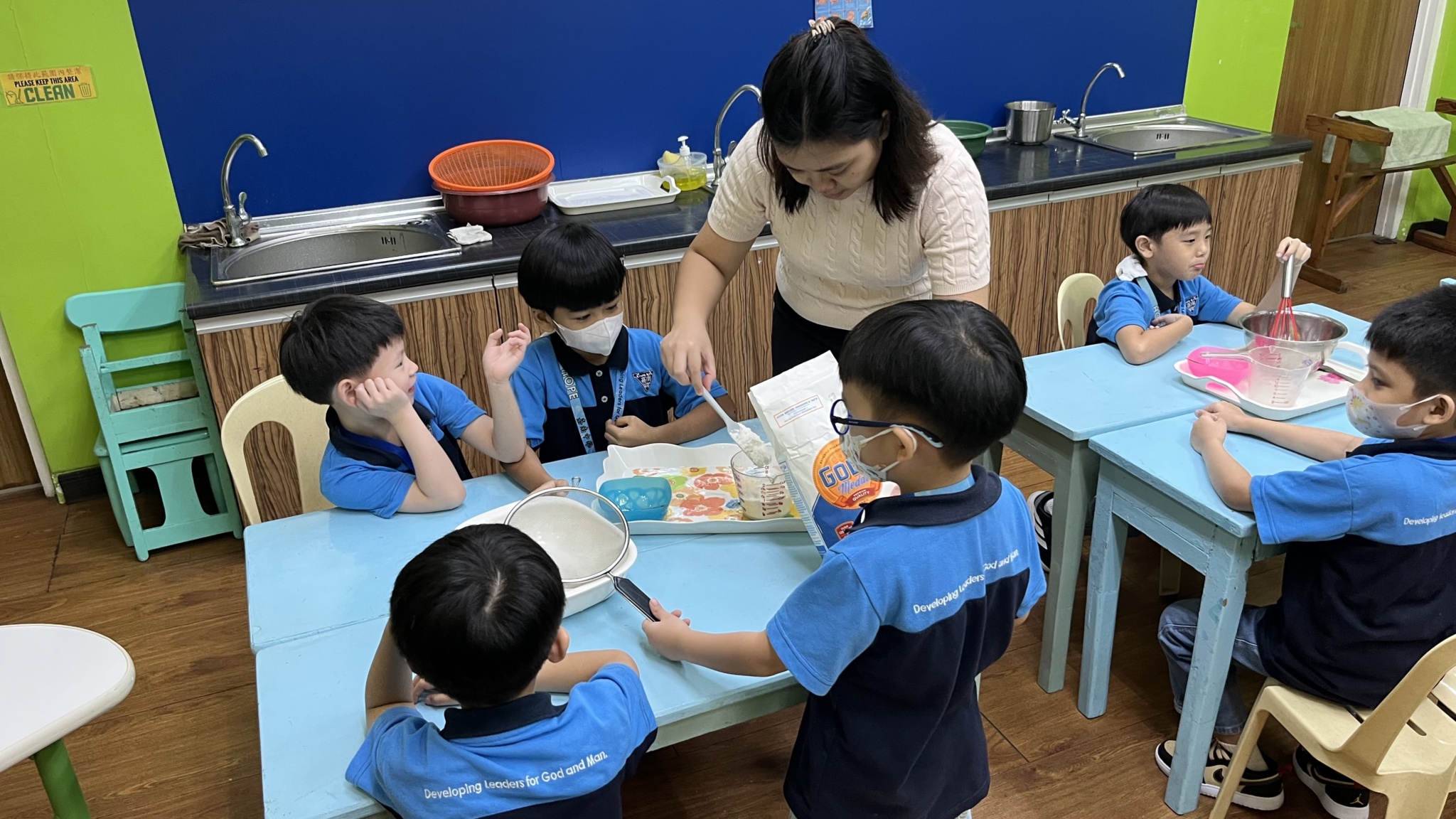
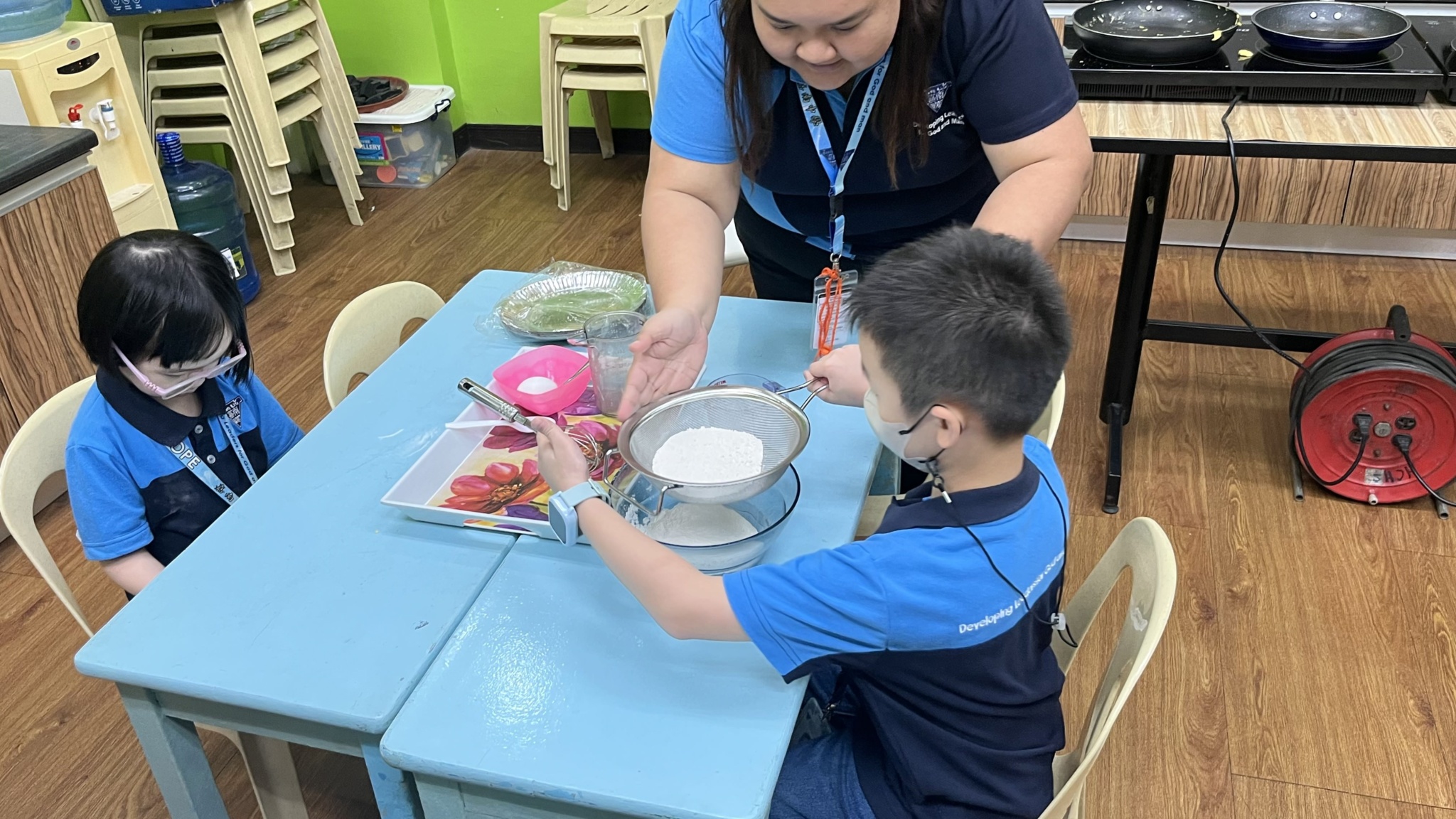
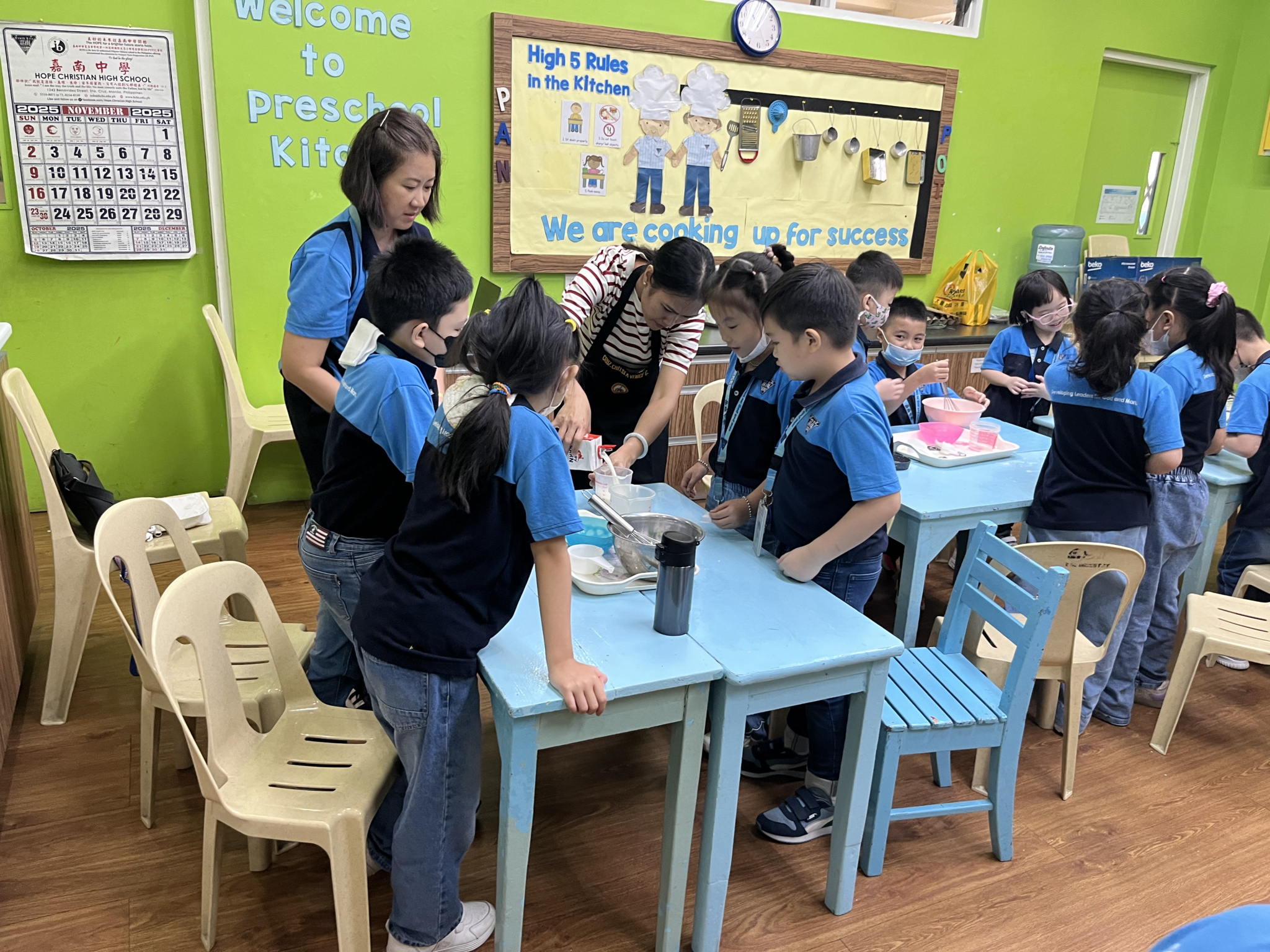
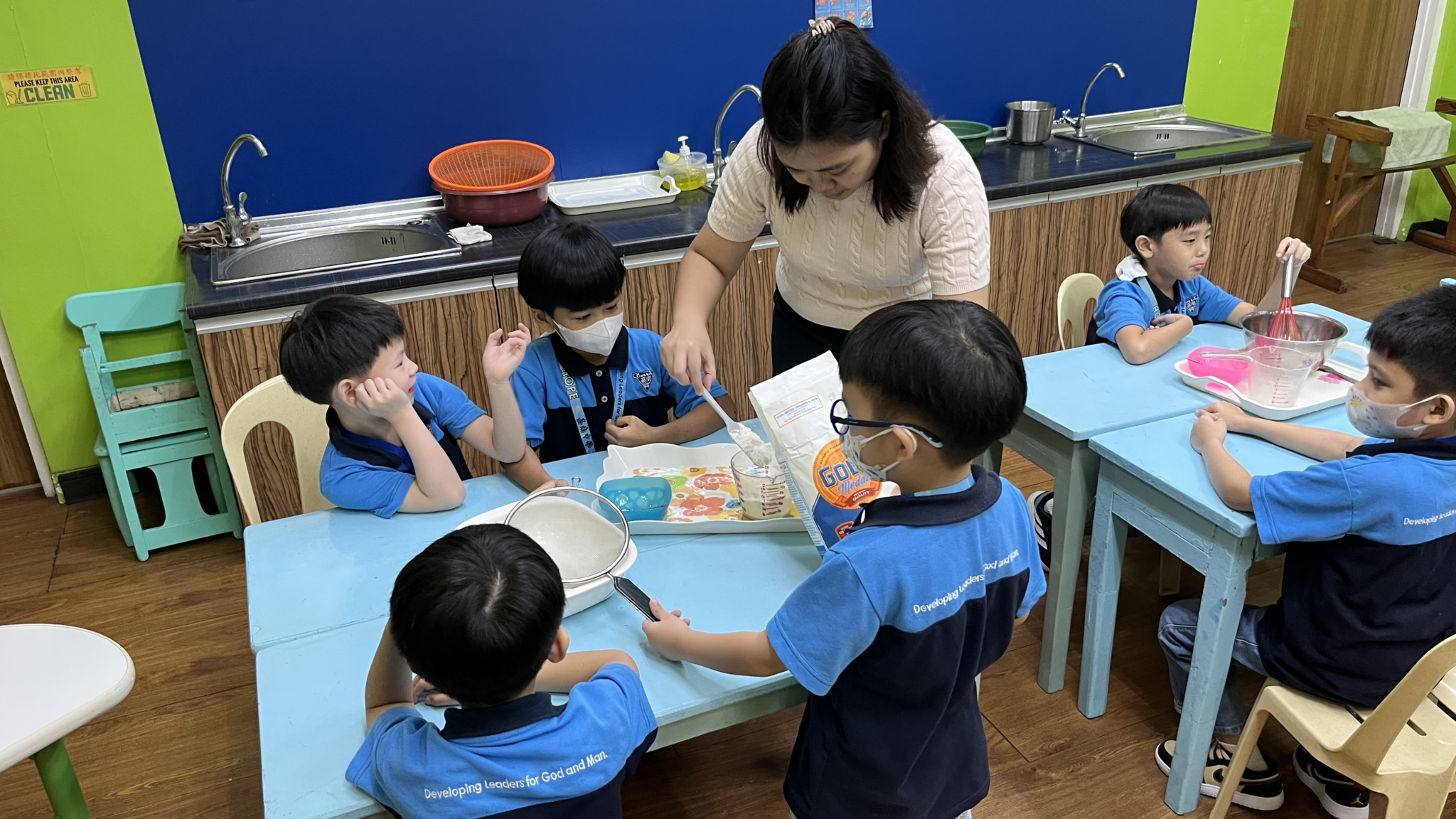
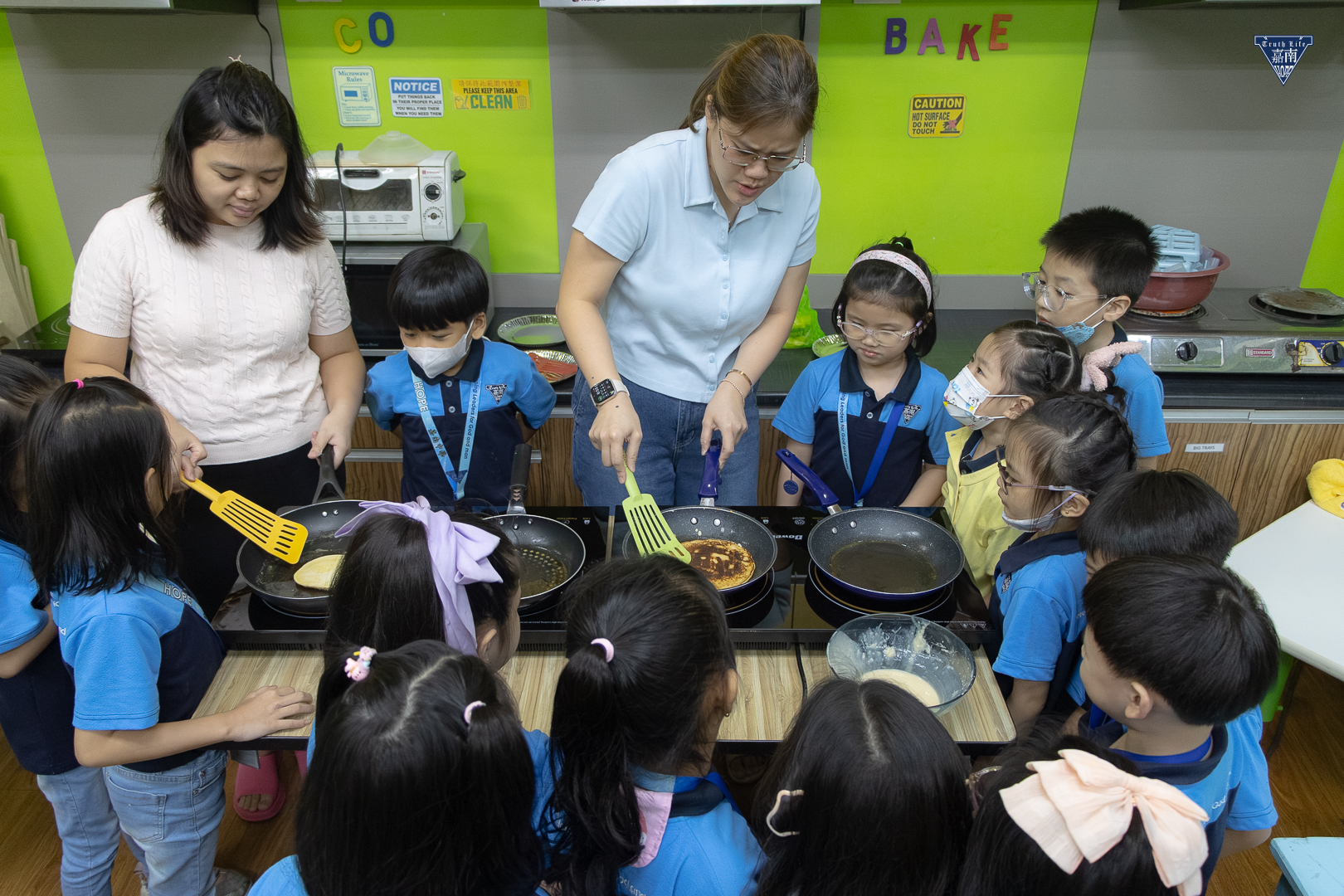
Following directions is a literacy skill that goes a long way. It can be applied to various disciplines, but in cooking, this is especially crucial. In making pancakes, for instance, the first step is sifting the dry ingredients. As expected, many Grade 1 students were unfamiliar with cooking terms like “sift”, “whisk” and “batter”. However, as the students followed the specific steps instructed, described, and demonstrated by their teachers and volunteer parents, they eventually learned what those words mean. This only shows that following general directions can be achieved by following specific steps, and that vocabulary can be expanded by engaging with authentic activities like cooking.
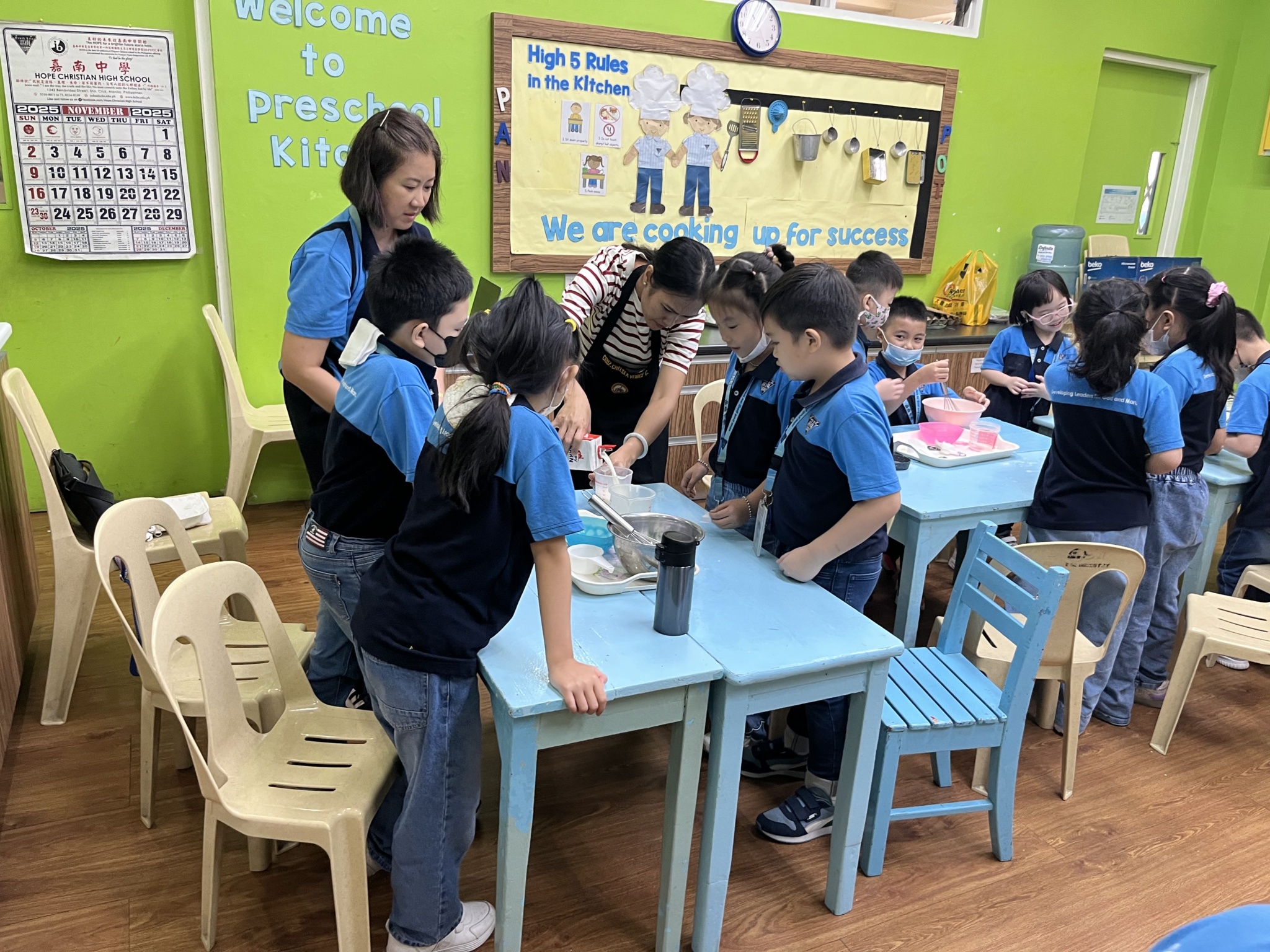
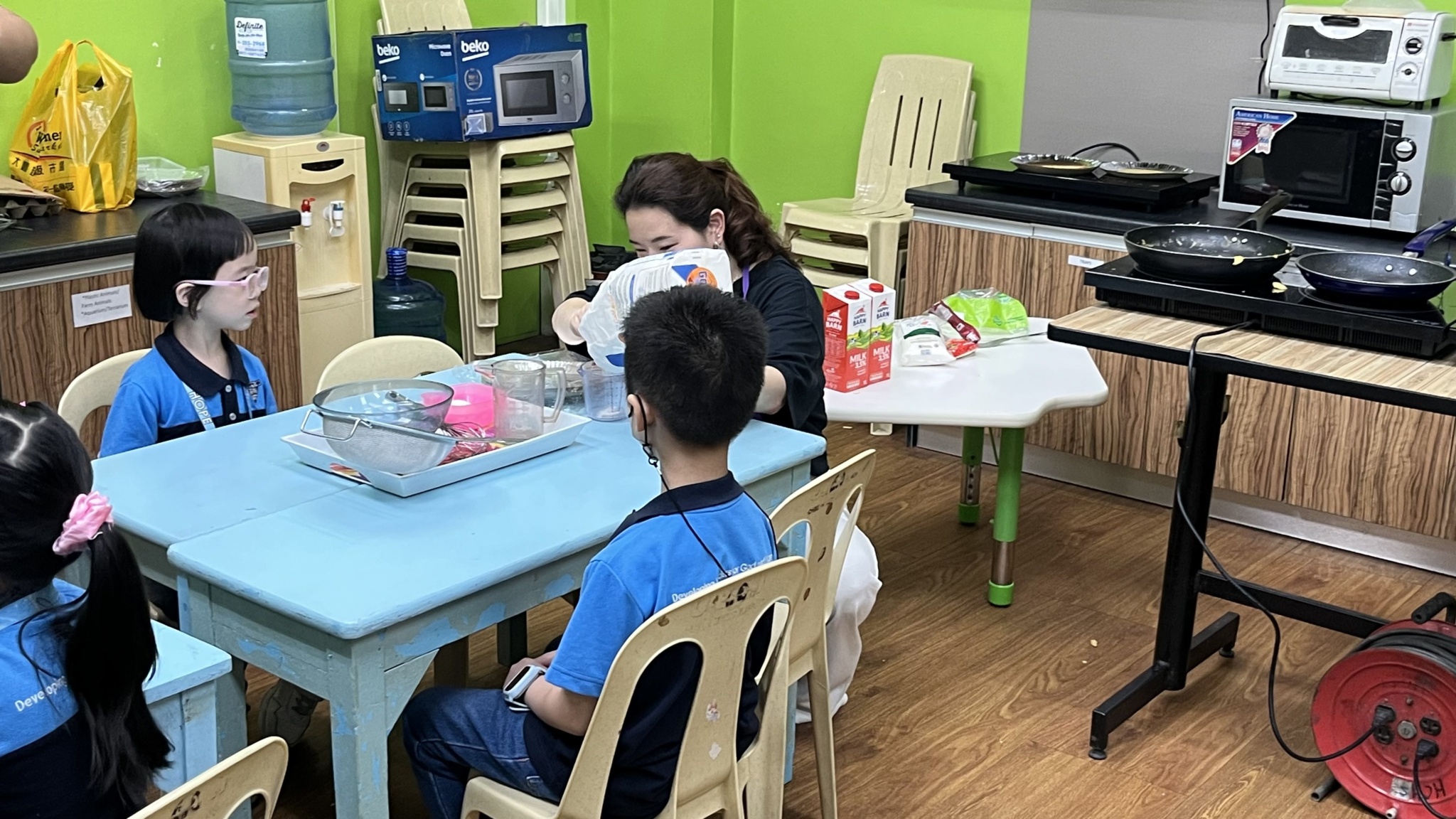
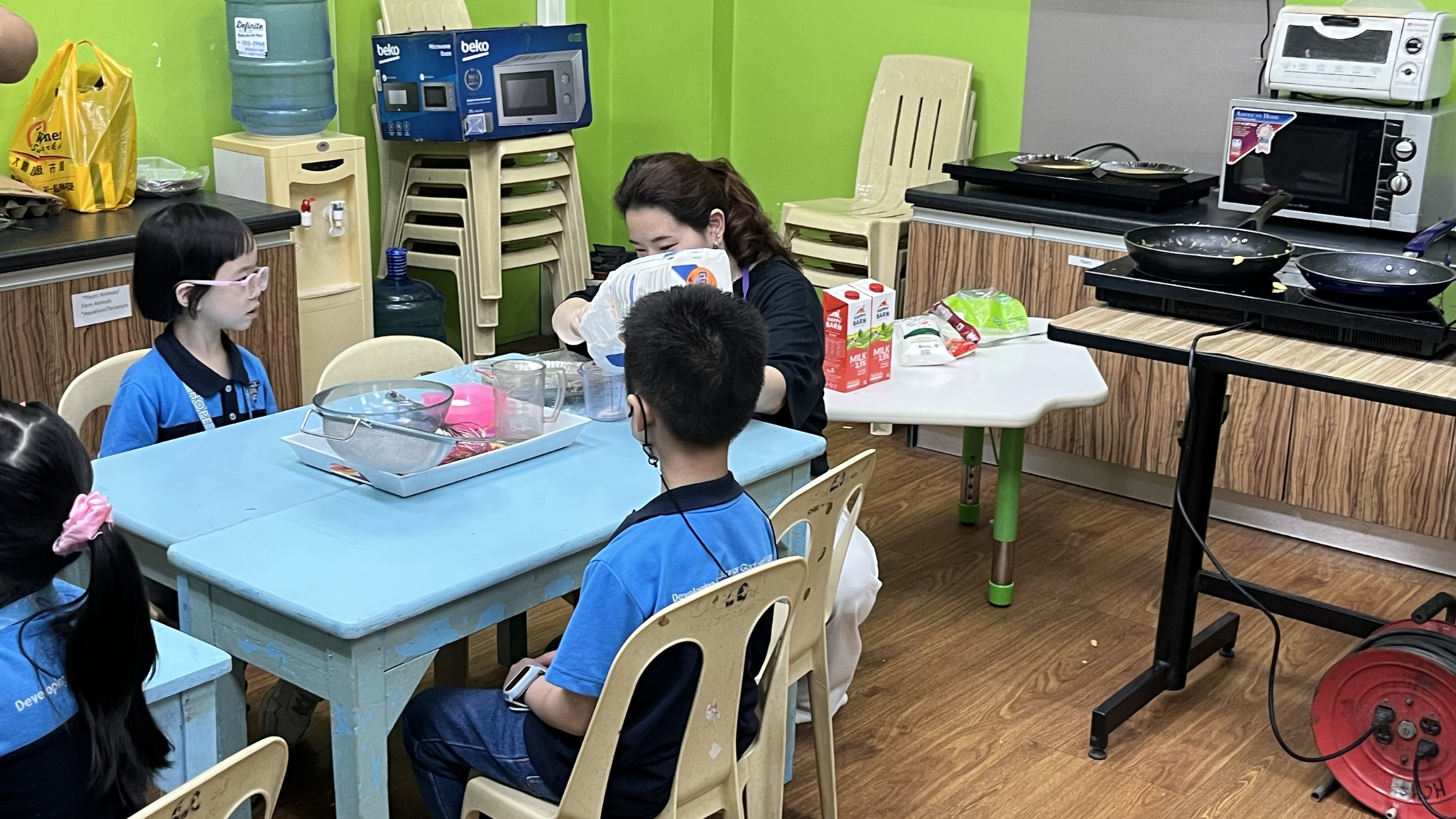
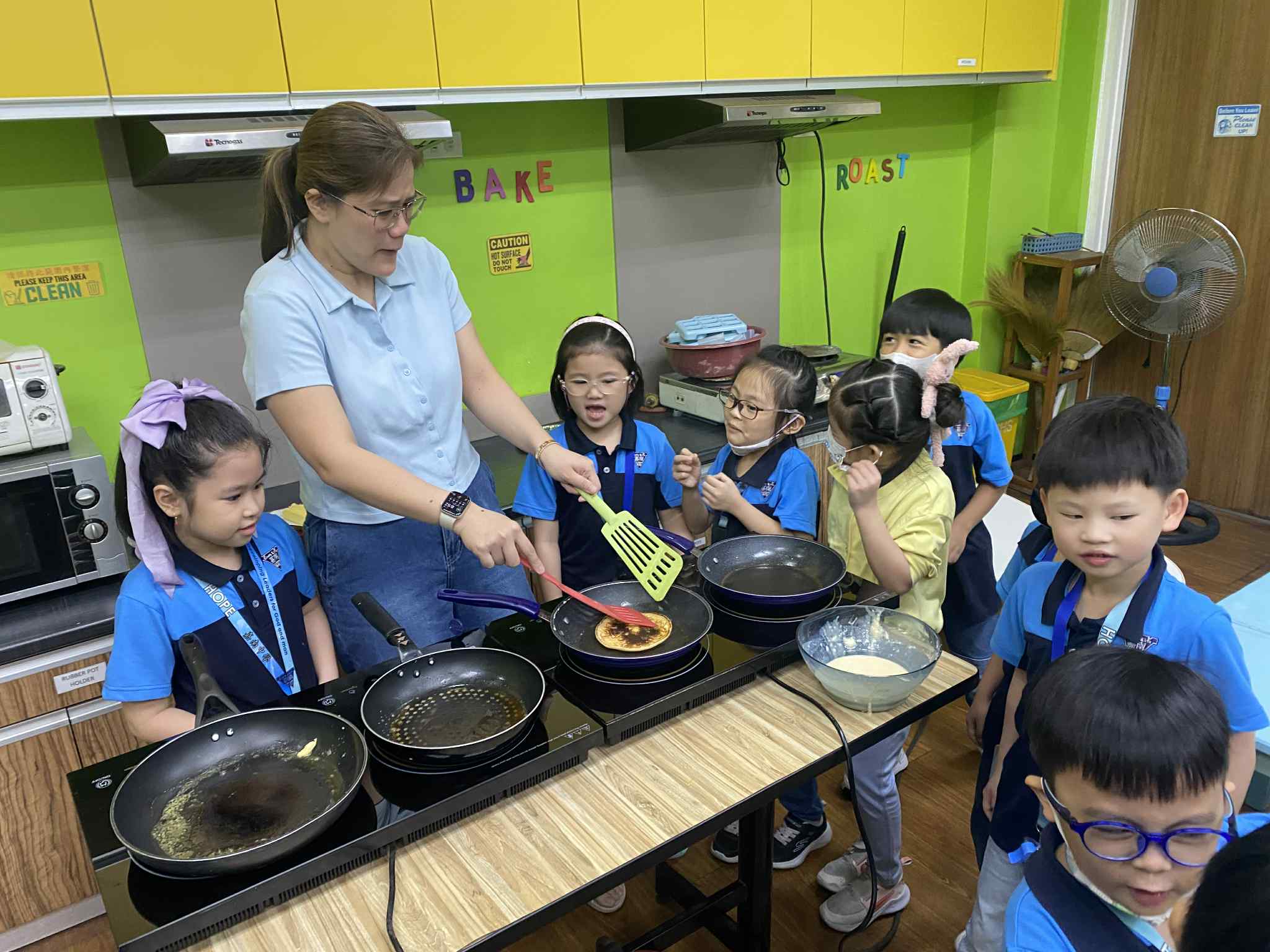
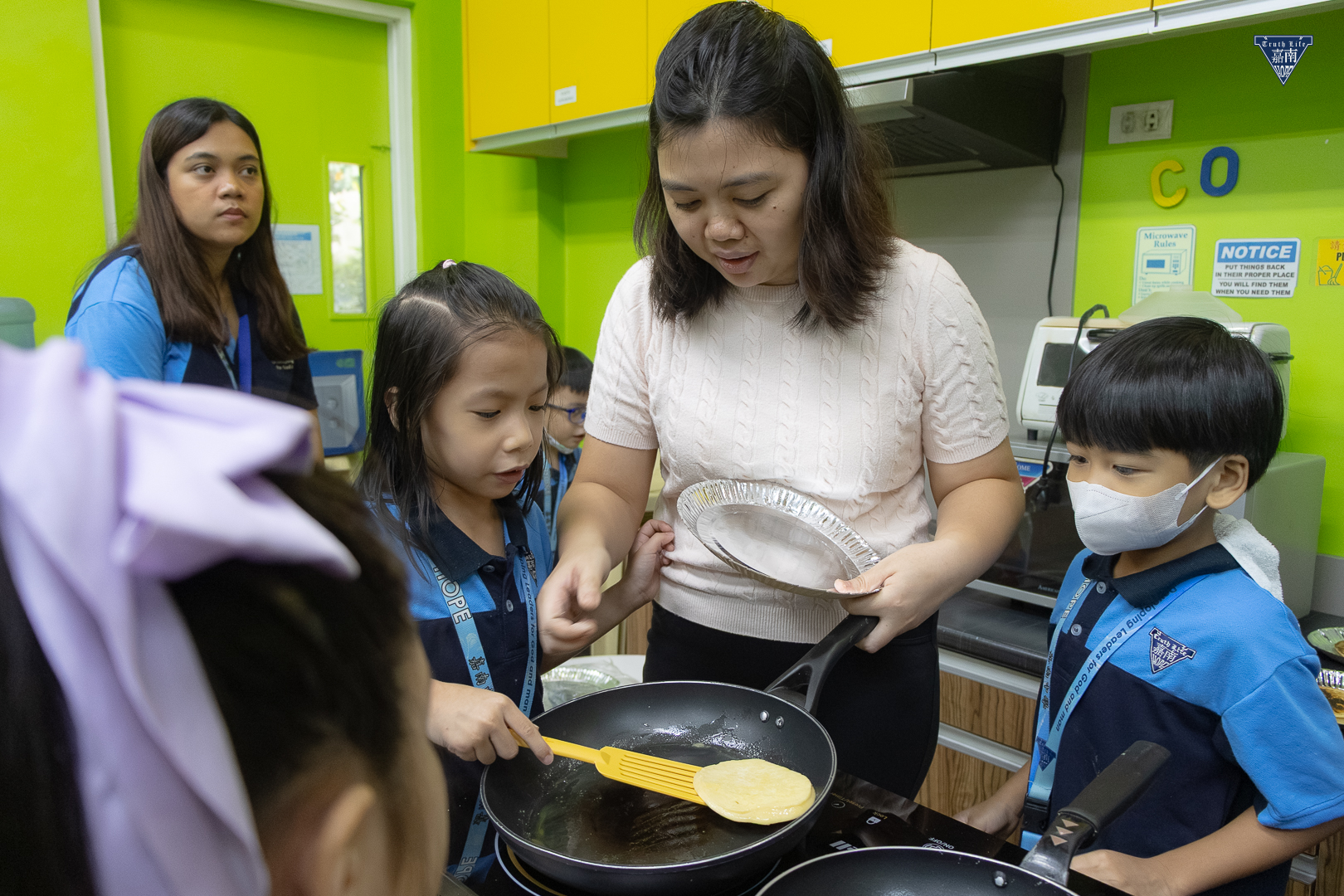
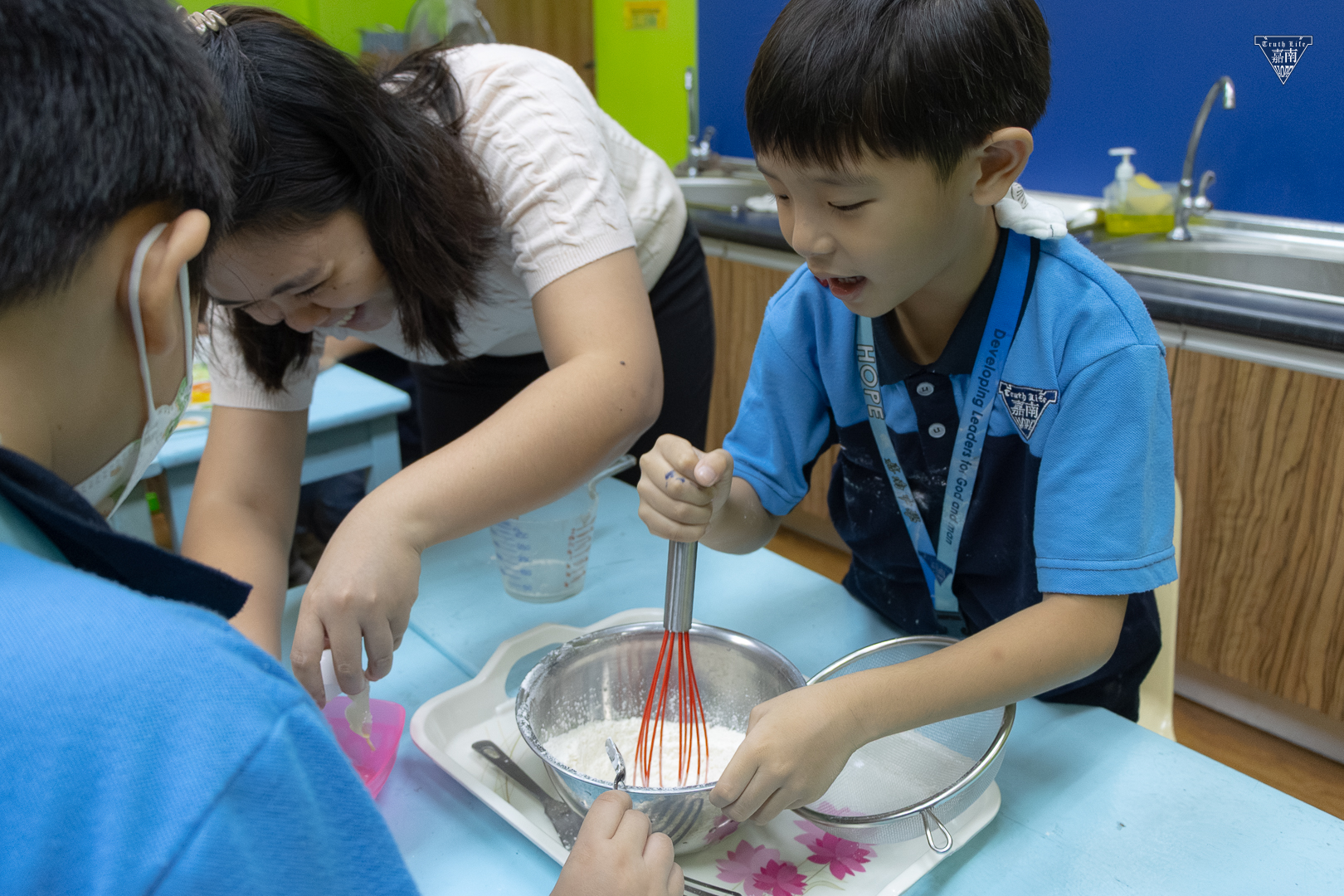
Teachers and volunteer parents demonstrating the steps in pancake-making
Pouring a Cup of Numeracy
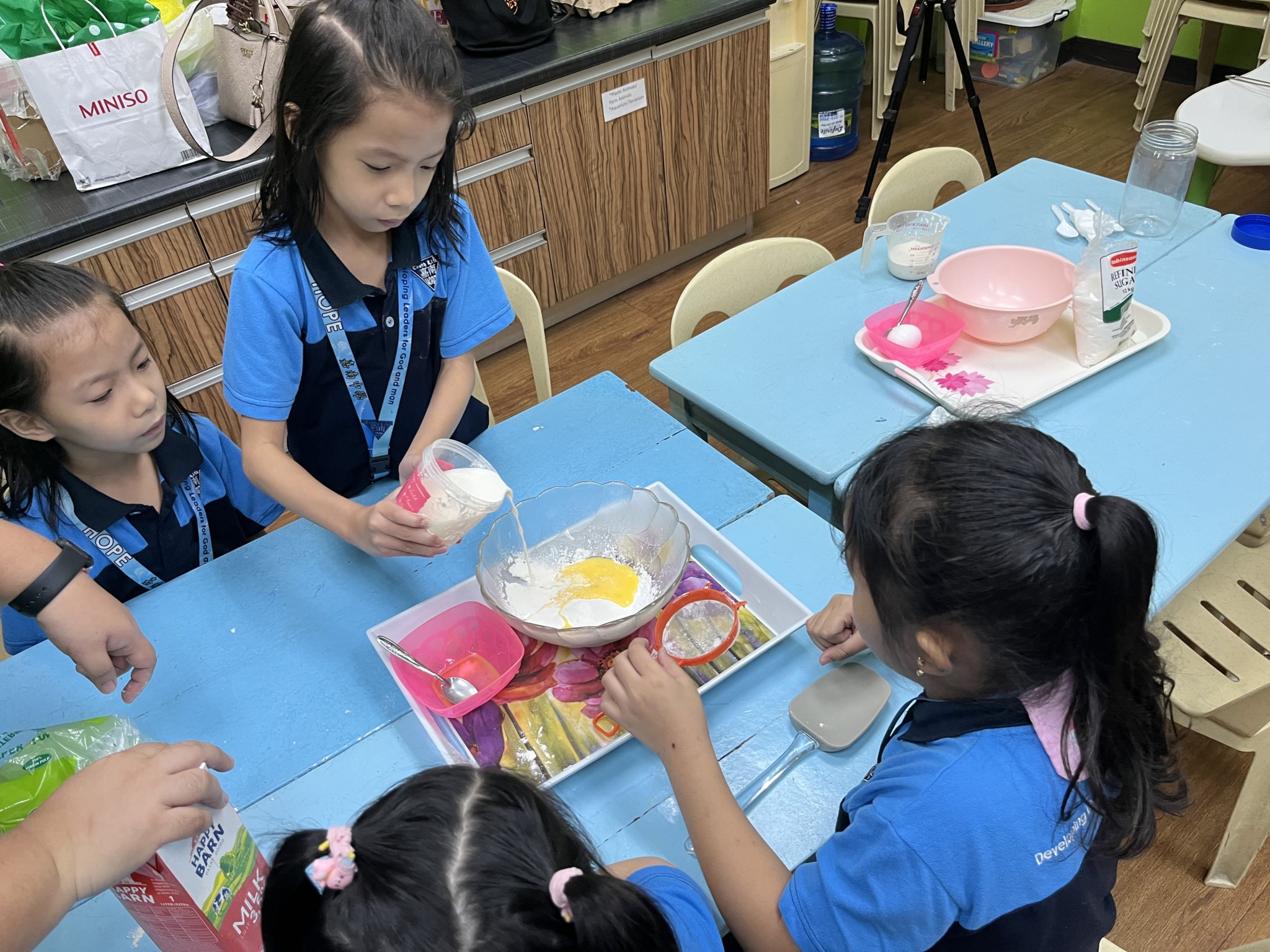
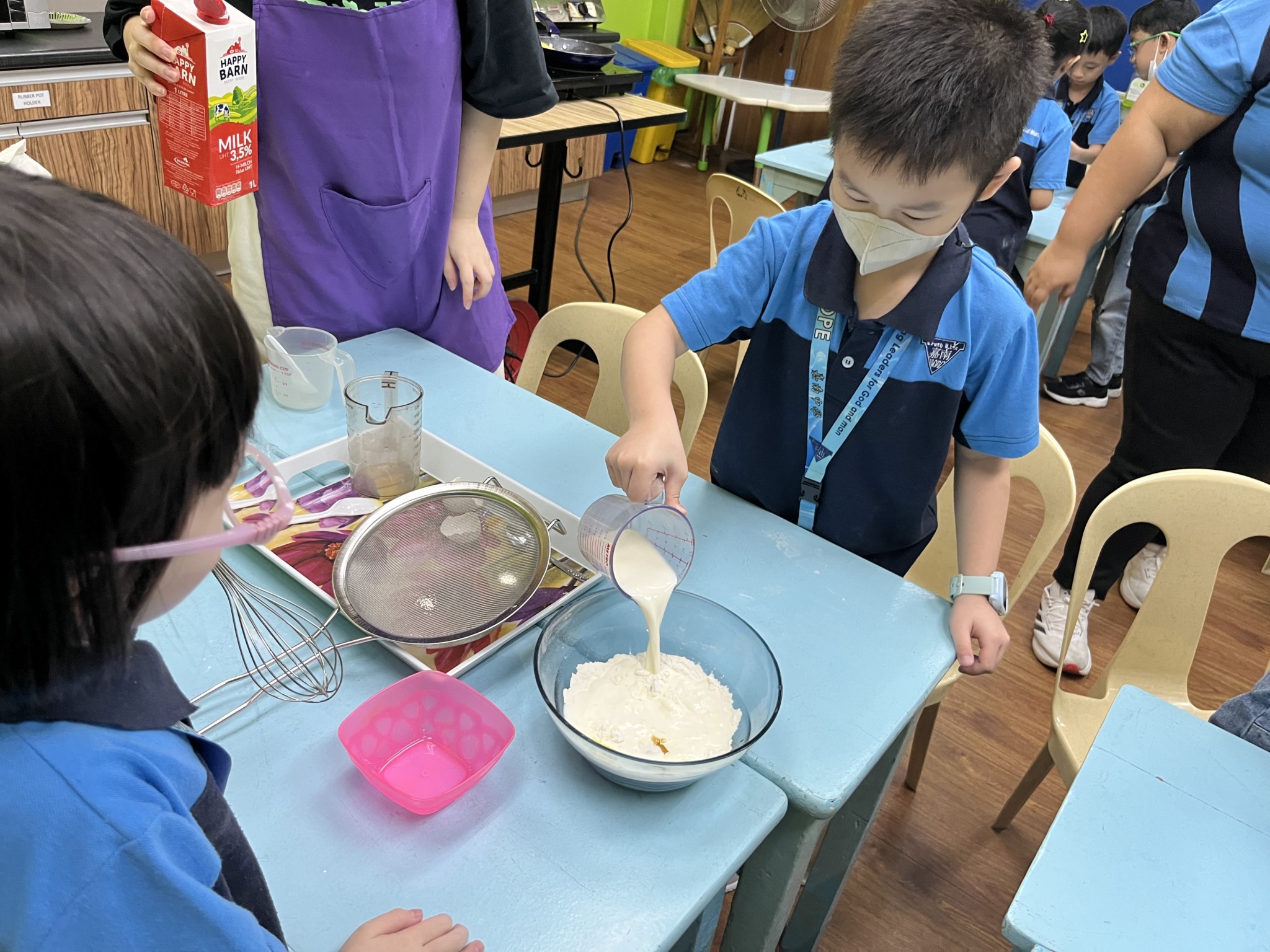
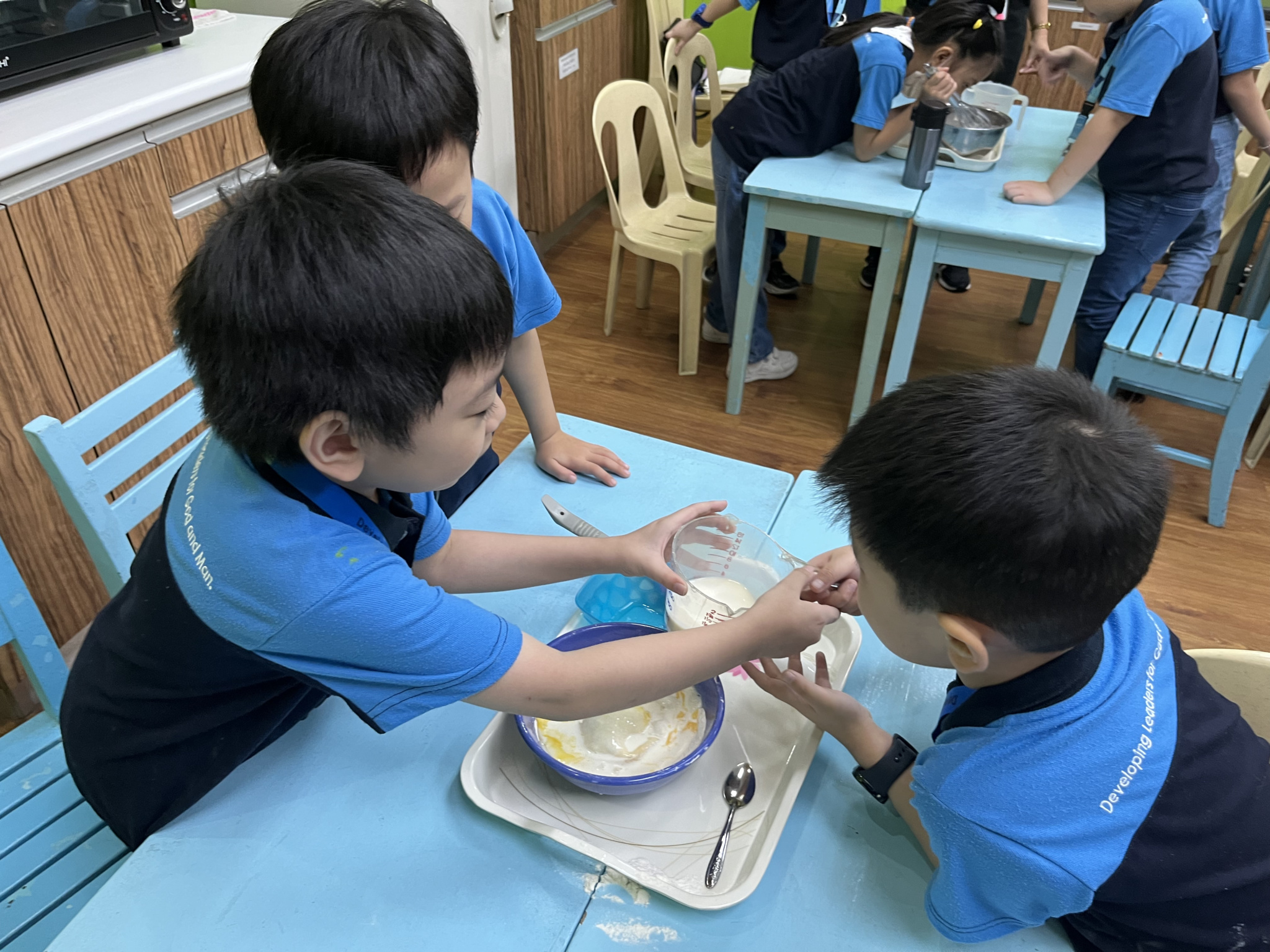
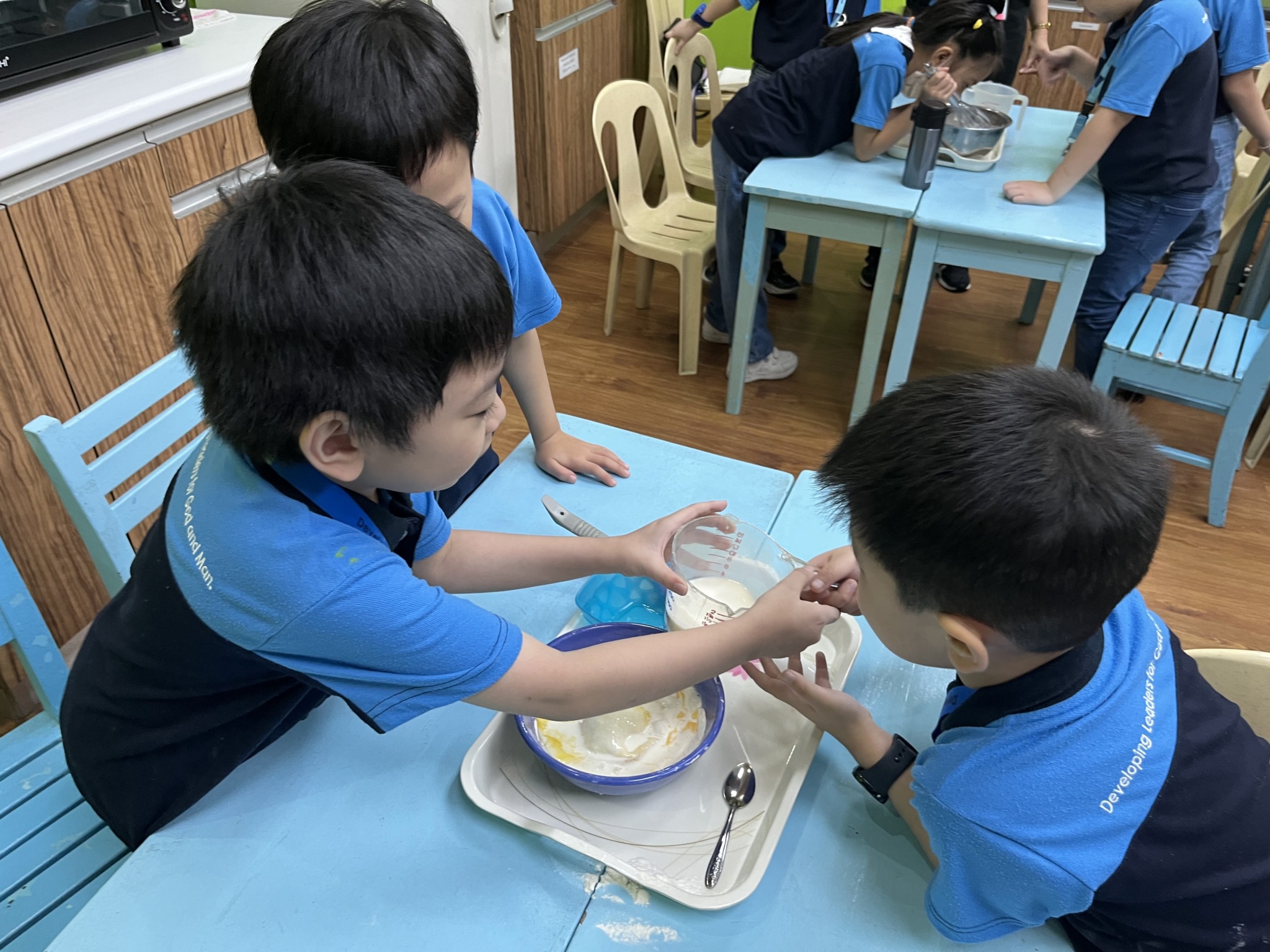
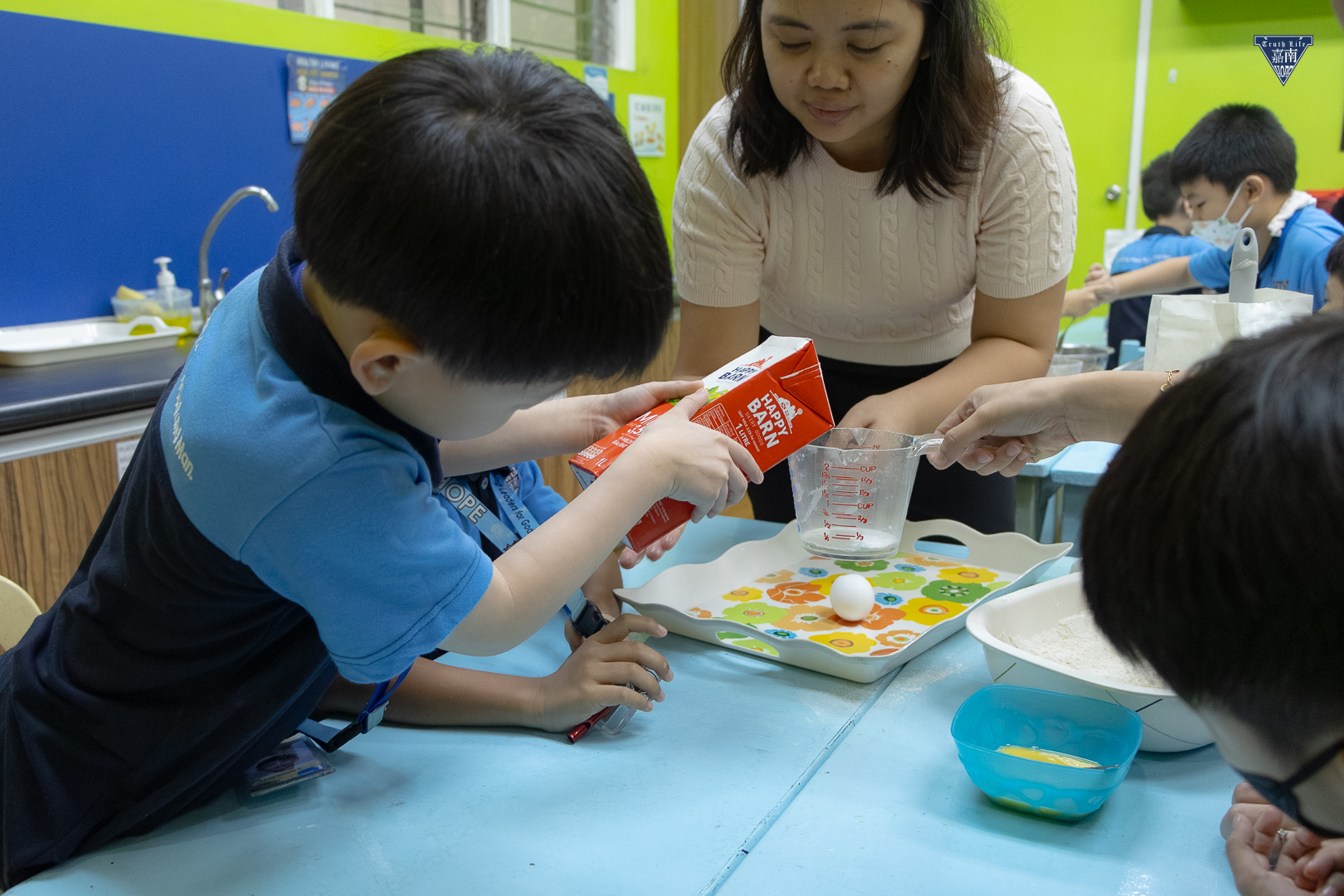
We can’t deny that cooking is mathematical. Every milliliter of milk poured into the grams of dry ingredients to make a pancake batter illustrates how measurement is essential in cooking. However, the role of numbers and mathematics in cooking does not end in measuring, counting, and applying arithmetic. It can also be found in the order of steps needed to make a successful culinary creation. The pancake-making was a practical way for Grade 1 students to learn about ordinal numbers. They identified the first, second, third, and nth steps in making pancakes.
Cracking Fine Motor Skills
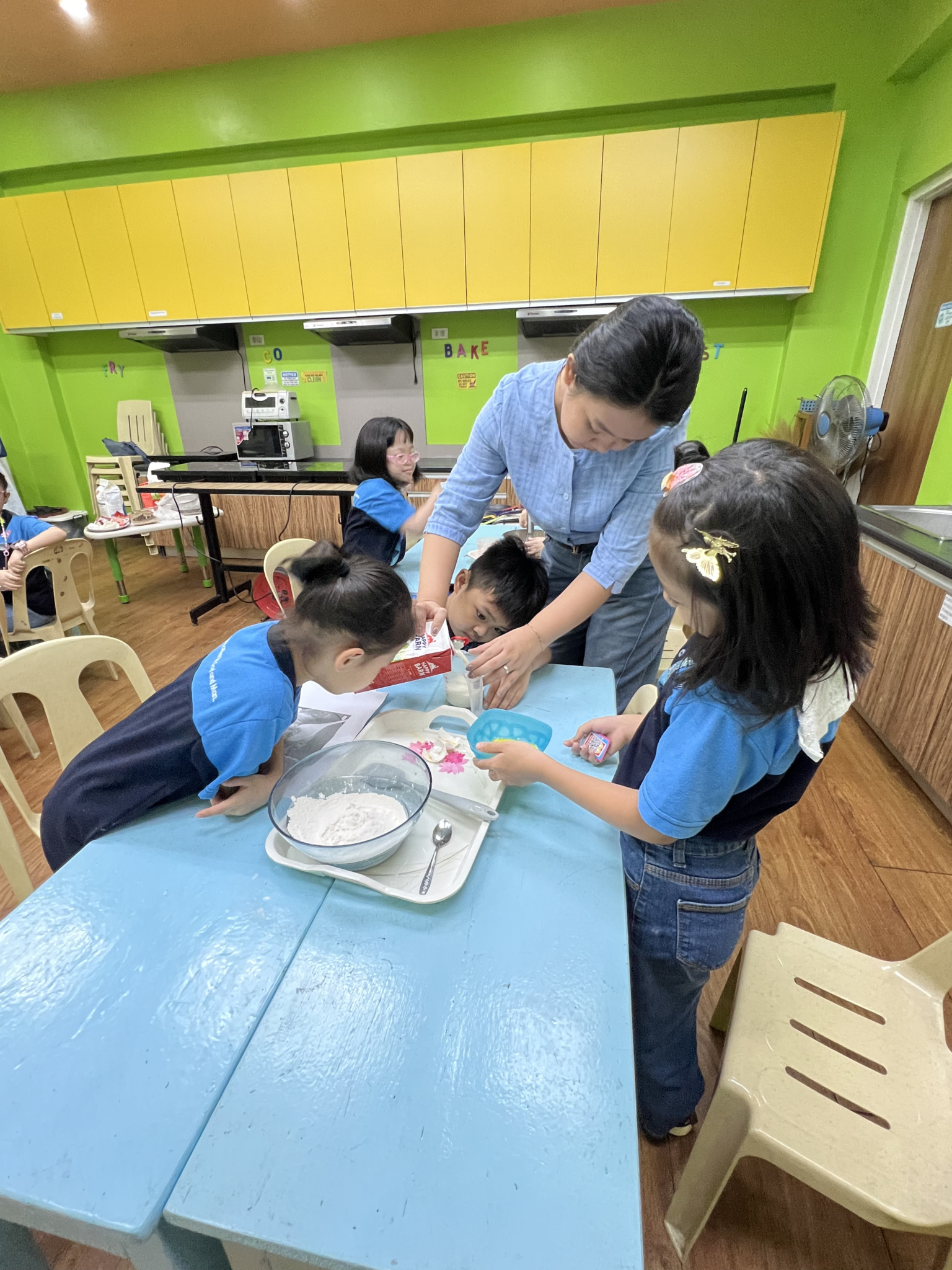
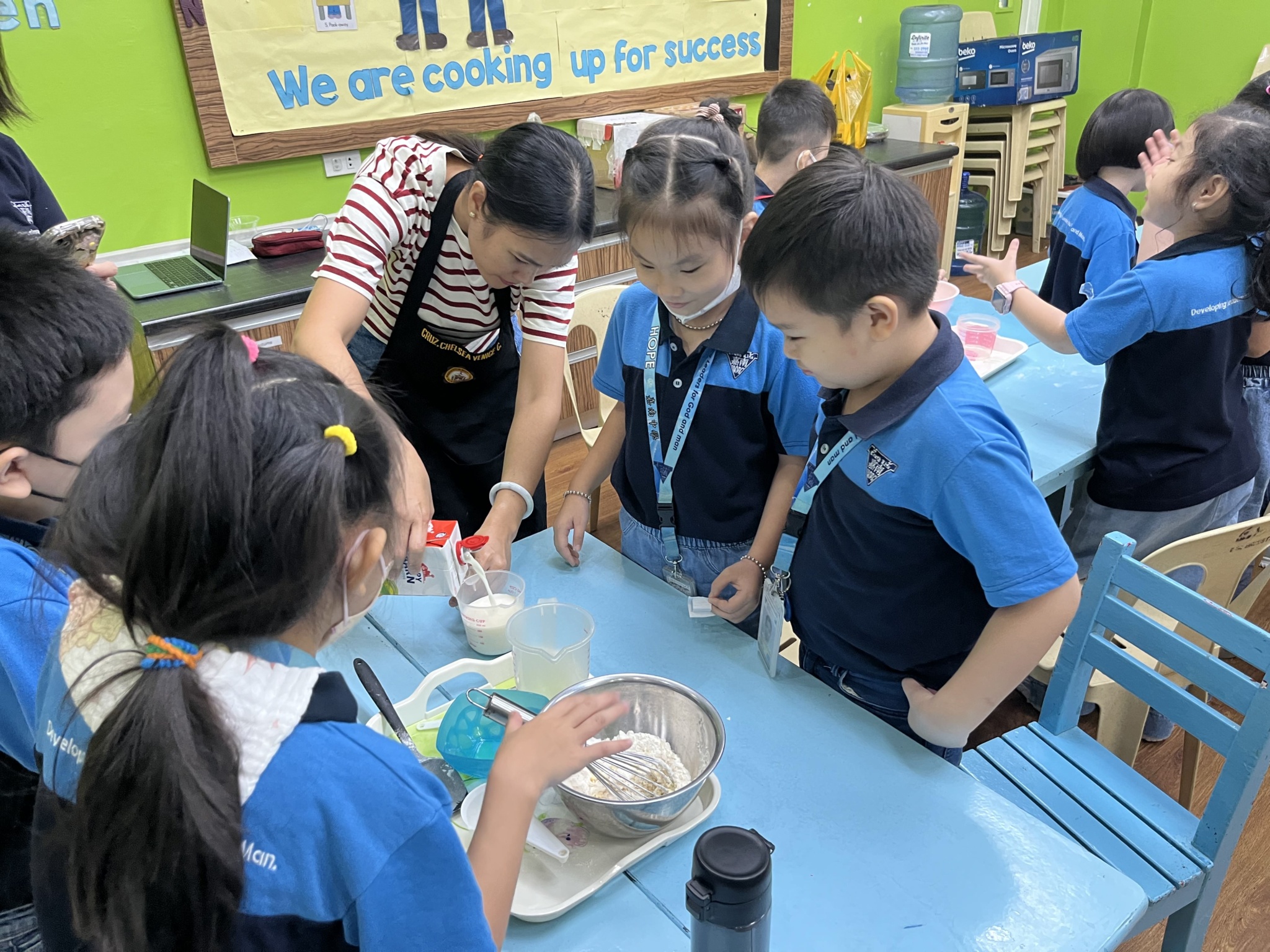
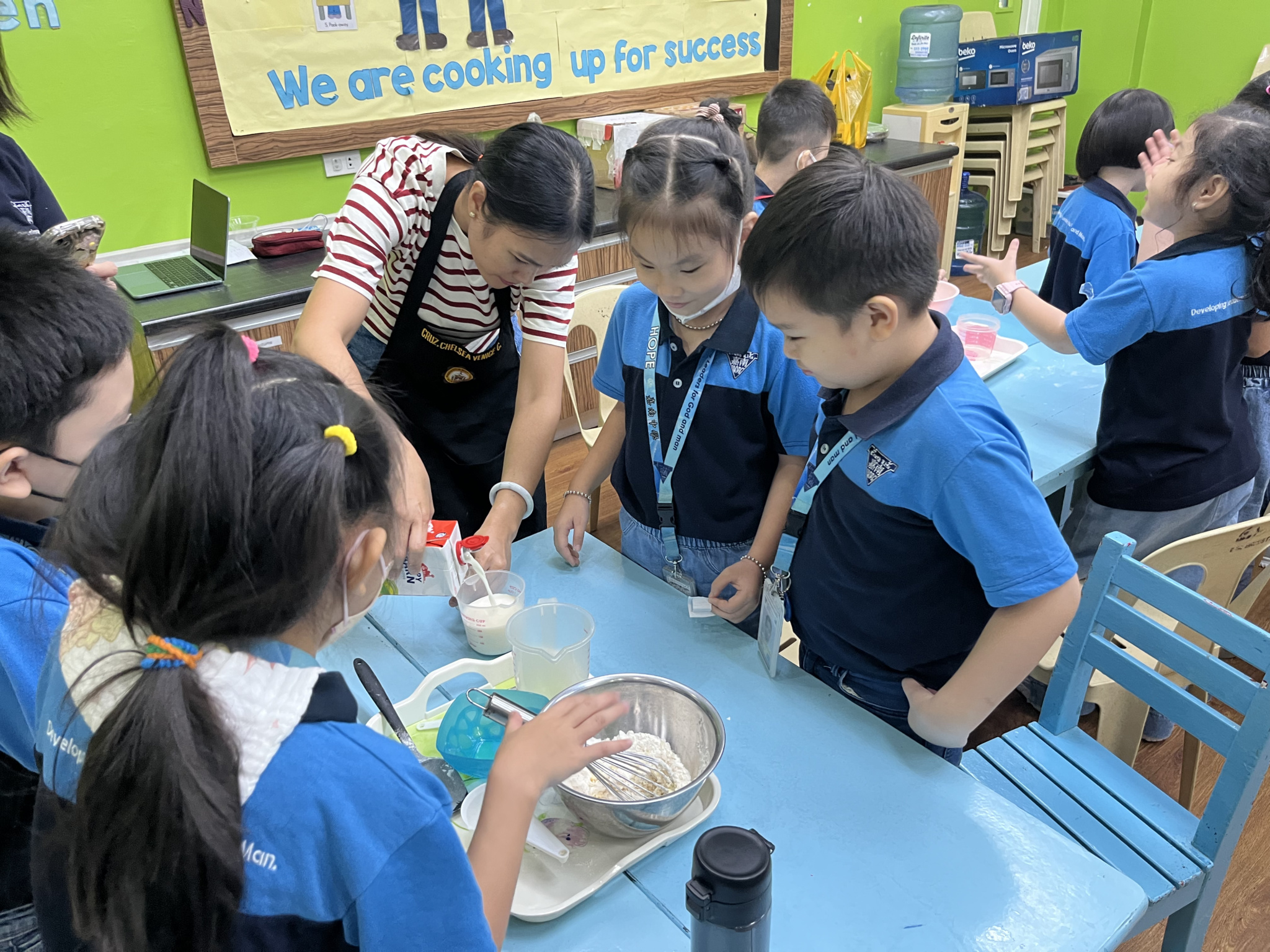
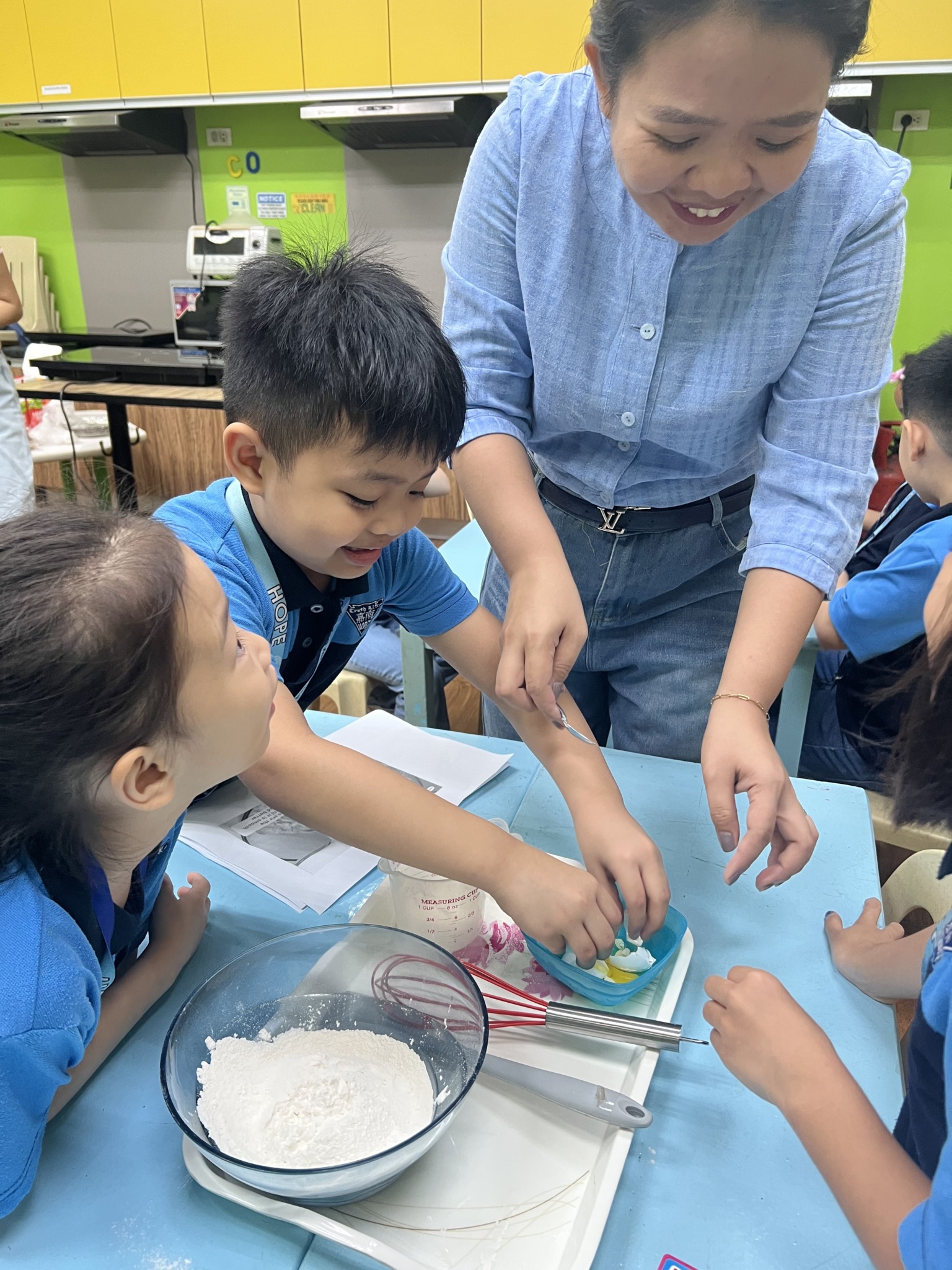
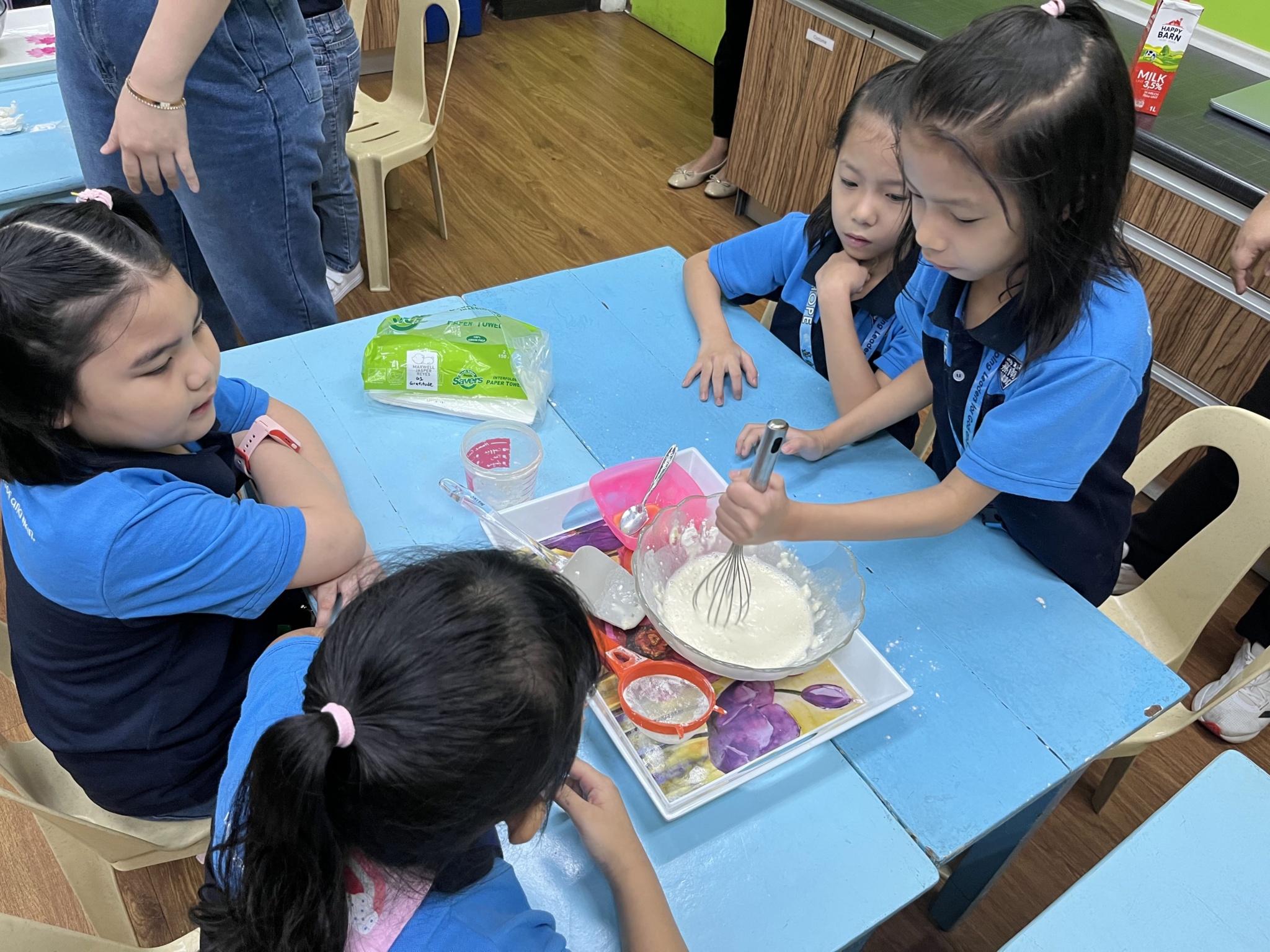
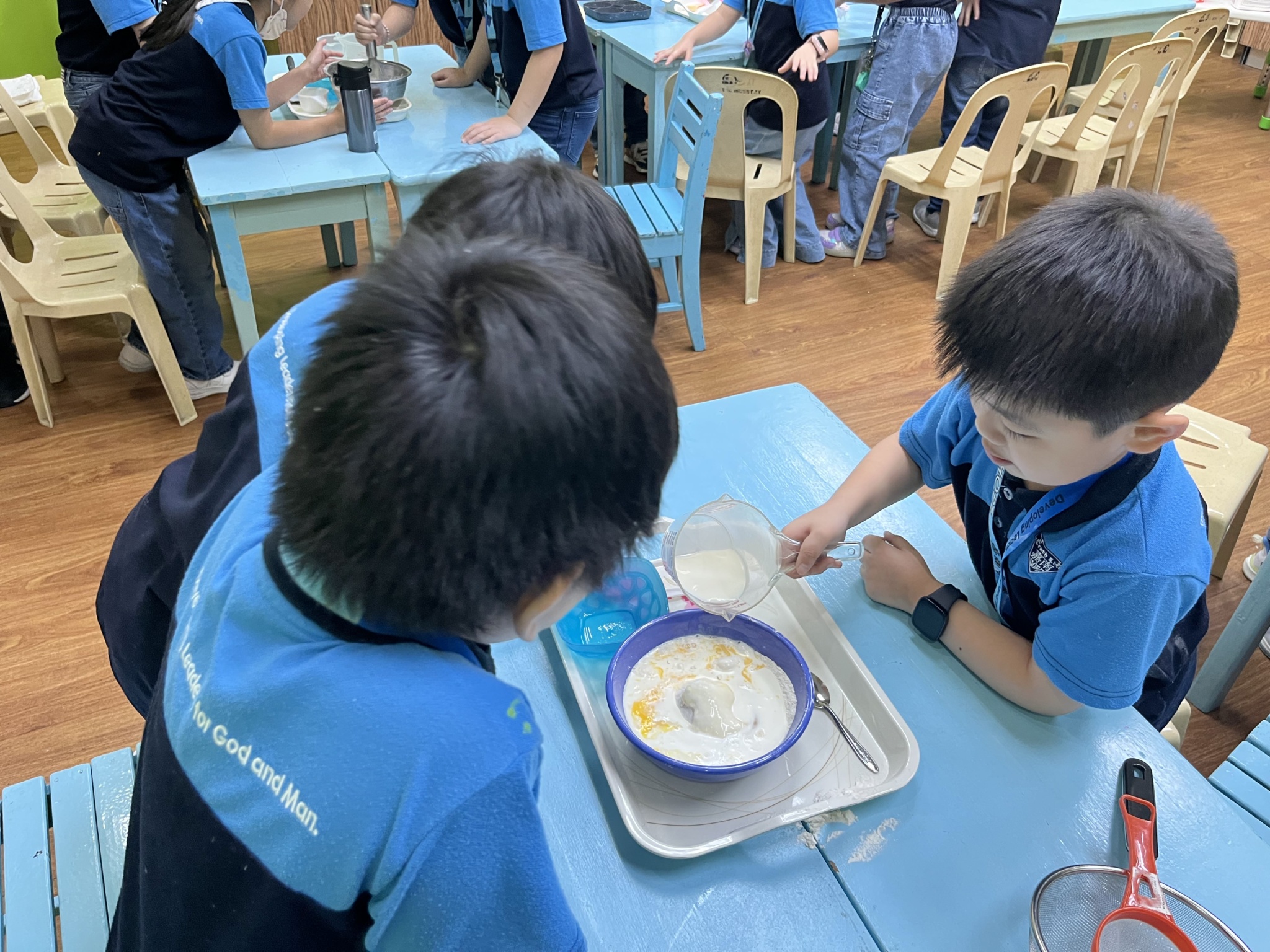
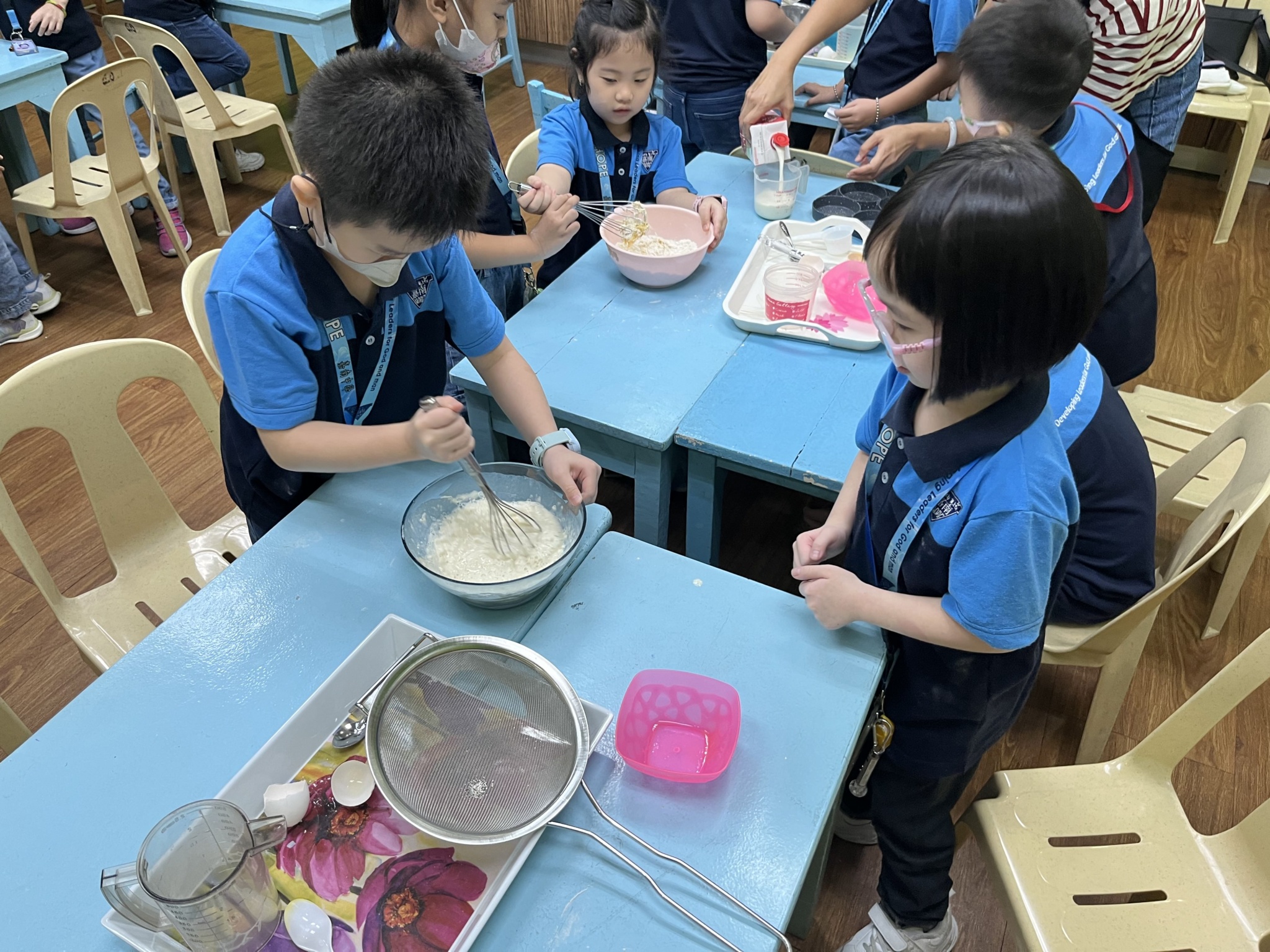
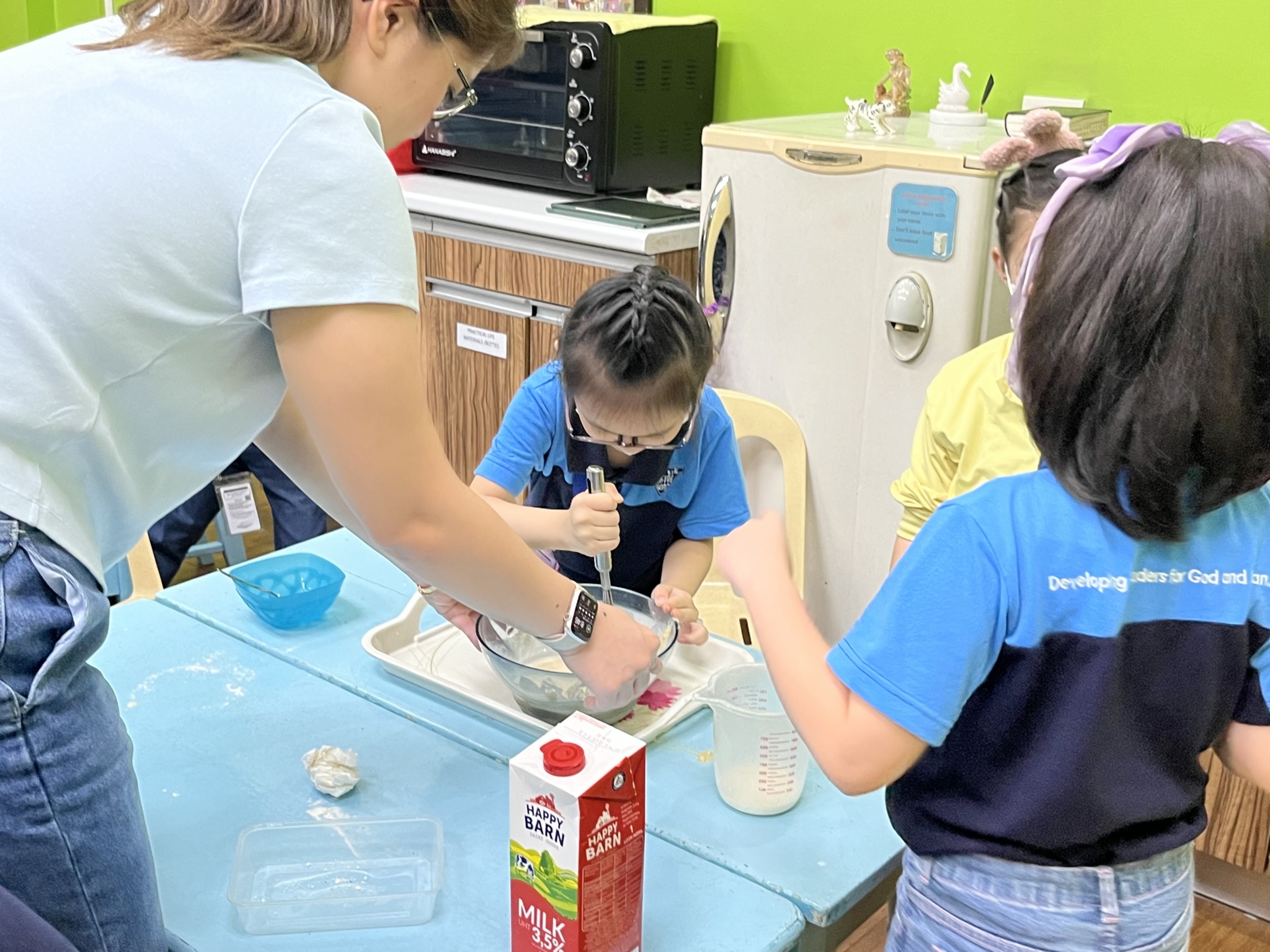
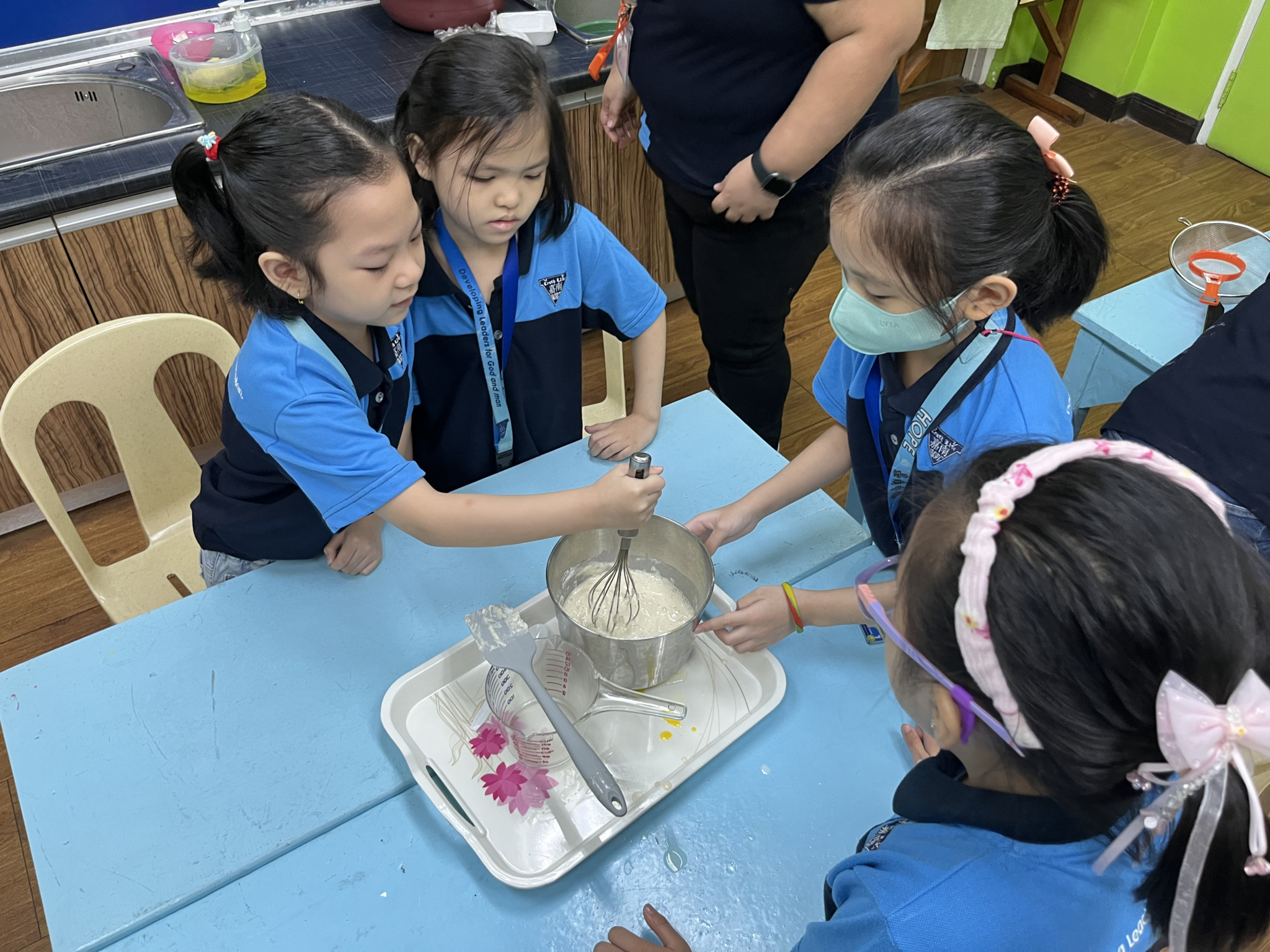
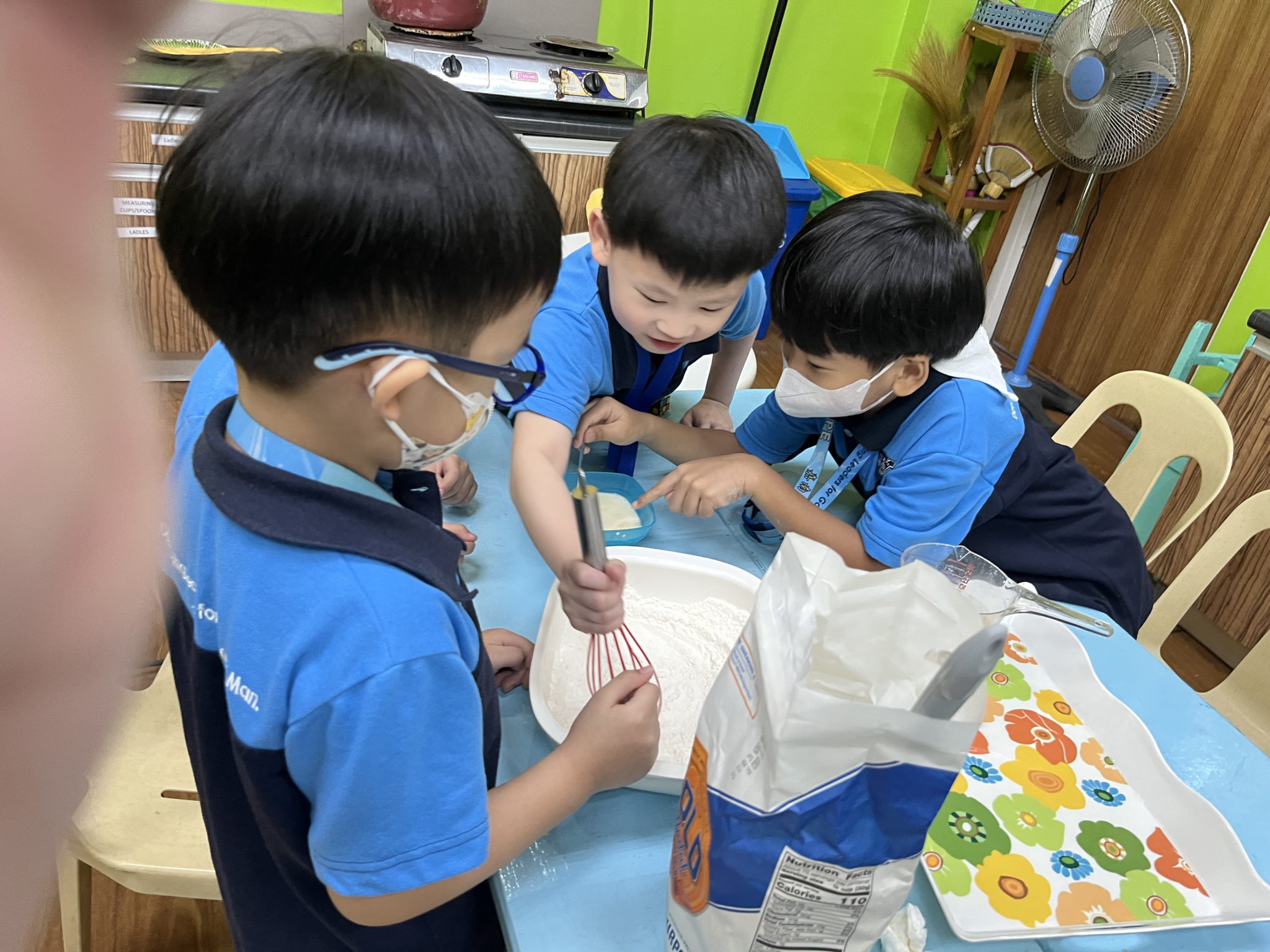
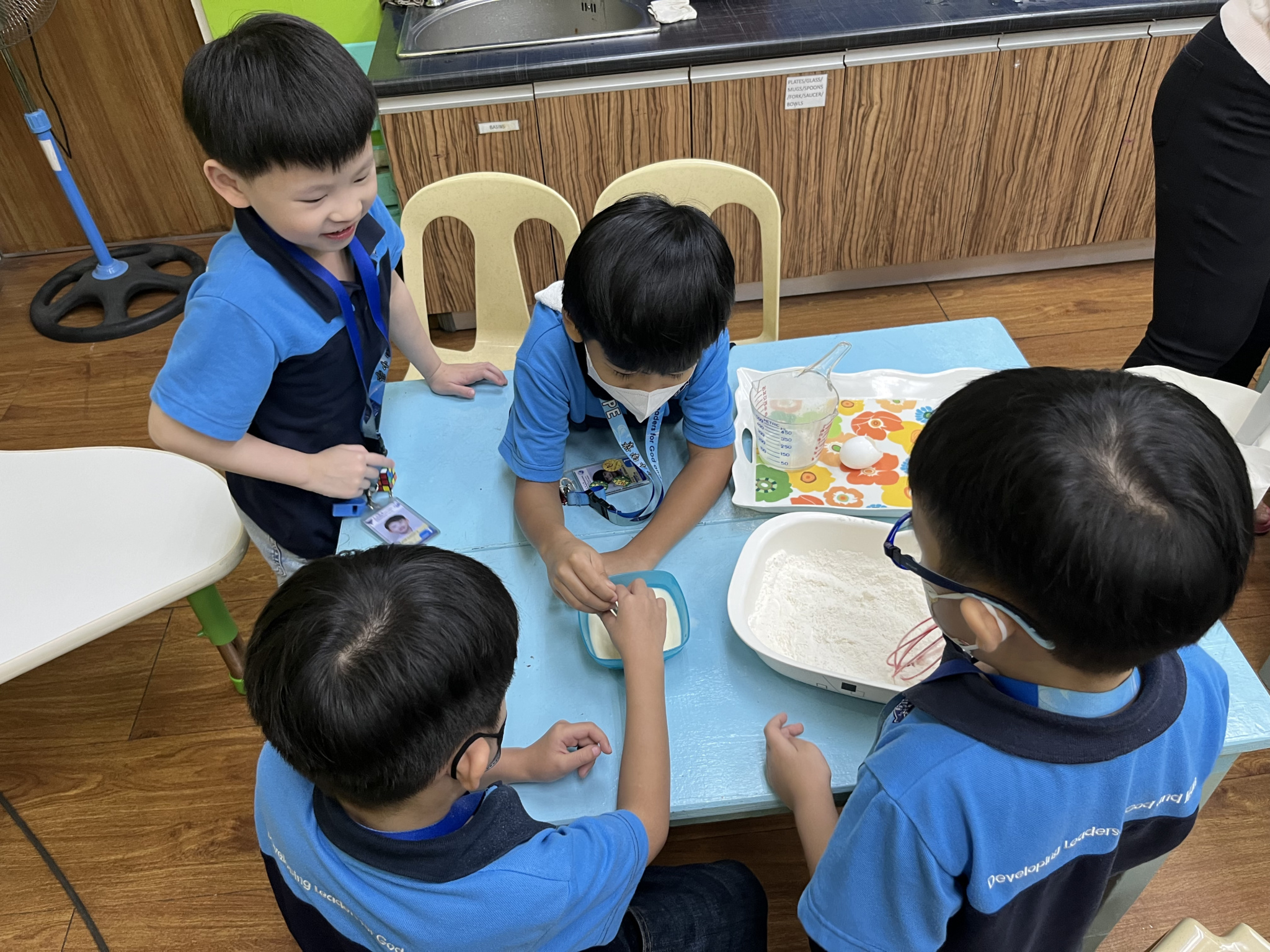
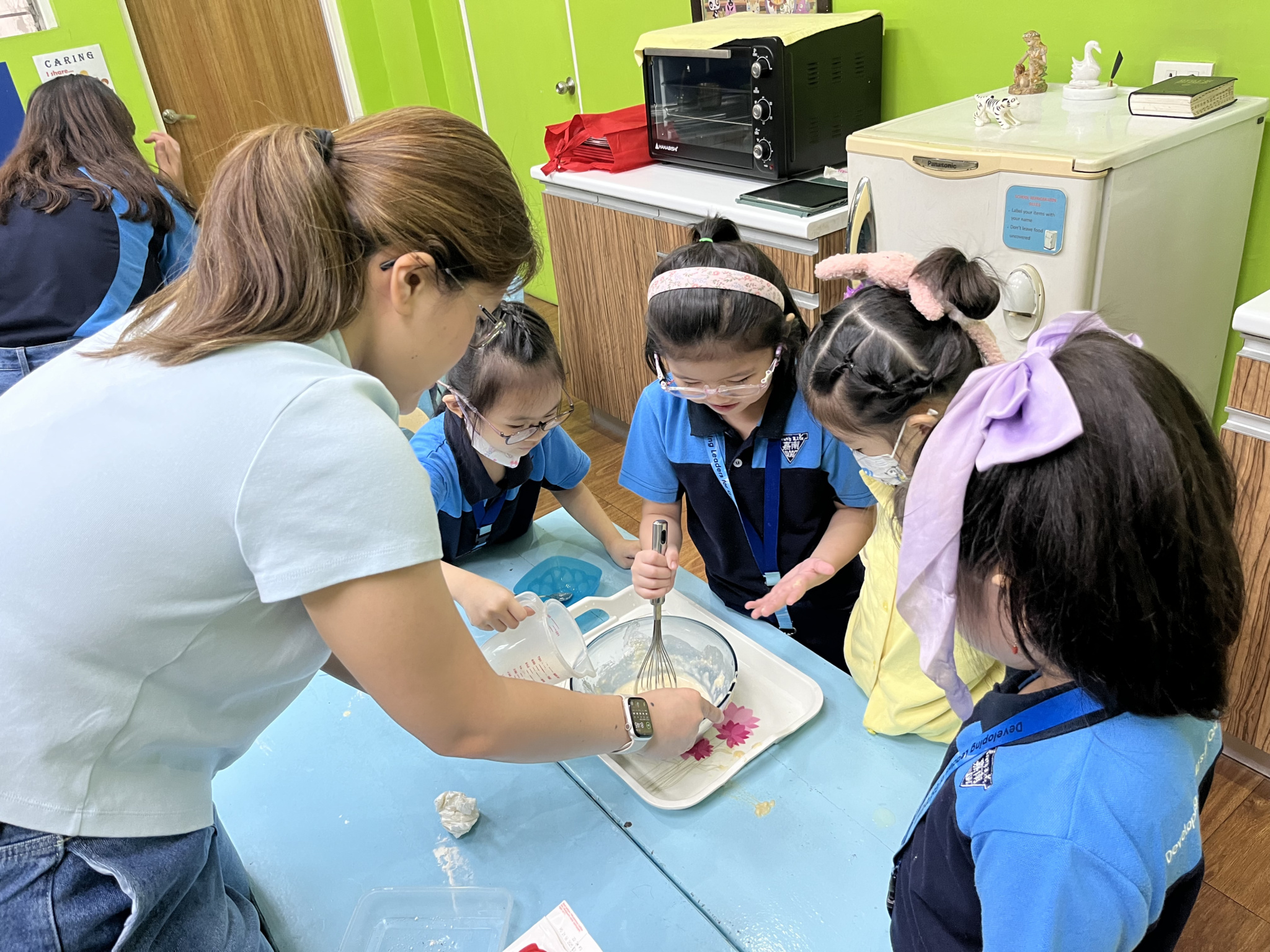
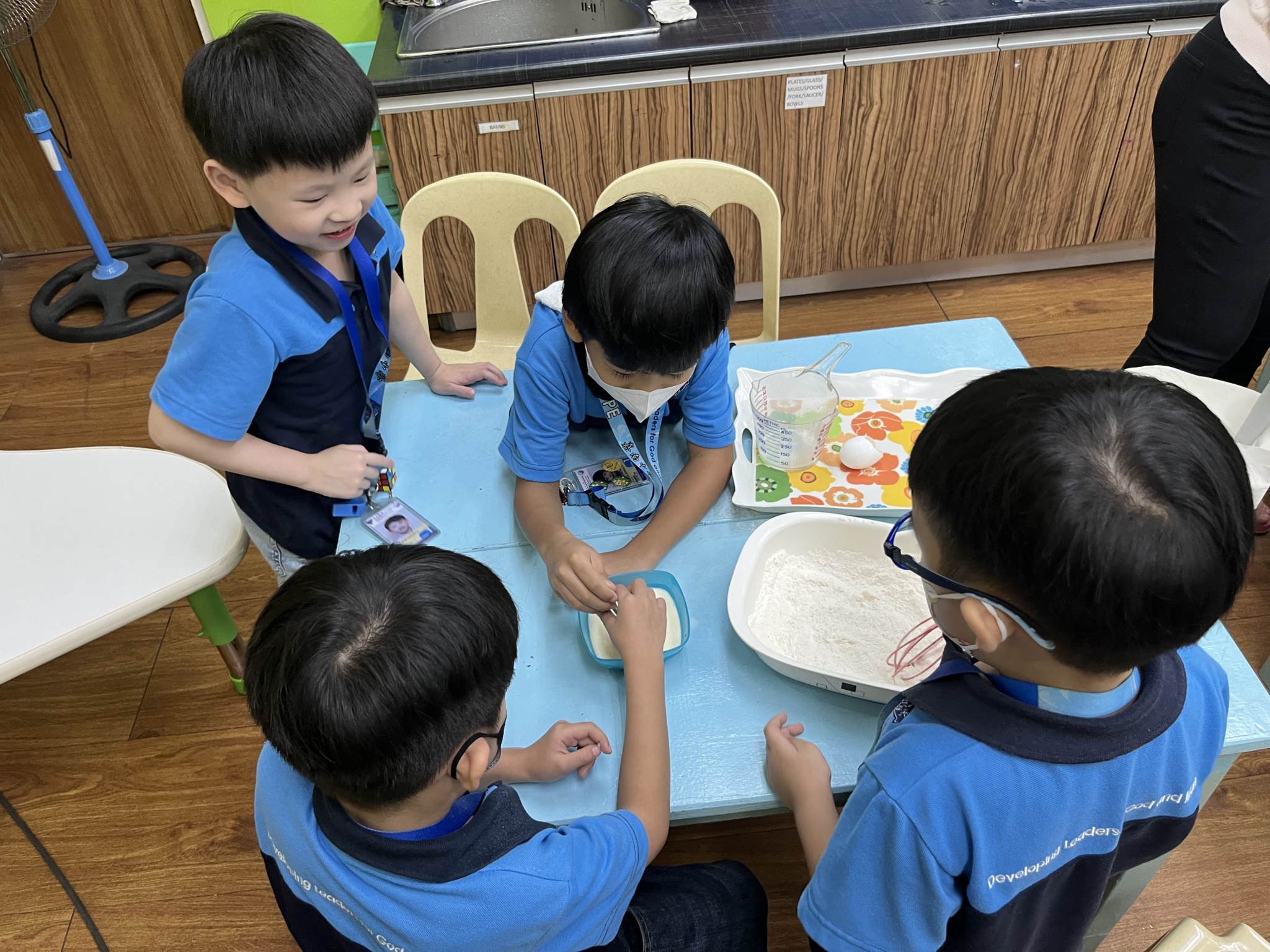
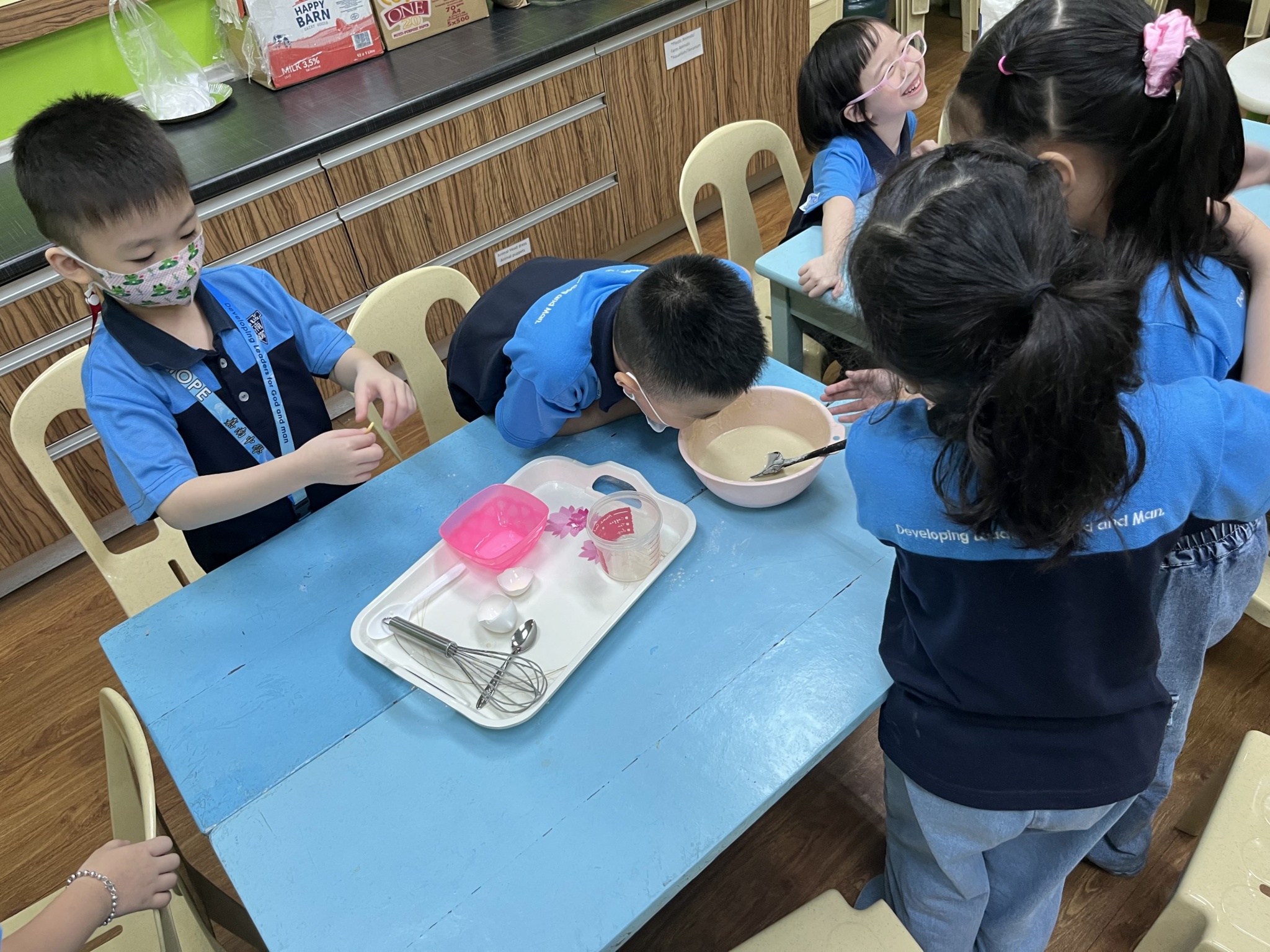
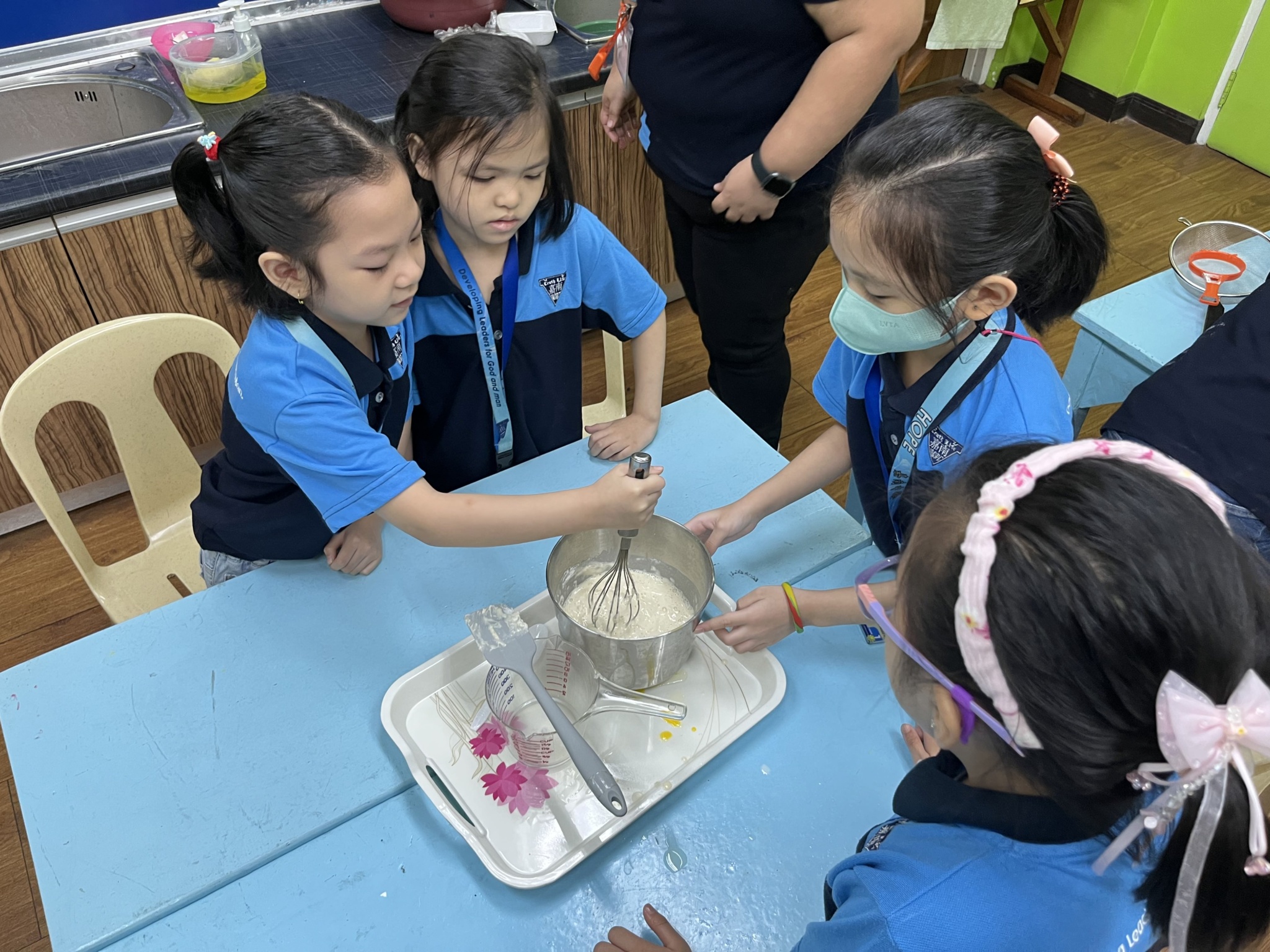
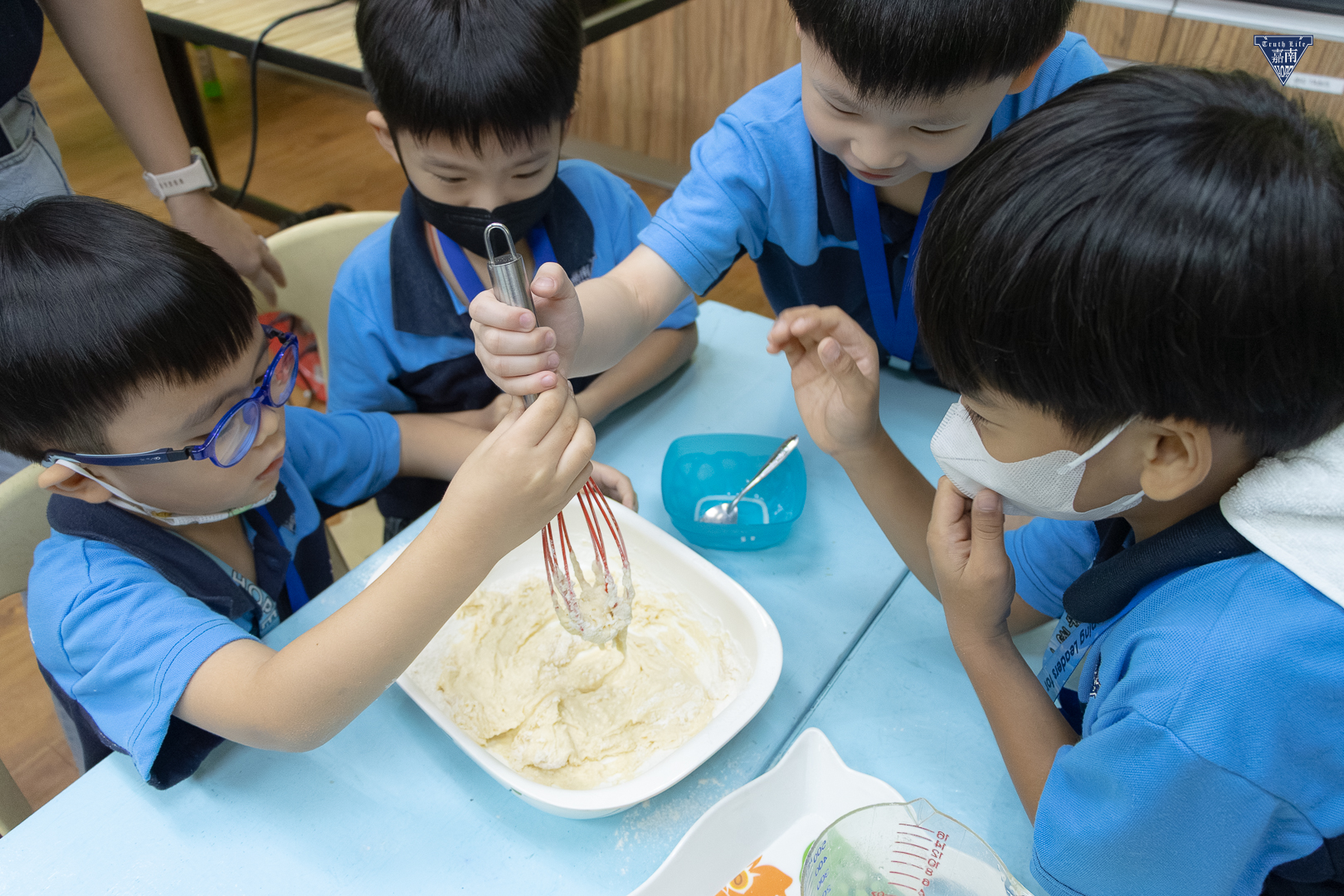
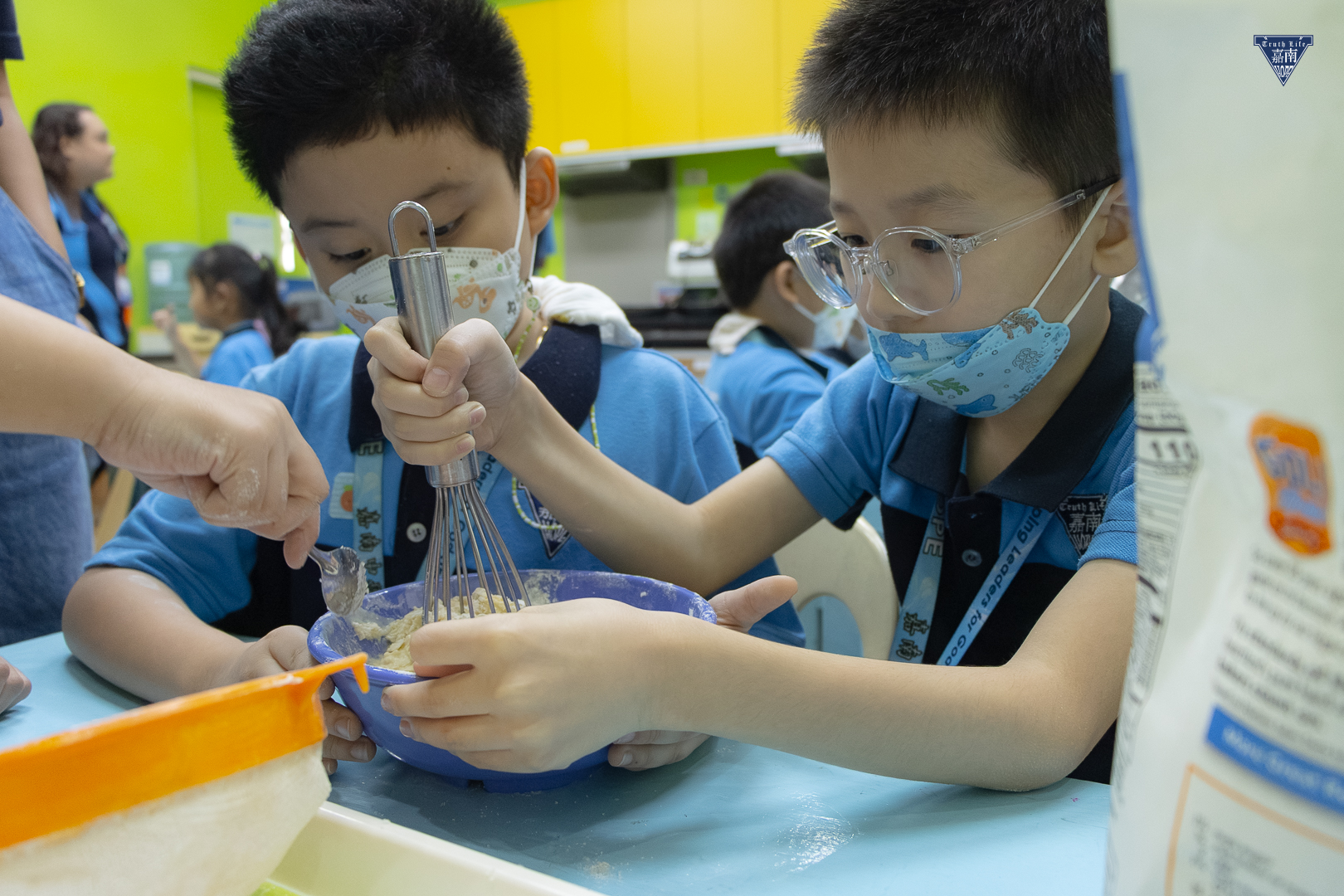
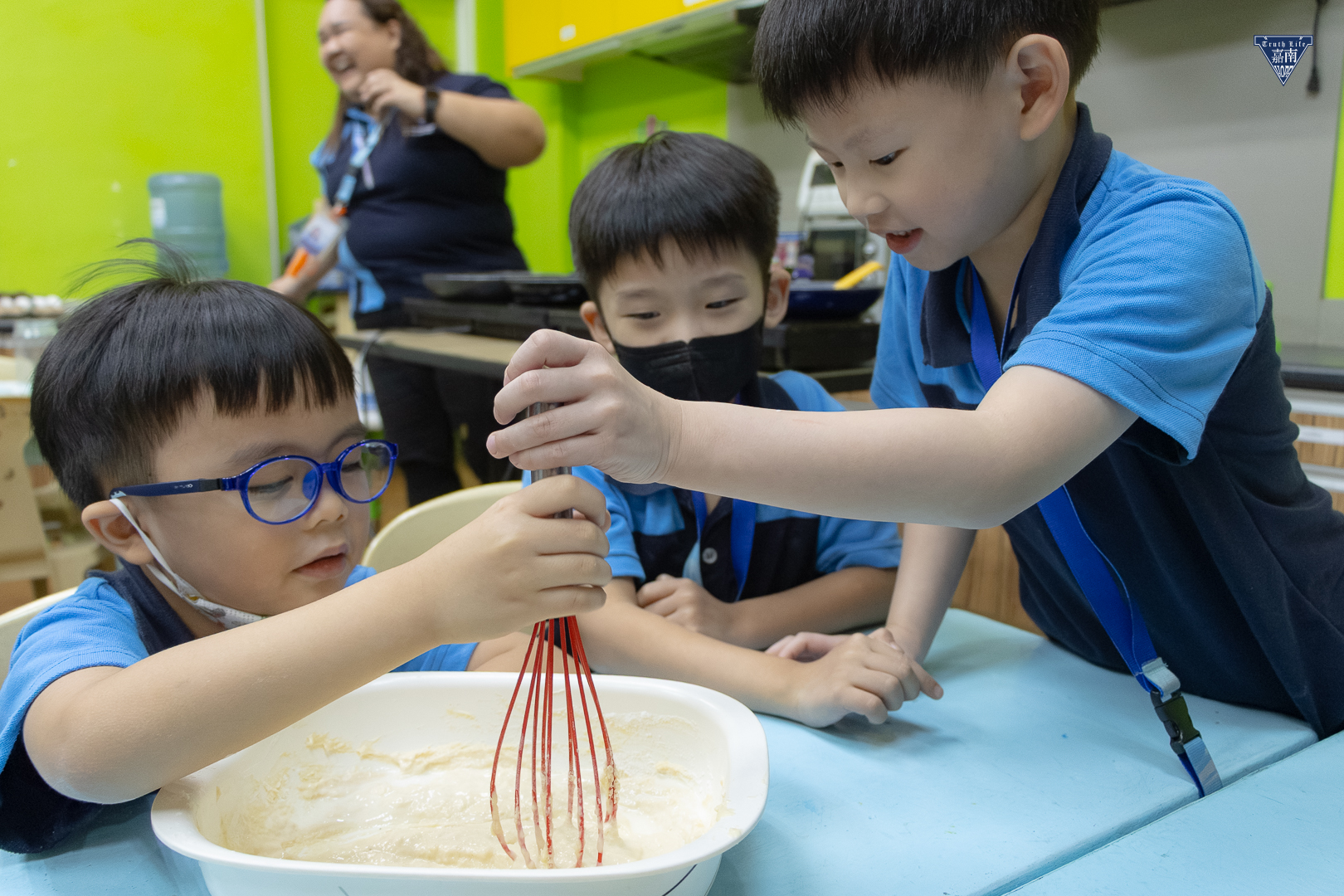
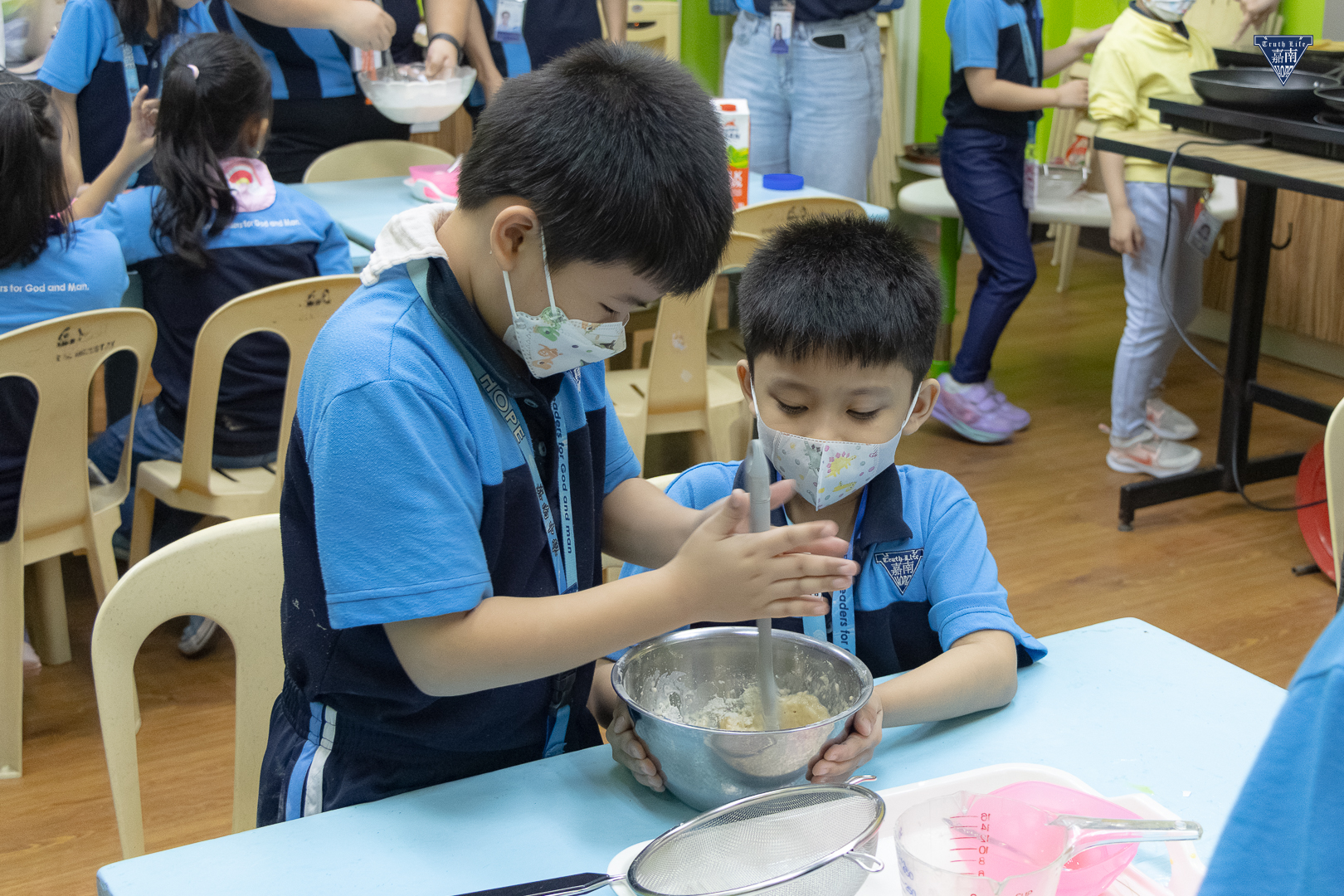
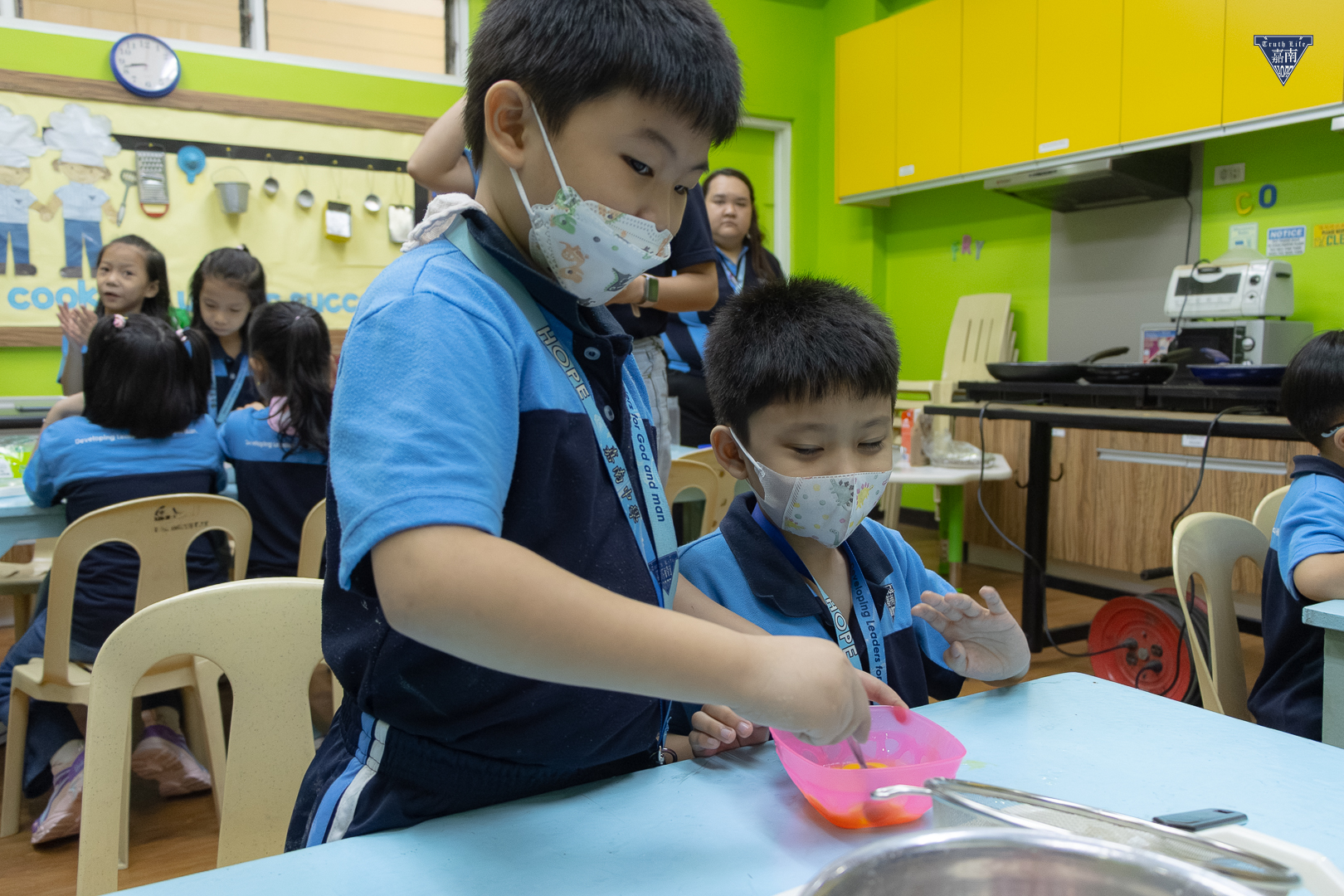
Cooking is a hands-on activity, and naturally, it is not easy for the tiny hands of Grade 1 pupils. It was seen in the way they cracked the eggs—pieces of eggshells ended up sneaking into pancake batter. Batter splattered across the table as they vigorously whisked and mixed the wet ingredients. It was truly messy, but it was a good exercise of their fine motor skills. Through cracking eggs and whisking them, through stirring the batter and pouring it into bowls, the children practiced their dexterity.
Grade 1 students preparing the pancake batter
Stirring Emotions and Opinions
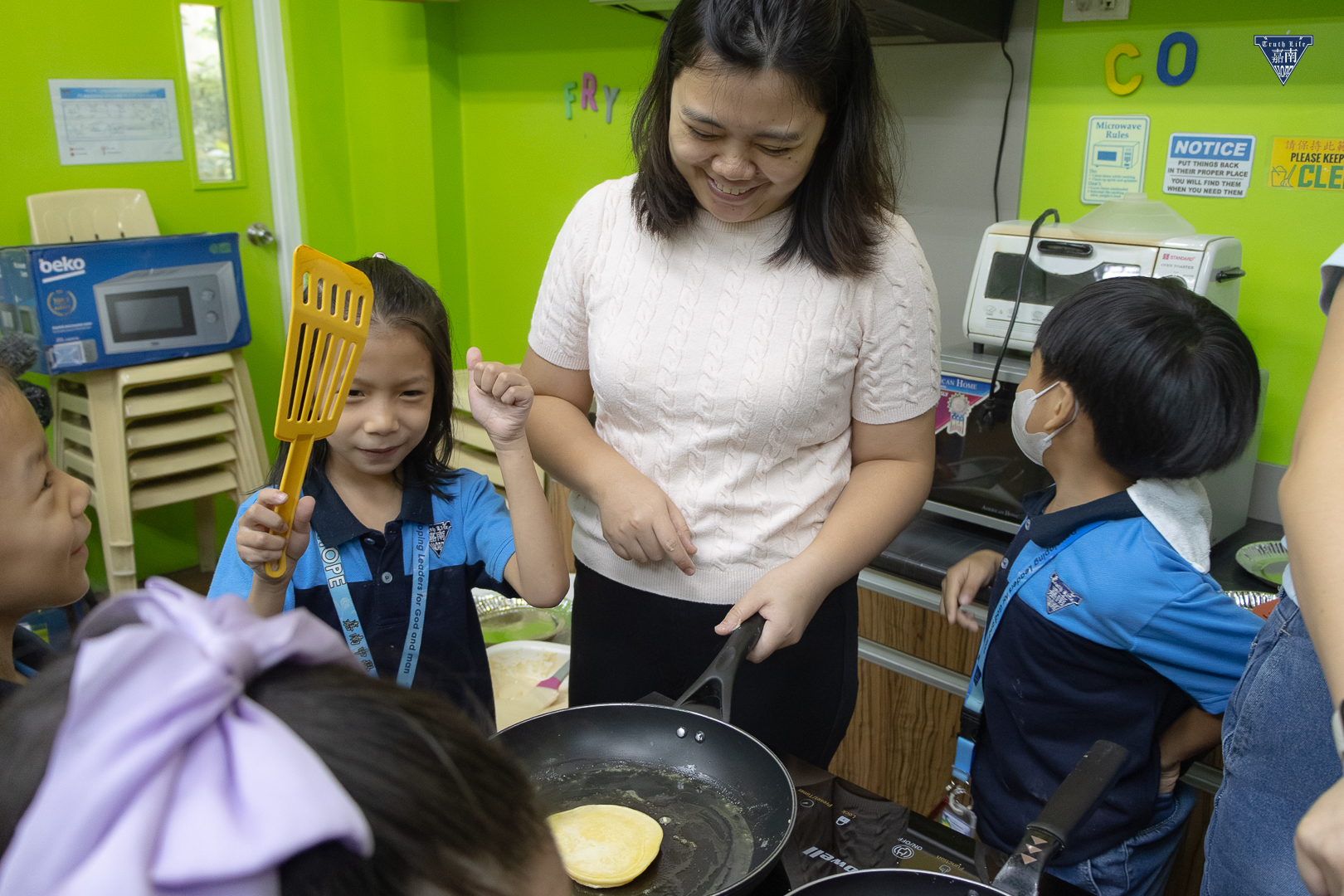
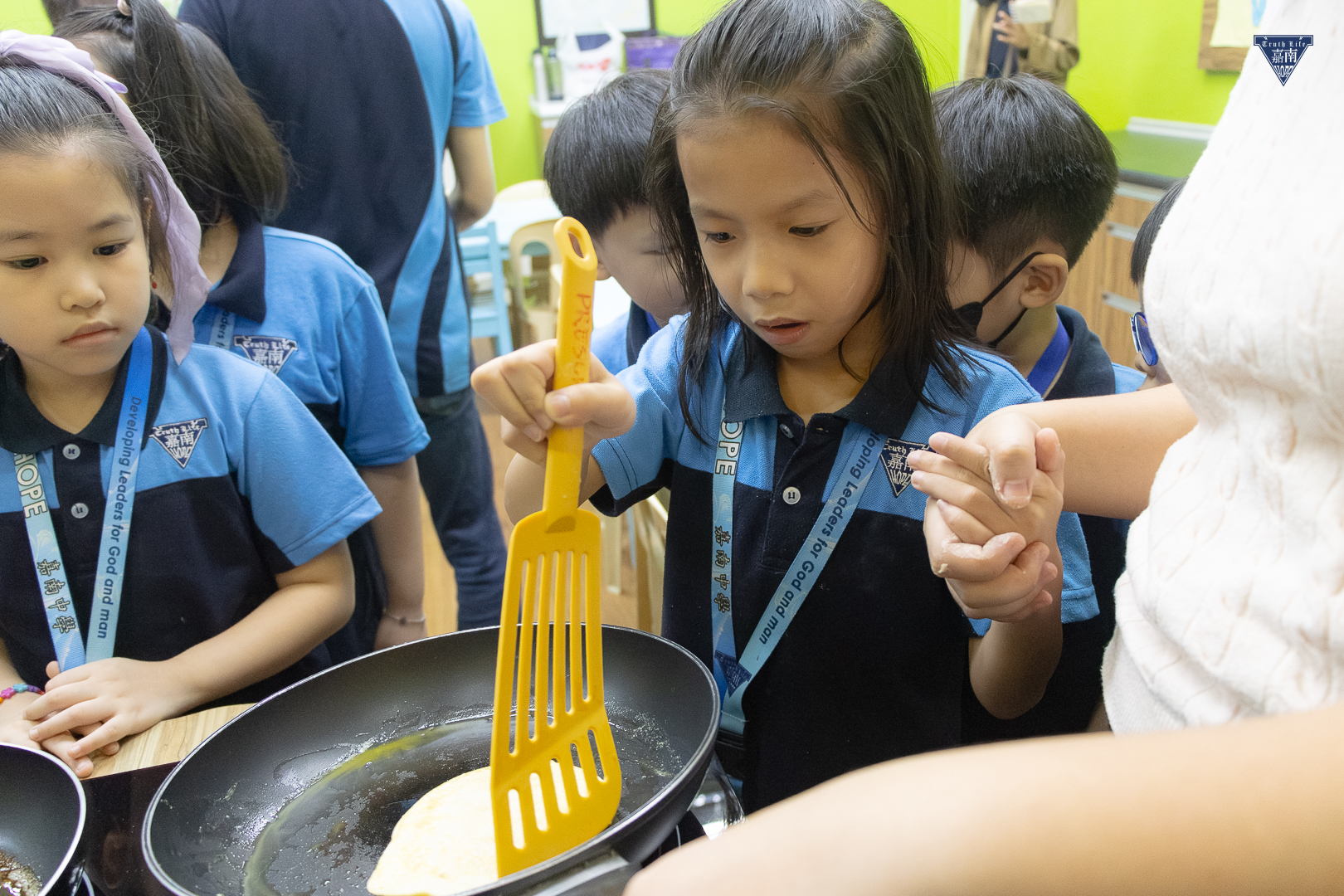
While cooked food, per se, can communicate one’s ideas and feelings, cooking serves as a medium that cultivates communication. Aside from the positive emotions seen on the students’ faces, they were seen taking turns in doing the steps in making their pancakes. They were also correcting each other when the procedures were not done correctly. When it was time to cook the pancakes on the stove, many students openly voiced out their preferred sizes of the pancakes. Communicating strategies like these are important for life, but thankfully, it can be taught early through practical activities like cooking.
Tasting Shared Experiences
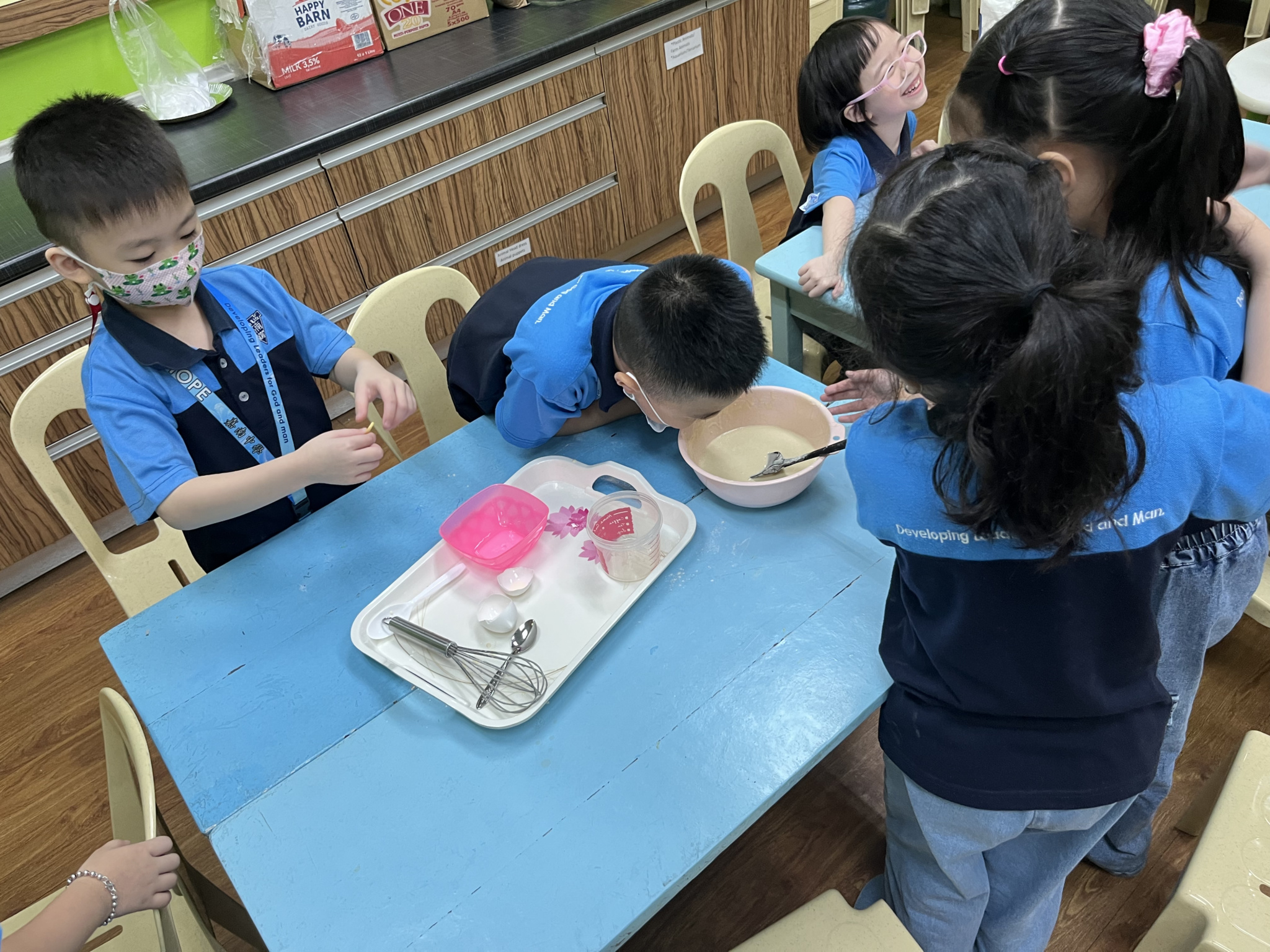
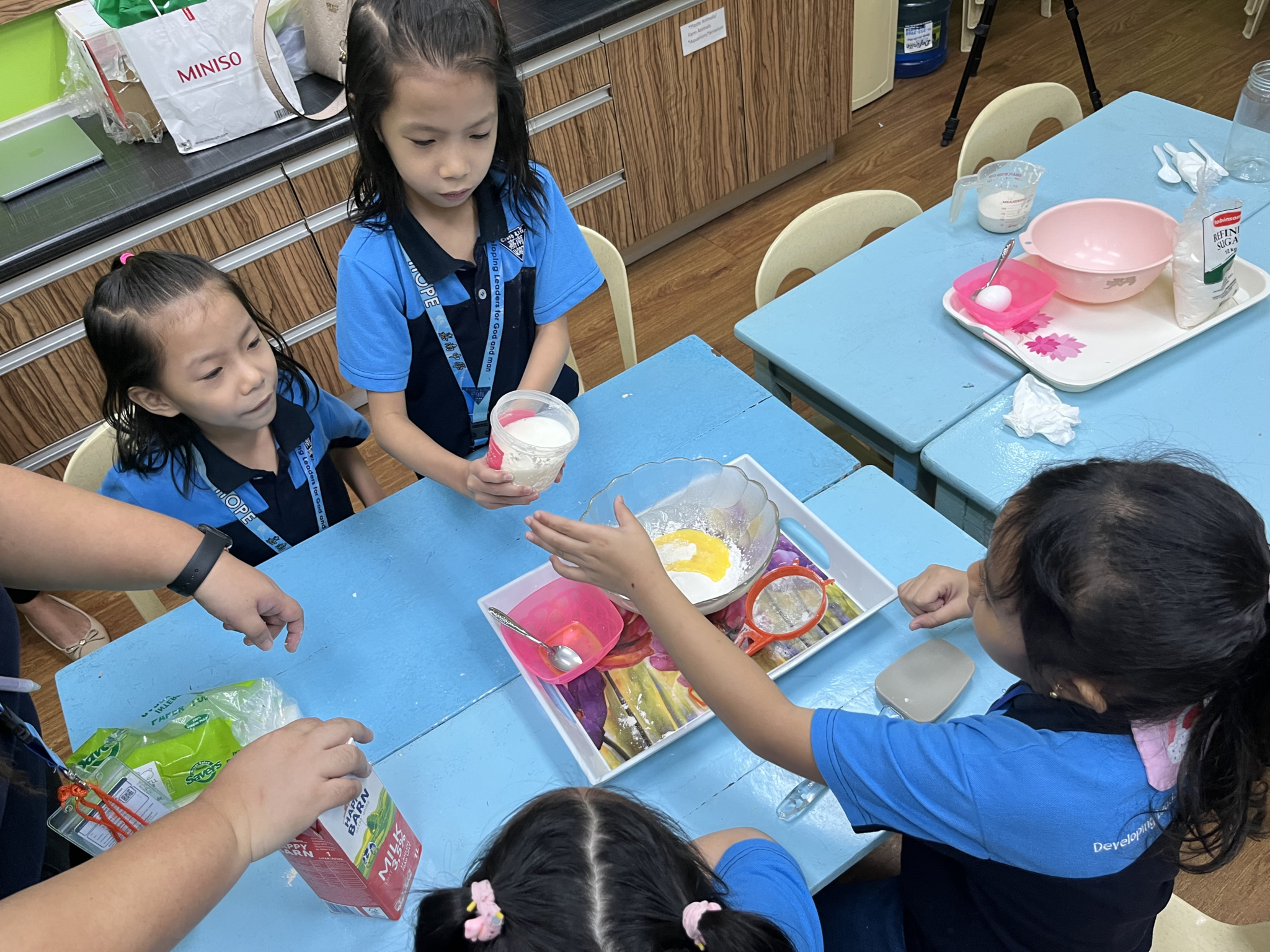
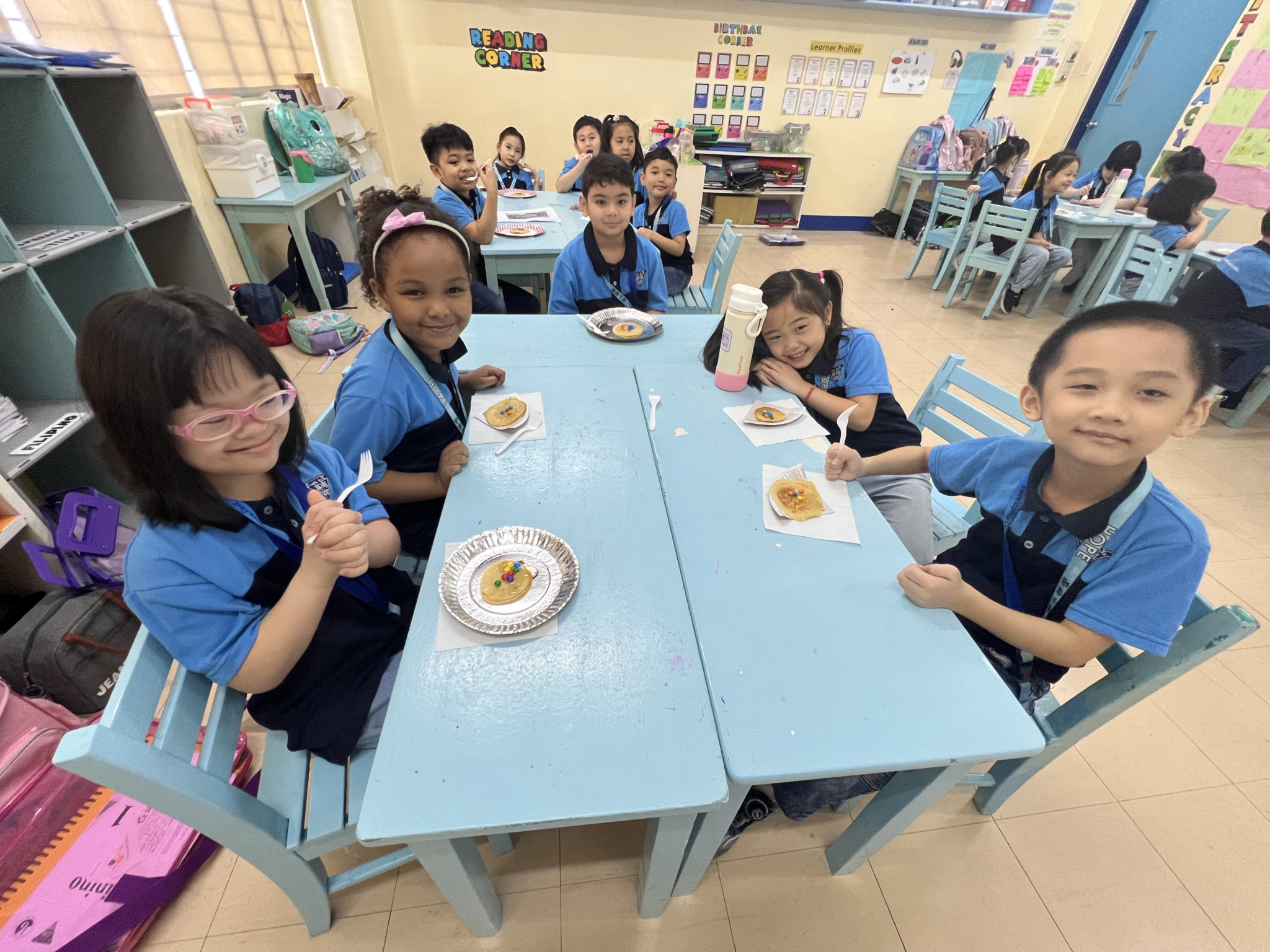
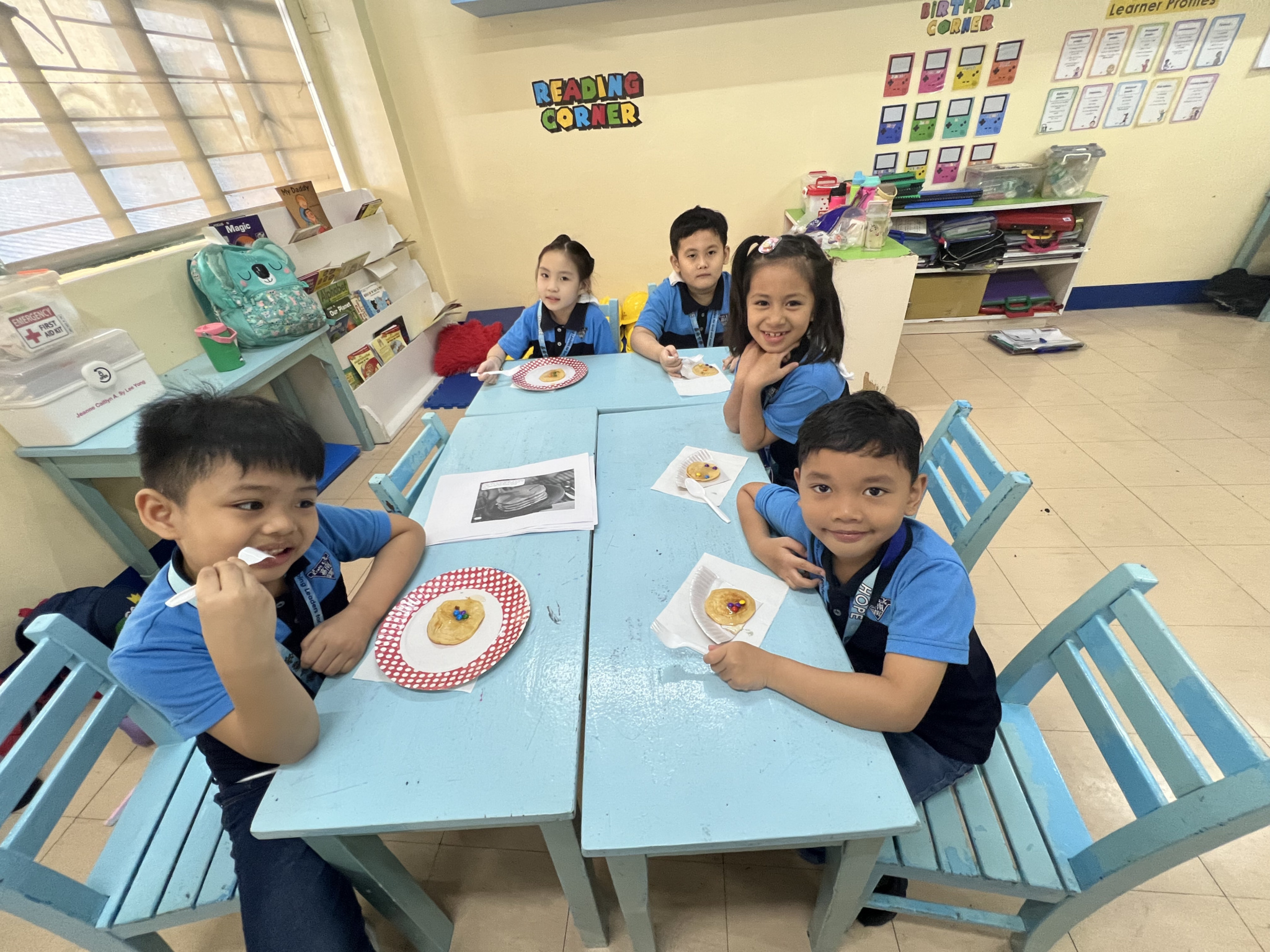
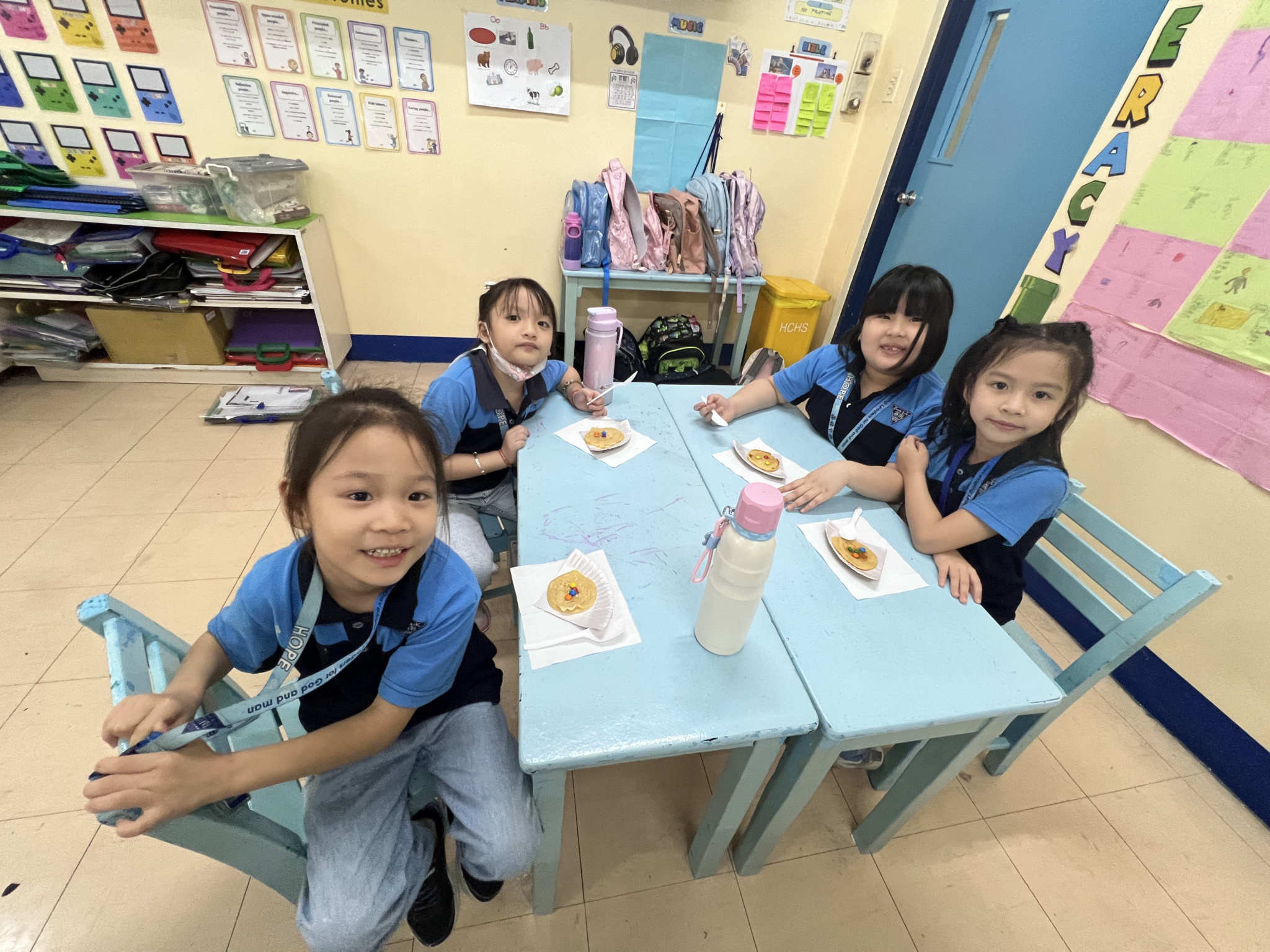
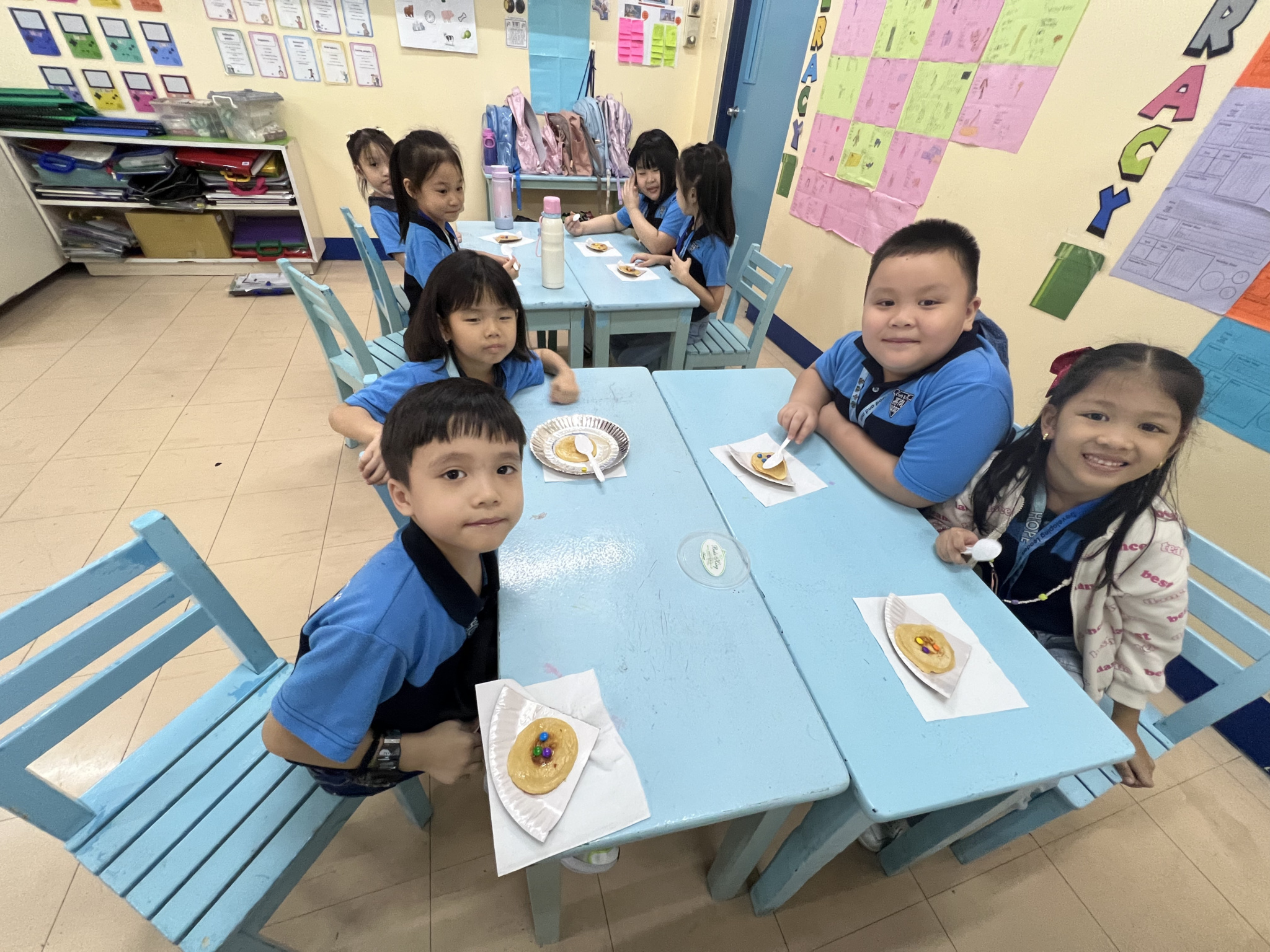
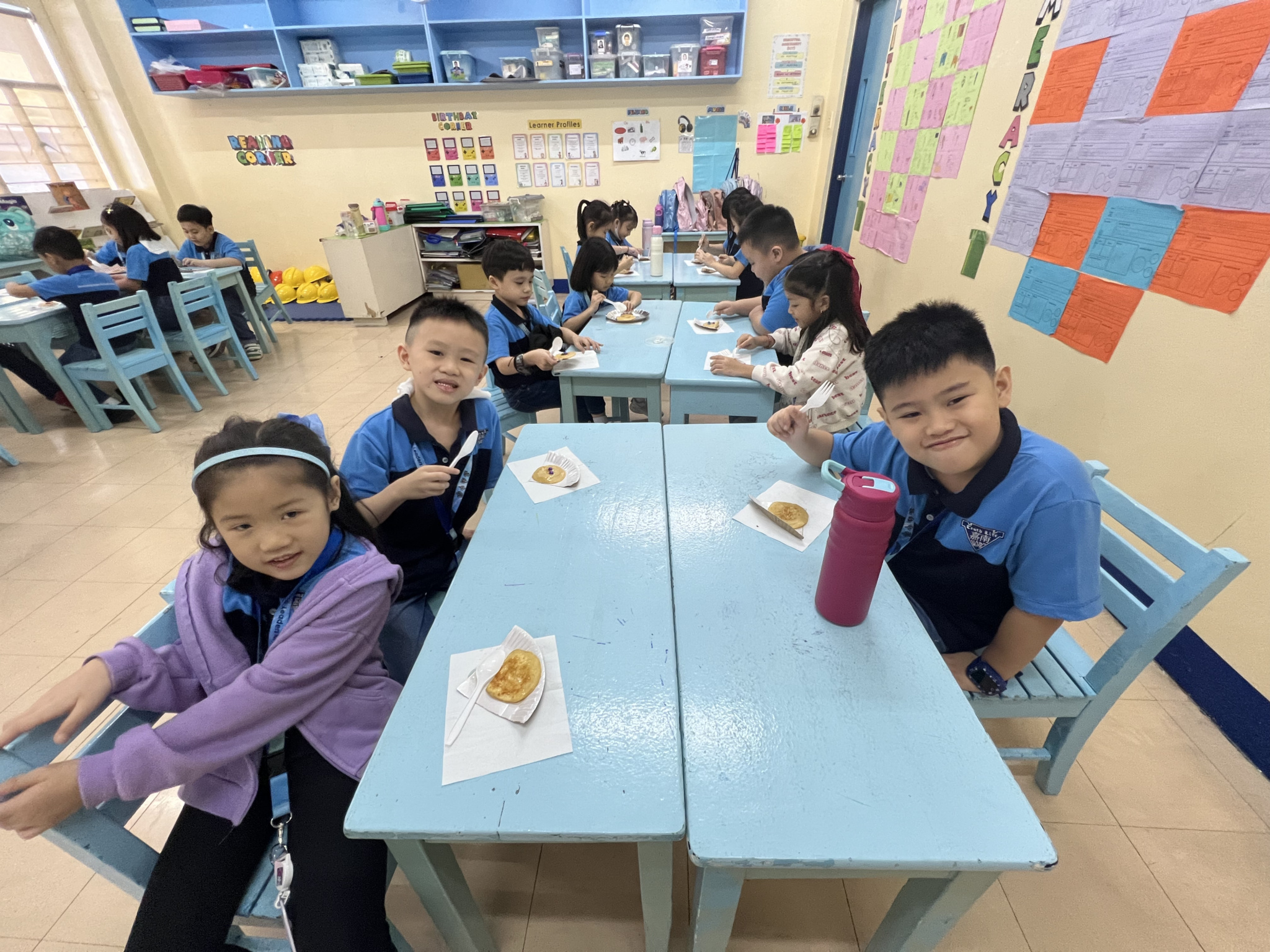
Along with communication skills, the pancake-making activity also improved the affective skills. For most of the Grade 1 students, it was their first time to help prepare their own food, so mistakes are inevitable. However, the statement “I can do it” was heard many times during the activity. Despite initially not knowing anything about making pancakes, the students were confident to try. They also exhibited independence in experimenting with the ingredients; they were curious with the smell and taste of the batter and other ingredients while still being mindful of the instructions to follow. Most importantly, they showed collaboration. They shared each other’s ingredients and materials, and they helped each other in accomplishing the task. At the end of the activity, they all got to taste the pancakes of their labor.
The students helping each other and eating the pancakes together
Indeed, our Grade 1 students are master chefs in the making, but it is not because they already know how to make pancakes. Like master chefs, our students are willing to learn and to try new things. They know working on simple materials and resources at hand can be turned into delicious treats.